How to Unify Data, Media, and Creative Marketing
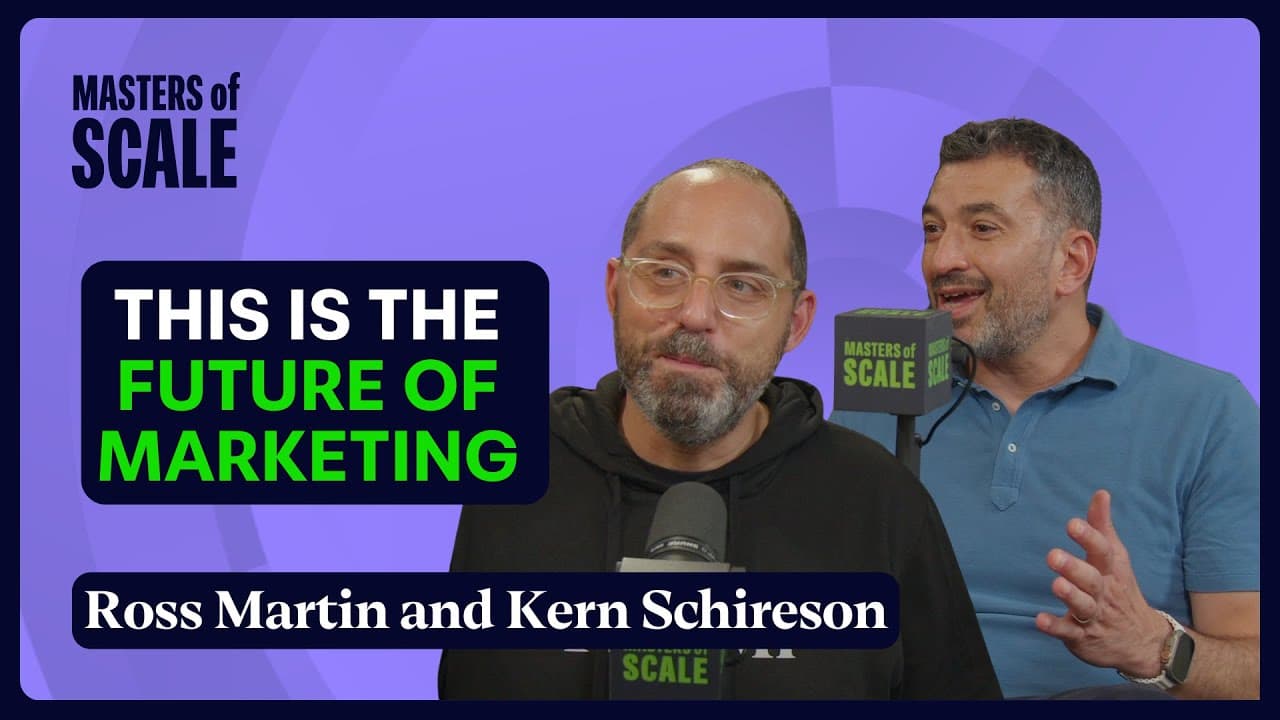
TL;DR
Effective marketing unifies data, research, media, and creative work around measurable client outcomes. Known reinforces that integration through shared financial incentives, employee ownership, continuous learning, high personal standards, and a culture of kindness, helping teams preserve insights from strategy through execution while making each marketing dollar work harder.
Transcript
You're sitting on a more than $10 million hole. You have to stop production on a Super Bowl spot that you have to deliver in just days. And you're told, "Actually, the company's out of business." Wow. That's how we started last year. What'd you do? I think we cried for a second. Yeah. If I told you that for the last 10 years, Instagram is an agenti... Read More
Key Insights
- Known is an integrated agency created in 2020 by combining three businesses with complementary strengths in creative work, analytics, research, media, brand strategy, and business innovation. The combination removed structural barriers that had prevented those capabilities from operating as one coordinated system.
- Marketing capabilities are often separated across media agencies, research teams, and creative agencies. This fragmentation can reduce the fidelity of insights as work moves between organizations, leaving clients responsible for coordinating specialists whose incentives, information, and execution may not be fully aligned.
- Known's agency model is built around unified responsibility for business results. Its teams collectively win or lose according to whether clients achieve goals such as return on investment, brand growth, business growth, or other agreed targets, limiting opportunities for one department to blame another.
- Client performance is directly connected to employee incentives at Known. The agency places a portion of compensation at risk or structures incentives around bottom-line client results, and those incentives help fuel the employee bonus pool across its different business units.
- Known's culture combines demanding personal standards with kindness. Employees described their colleagues primarily as kind, while leaders observed that successful team members hold themselves to standards higher than those imposed by others and actively support the success of people around them.
- Employee ownership strengthens collective responsibility at Known. Team members have a shared stake in what they are building, which reinforces pride in the company and makes the consequences of client outcomes, collaboration, and cultural decisions personally meaningful across the organization.
- Launching during widespread remote work made culture formation especially difficult for Known. Hundreds of employees could not gather in the same room, so leadership had to discover shared values and build relationships through virtual interactions separated by time, space, and screens.
- Continuous learning is a core requirement of Known's operating model. The agency favors people willing to work across disciplines and adapt together, rather than specialists who insist on remaining within one narrow lane regardless of the broader client outcome.
Install to Summarize YouTube Videos and Get Transcripts
Explore YouTube Video Summarizer or Get YouTube Transcript Extractor
Questions & Answers
Q: How can companies integrate data, media, and creative marketing?
Companies can integrate marketing by placing analytics, research, media buying, strategy, and creative production within one aligned operating structure. Known was formed by combining three businesses with complementary capabilities so that insights could flow into activation without passing through disconnected agencies. Shared goals and incentives then make every discipline responsible for the client's measurable business results.
Q: Why does separating marketing agencies reduce effectiveness?
Separating research, media, and creative work can cause valuable information to lose fidelity as it moves between specialist organizations. Each agency may focus on its own assignment rather than the client's complete business outcome. Reuniting those functions allows strategic insights to inform media choices and creative execution while giving one coordinated team responsibility for performance.
Q: How does Known connect agency compensation to client results?
Known structures deals so that part of its fees is placed at risk or attached to incentives based on real bottom-line outcomes. These incentives help fund the company's bonus pool, connecting client success with company and individual success across business units. If clients do not achieve the agreed results, the agency and its employees do not receive the same benefit.
Q: What workplace values support Known's growth?
Known emphasizes high personal standards, kindness, shared responsibility, and continuous learning. Its leaders found that successful employees hold themselves to standards higher than anyone else might impose. Employees also described their colleagues as kind, reflecting a culture in which people care about excellent work and actively support the success of teammates beside them.
Q: How did Known build company culture during remote work?
Known began by asking what employees across the newly combined organization genuinely shared. Because hundreds of people were sent home and could meet only through virtual rectangles, leadership could not rely on conventional in-person culture building. Surveys and observation revealed common traits, especially kindness and unusually high self-imposed standards, which became foundations for the company's belief system.
Q: Why are shared incentives important in an integrated agency?
Shared incentives make separate disciplines accountable for the same client outcome. At Known, client success contributes to company success and to the bonus pool available across business units. This arrangement discourages teams from protecting narrow specialties or pointing fingers when results fall short, because analytics, media, strategy, and creative employees share responsibility for winning or losing.
Q: What kind of employees fit Known's agency model?
Known's model favors employees who want to collaborate across disciplines, keep learning, accept accountability for business outcomes, and help colleagues succeed. People who prefer to remain exclusively within one specialist lane are described as a weaker fit. The integrated structure requires experts to connect their work with the broader team's strategy, execution, and client targets.
Q: How can marketers make a limited budget work harder?
A marketing budget can work harder when data, research, strategy, media, and creative execution are aligned from the beginning. This preserves the original insight as it moves into campaigns and reduces the losses created by disconnected teams. Tying agency incentives to return on investment, brand growth, business growth, or agreed targets also keeps spending focused on measurable outcomes.
Summary & Key Takeaways
-
Known was formed in 2020 by combining Blackbird, Schireson Associates, and Stun Creative. The merger reunited capabilities that marketing agencies had historically separated, including analytics, research, media buying, brand strategy, and creative production. Its founders believed this integrated structure was necessary because clients suffered when valuable insights were lost between disconnected specialist teams.
-
Building Known's culture was unusually difficult because the company launched as employees were sent home and could interact only through virtual meetings. Leadership identified two shared characteristics among successful employees: they held themselves to exceptionally high standards, and they treated colleagues with kindness while caring about one another's success and the quality of their work.
-
Known connects employee rewards to client performance by placing part of its fees at risk or tying them to measurable results. Those incentives help fund the company bonus pool, linking client success, company success, and individual success. This structure encourages every business unit to collaborate instead of protecting narrow specialties or blaming another team.
Read in Other Languages (beta)
Share This Summary 📚
Summarize YouTube Videos and Get Video Transcripts with 1-Click
Try YouTube Summary with ChatGPT & Claude or YouTube Transcript Generator