What Is 3D Printing and How Will It Change Our Future?
TL;DR
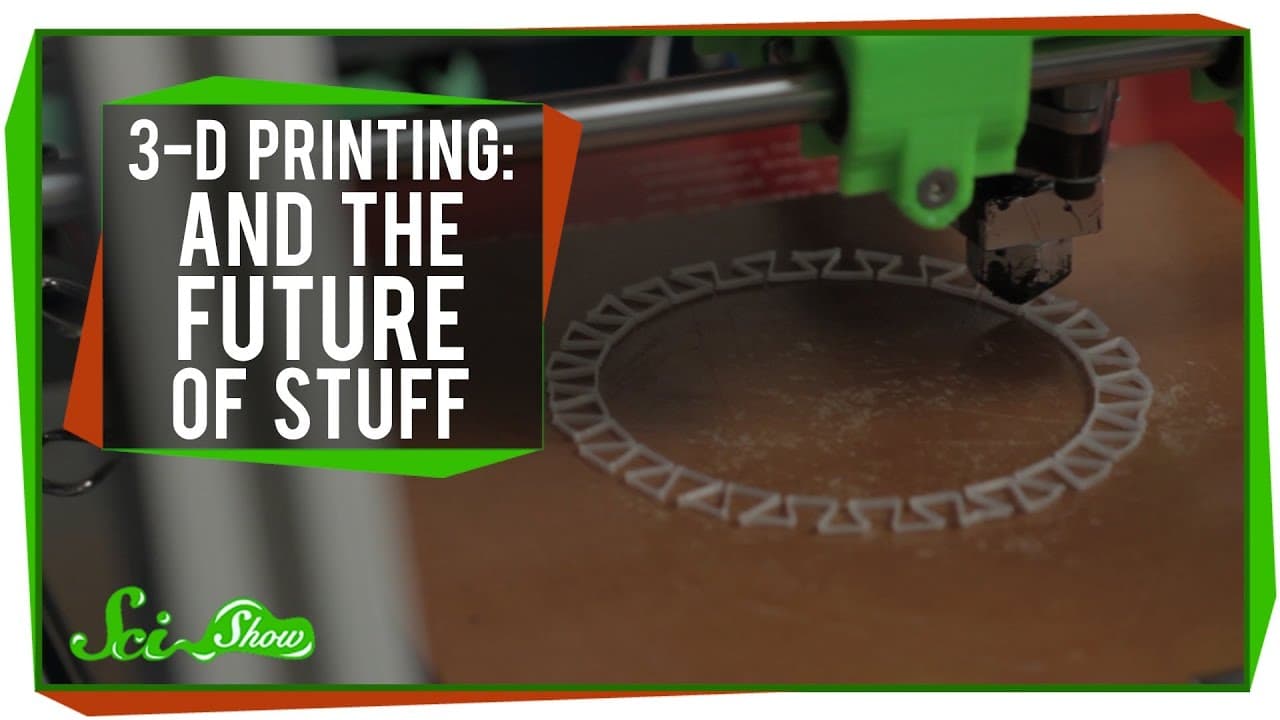
3D printing, or additive manufacturing, builds objects layer by layer and has the potential to revolutionize various industries, including manufacturing, medicine, and food. Innovations like bioprinting could lead to personalized organs and drug development, making the technology a game changer for customization and efficiency in production.
Transcript
What If instead of going to the store to buy a new toilet brush all you had to do was walk into your office Nook and print out a new one not a picture of a toilet brush cuz what why would you want that but an actual toilet brush that you can use to clean those hard to clean stubborn stains from your toilet I know your toilet is very dirty n you're ... Read More
Key Insights
- 👻 3D printing is an additive manufacturing process that allows for customization and complex designs.
- 🥳 The technology has advanced to the point where objects can have moving parts and be made from various materials.
- ❓ Bioprinting offers the potential for personalized replacement organs and the reduction of animal testing.
- 😋 3D printing has implications for industries such as medicine, manufacturing, and food production.
- 💄 The affordability and accessibility of 3D printers are increasing, making the technology more widely available.
- 👻 Customizable prosthetics are a significant advantage of 3D printing, allowing for personalized and functional designs.
- 🤗 The ability to print organic molecules opens up the possibility of customized drugs and medication.
Install to Summarize YouTube Videos and Get Transcripts
Explore YouTube Video Summarizer or Get YouTube Transcript Extractor
Questions & Answers
Q: How does 3D printing work?
3D printing works by adding layers of material, such as plastic or metal, on top of each other to create a three-dimensional object. This additive process allows for customization and complex designs that traditional manufacturing methods cannot achieve.
Q: What are the potential applications of 3D printing?
3D printing has implications for various industries, including medicine, manufacturing, and food production. It can be used to create personalized prosthetic limbs, customized drugs, and even bioprinted tissues and organs.
Q: What materials can be used in 3D printing?
3D printers can use a wide range of materials, including plastic, metal, synthetic resin, concrete, and even sugar. The choice of material depends on the desired properties of the final object.
Q: What are the challenges in bioprinting human tissues?
Bioprinting human tissues faces challenges in terms of connecting the bioprinted tissue to real blood vessels for oxygen supply. Additionally, printing with delicate embryonic stem cells is difficult, but researchers are working on finding solutions.
Summary & Key Takeaways
-
3D printing is the process of creating solid objects by adding layers of material, allowing for customization and complex designs.
-
The technology has advanced to the point where objects can have moving parts and be made using materials like plastic, metal, and even organic molecules.
-
Bioprinting, the 3D printing of living tissues, shows promise for creating replacement organs and reducing the need for animal testing.
Read in Other Languages (beta)
Share This Summary 📚
Summarize YouTube Videos and Get Video Transcripts with 1-Click
Try YouTube Summary with ChatGPT & Claude or YouTube Transcript Generator
Explore More Summaries from SciShow 📚


Summarize YouTube Videos and Get Video Transcripts with 1-Click
Try YouTube Summary with ChatGPT & Claude or YouTube Transcript Generator