What Was Nell, the Skeleton Rocket That Flew?
TL;DR
Nell was Robert Goddard’s first modern liquid-fuel rocket, proving that gasoline and liquid oxygen could power a working launch. On March 16, 1926, it burned its fuel in under three seconds, climbed about 12.5 meters, and landed about 56 meters away. Read on to understand its unusual design and lasting importance to rocket science.
Transcript
These days, rockets all more or less look alike. Sure, some are bigger. Some are smaller. But pretty much all have a cone-shaped nose at the top… a big tube holding fuel and the rest of the propulsion system underneath... maybe some fins at the bottom if you’re feelin’ fancy. But the thing is, you don’t have to set your rocket up that way to fly. W... Read More
Key Insights
- 😒 Rockets before Nell were inefficient and unable to reach space due to the use of gunpowder as fuel.
- 😒 Robert Goddard's use of liquid fuels increased efficiency and allowed for more thrust.
- 🫗 Liquid-fuel rockets require separate chambers to store each propellant and sophisticated plumbing for efficient mixing.
- 🚀 Nell, the first modern rocket, paved the way for future developments in rocket science and space exploration.
Install to Summarize YouTube Videos and Get Transcripts
Explore YouTube Video Summarizer or Get YouTube Transcript Extractor
Questions & Answers
Q: What was Nell, the skeleton rocket that flew?
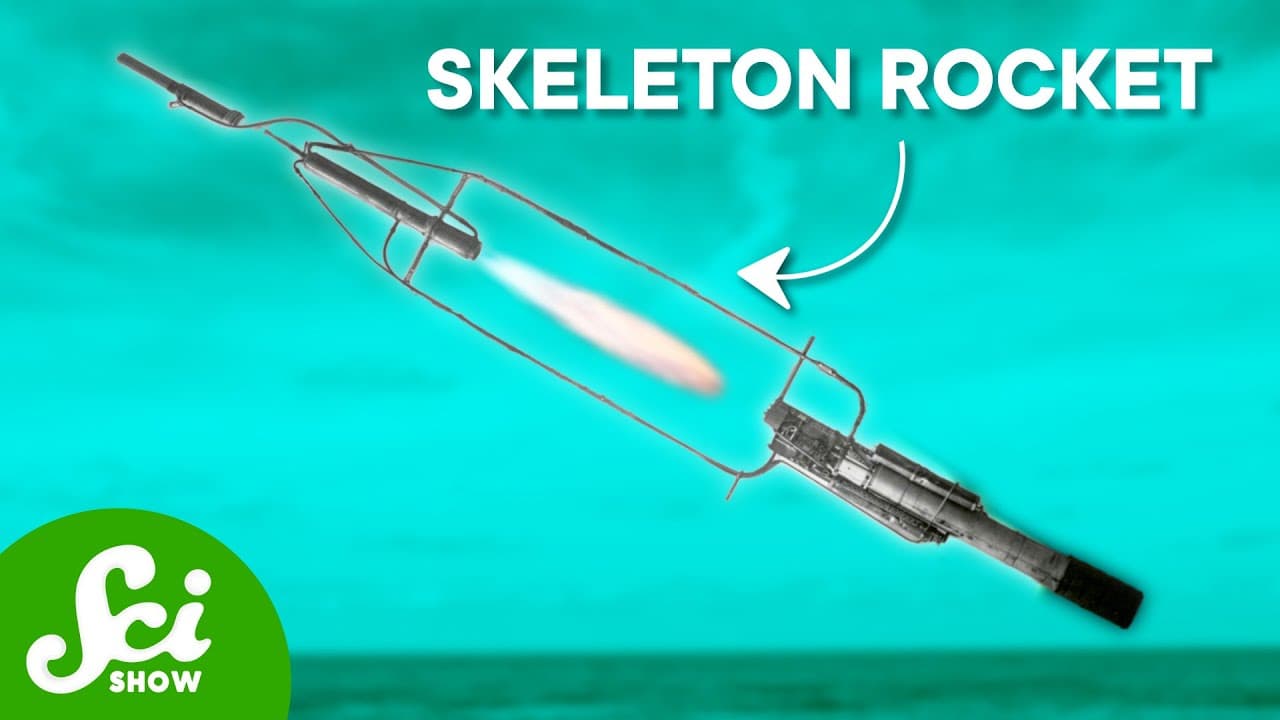
Nell was a liquid-fuel rocket created by physicist Robert Goddard. Its exposed frame and unconventional component placement looked unlike modern rockets, but its successful launch demonstrated that liquid-fuel rockets worked.
Q: Why is Nell considered the first modern rocket?
Nell introduced many fundamentals of rocket science that would ultimately help rockets reach orbit and beyond. Its design used separate liquid propellants, a combustion chamber, plumbing, an igniter, and a nozzle.
Q: When and where did Nell launch?
Nell blasted off from a Massachusetts farm on March 16, 1926. It used its fuel in under three seconds, climbed about 12.5 meters, and crashed about 56 meters away.
Q: What fuel and oxidizer did Nell use?
Goddard used gasoline as Nell’s fuel and liquid oxygen as its oxidizer. The propellants were stored in tanks at the bottom and mixed in a combustion chamber at the top.
Q: Why did Robert Goddard choose liquid fuel for Nell?
Liquid fuels were more energy dense than solid fuels, releasing more energy for the same fuel mass. They were also better at creating thrust for the same amount of mass.
Q: How did Nell’s liquid-fuel system work?
Nell stored its fuel and oxidizer separately because liquids could not remain perfectly mixed before launch. Plumbing delivered the correct amounts to another chamber, where the propellants mixed, combusted, and produced exhaust through a nozzle.
Q: Why was Nell’s nozzle in the middle of the rocket?
The nozzle sat beneath the combustion chamber, causing exhaust to emerge above the oxygen tank. Goddard placed the combustion flame far from the propellant tanks and protected the oxygen tank with a small asbestos heat shield.
Q: How did Robert Goddard improve rockets after Nell?
Goddard continued refining liquid-fuel rockets until his death in 1945. He rearranged components, developed more sophisticated pumping systems, added stabilizers, and made the rockets steerable.
Summary & Key Takeaways
-
Definition: Nell was Robert Goddard’s first modern liquid-fuel rocket and demonstrated that liquid-fuel propulsion worked.
-
Number: Gunpowder rockets converted only about 2% of released energy into thrust.
-
Number: Goddard improved the efficiency of solid-fuel rockets by over 3000%.
-
Compare: Liquid fuels released more energy and created more thrust than solid fuels for the same mass.
-
Definition: Liquid rockets require fuel and an oxidizer, stored separately and mixed in the correct proportions before combustion.
-
Number: Liquid-fuel systems need at least two separate chambers to store the propellants.
-
Tool: Nell used gasoline as fuel, liquid oxygen as oxidizer, and plumbing built into its exposed frame.
-
Tool: Match heads ignited Nell after Goddard’s assistant heated them with a blowtorch on a long pole.
-
When: Nell launched from a Massachusetts farm on March 16, 1926.
-
Number: Nell burned its fuel in under three seconds, climbed about 12.5 meters, and landed about 56 meters away.
-
Who: Goddard later improved pumping, rearranged components, added stabilizers, and made his rockets steerable.
Read in Other Languages (beta)
Share This Summary 📚
Summarize YouTube Videos and Get Video Transcripts with 1-Click
Try YouTube Summary with ChatGPT & Claude or YouTube Transcript Generator
Explore More Summaries from SciShow 📚


Summarize YouTube Videos and Get Video Transcripts with 1-Click
Try YouTube Summary with ChatGPT & Claude or YouTube Transcript Generator