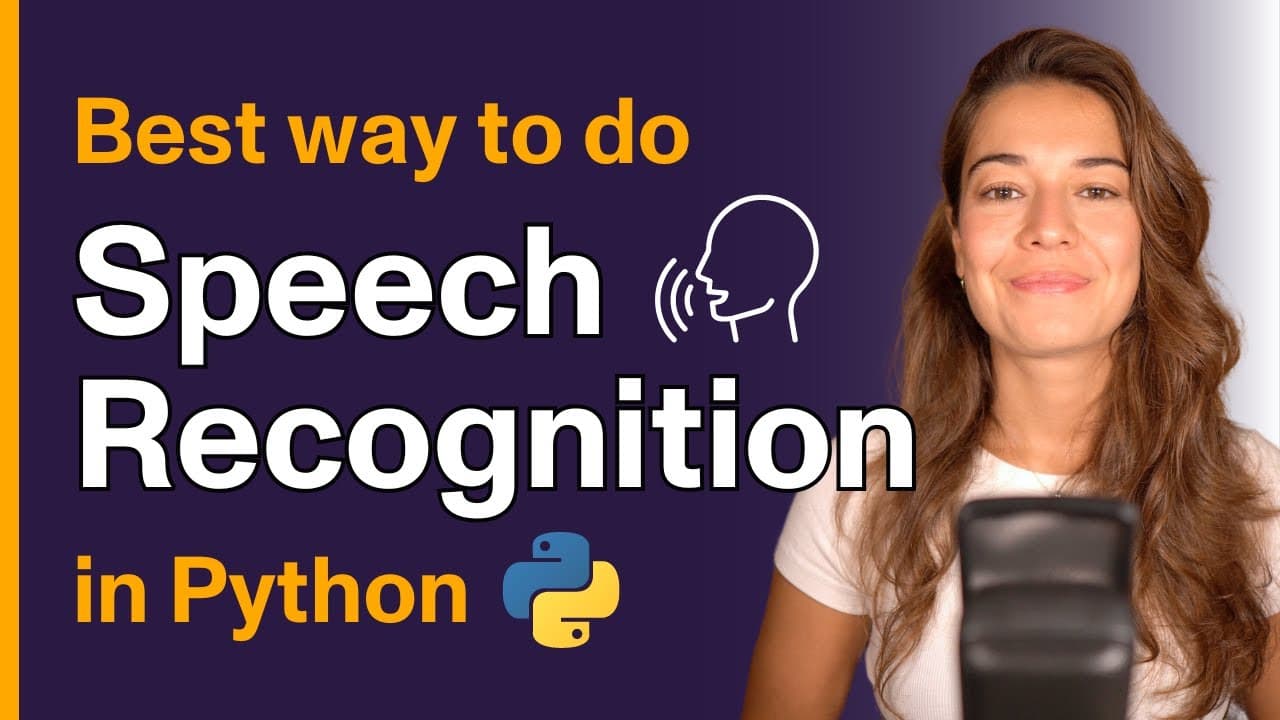
How to Use Assembly AI for Speech Recognition in Python
TL;DR
To use Assembly AI for speech recognition in Python, start by installing the Assembly AI Python SDK and configuring your API key. You can transcribe audio files, customize outputs, and utilize features like speaker labels and automatic language detection. The Universal One model provides advanced transcription capabilities at a competitive price of 37 cents per hour for the best tier.
Transcript
assembly AI is building the best API platform for developers to transform and understand voice data so that they can build amazing new products and services for the world to use you can transcribe your audio data with assembly AI or get a speaker labeled version of your transcription but you can do much more you can get a list of topics discussed w... Read More
Key Insights
- 🐕🦺 Assembly AI's API platform enables developers to transform and analyze voice data for building innovative products and services.
- 😯 Universal One is Assembly AI's latest model for advanced speech recognition.
- 😯 Developers can customize their output by modifying configuration arguments, such as choosing speech models and adjusting formatting.
- 🔇 Assembly AI offers transcription, sentiment analysis, topic detection, and speaker diarization functionalities through their API platform.
- 😇 The cost of using Assembly AI's services is 37 cents an hour for the best tier and 12 cents an hour for the Nano tier.
- 🐕🦺 Assembly AI provides a Python SDK and comprehensive documentation to facilitate the integration and usage of their services.
- 🔇 Language detection and support for multiple speakers are among the features available in Assembly AI's platform.
Install to Summarize YouTube Videos and Get Transcripts
Explore YouTube Video Summarizer or Get YouTube Transcript Extractor
Questions & Answers
Q: What can developers do with Assembly AI's API platform?
Developers can use Assembly AI's API platform to transcribe audio files, detect flagged content, identify sensitive information, determine sentiment, and even use natural language processing (NLP) through the Lemur endpoint.
Q: How can developers start using Assembly AI's latest model, Universal One?
To start using Universal One, developers need to import Assembly AI's Python SDK, set the API key, define the audio data (either by providing a URL or uploading a file), and then call the transcribe function on the transcriber object.
Q: Can developers customize their output with Assembly AI?
Yes, developers can customize the output by modifying the configuration arguments, such as using the Nano tier for bulk transcription, turning off punctuation and formatting, setting language manually or enabling automatic language detection.
Q: How can developers get speaker labels for transcriptions?
To get speaker labels, developers need to set the speaker labels argument to true in the configuration and retrieve the results of the speaker diarization. This allows for attributing sentences or groups of sentences to specific speakers.
Summary & Key Takeaways
-
Assembly AI provides developers with an API platform to transcribe and analyze voice data, including detecting flagged content, sensitive information, and sentiment.
-
By using Assembly AI's latest model, Universal One, developers can have access to advanced speech recognition capabilities.
-
The tutorial provides step-by-step instructions on how to use Assembly AI's Python SDK to transcribe audio files, customize output, and use different speech models.
Read in Other Languages (beta)
Share This Summary 📚
Summarize YouTube Videos and Get Video Transcripts with 1-Click
Try YouTube Summary with ChatGPT & Claude or YouTube Transcript Generator
Explore More Summaries from AssemblyAI 📚

Summarize YouTube Videos and Get Video Transcripts with 1-Click
Try YouTube Summary with ChatGPT & Claude or YouTube Transcript Generator