Can this Plant /Actually/ See?
TL;DR
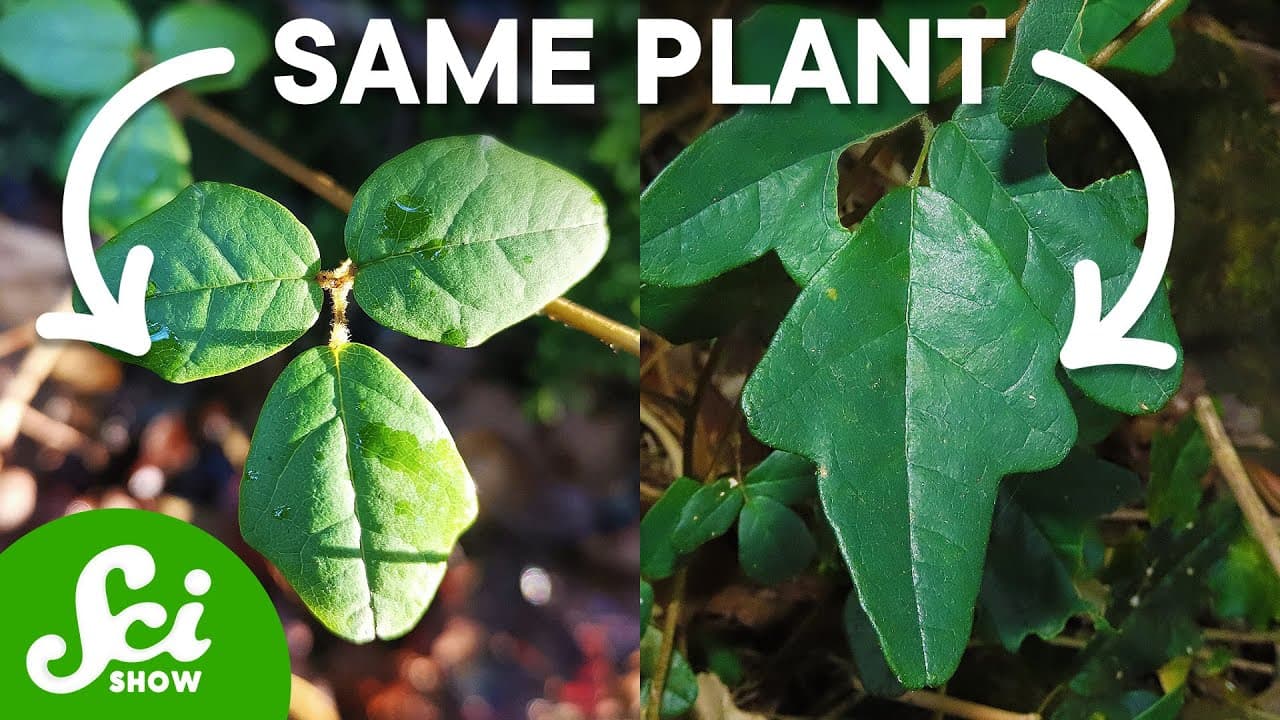
The Boquila Trifoliolata plant, found in temperate rainforests in Chile and Argentina, challenges our understanding of plants by effortlessly mimicking the leaves of other plants and potentially even having the ability to see.
Transcript
This SciShow video is supported by Brilliant! As a SciShow viewer, you can keep building your STEM skills with 20% off an annual premium subscription at Brilliant.org/SciShow. [♪ INTRO] When it comes to plant biology, it seems like we should have most of it figured out by now. Sure, we spot a new species or maybe a funky adaptation every once i... Read More
Key Insights
- 🌱 The Boquila Trifoliolata plant can mimic the leaves of other plants, changing its own leaf shape to blend in and avoid predation.
- 🧑🔬 Scientists are still unsure of the exact mechanism behind the Boquila plant's mimicry abilities, but one hypothesis involves the transfer of genetic material from neighboring leaves.
- 🌱 Another study suggests that the Boquila plant may have the ability to see, although this idea is met with skepticism from other researchers.
- 🌱 The mimicry abilities of the Boquila plant raise questions about our current knowledge of plant biology and highlight how much we still have to learn about the natural world.
Install to Summarize YouTube Videos and Get Transcripts
Explore YouTube Video Summarizer or Get YouTube Transcript Extractor
Questions & Answers
Q: How does the Boquila Trifoliolata plant mimic the leaves of other plants?
The Boquila plant can alter the size, shape, color, orientation, and stalk length of its leaves to closely resemble the leaves of other plants, allowing it to blend in and avoid predation.
Q: What is horizontal gene transfer, and how does it relate to the Boquila plant's mimicry abilities?
Horizontal gene transfer is the process of passing genetic material directly from one mature organism to another. Some researchers believe that the Boquila plant may receive genetic material from neighboring leaves, allowing it to rapidly change its own leaf shape through mimicry.
Q: Can the Boquila Trifoliolata plant see?
There is a hypothesis that the Boquila plant has the ability to see, based on its responses to artificial plants. However, this idea is still controversial, and other researchers criticize the study's design and lack of explanation for how plant vision would work.
Q: What are the potential implications of the Boquila plant's mimicry abilities?
The mimicry abilities of the Boquila plant challenge our understanding of plant biology and open up possibilities for further research on horizontal gene transfer and plant vision.
Summary & Key Takeaways
-
The Boquila Trifoliolata plant can mimic the leaves of various species of trees and nearby plants, changing almost every aspect of its own leaves to blend in.
-
Scientists are still unsure of how the Boquila plant is able to mimic other plants, but one hypothesis suggests that it may receive genetic material from neighboring leaves through a process called horizontal gene transfer.
-
Another study suggests that the Boquila plant may have the ability to see, based on its responses to artificial plants and changes in leaf shape.
Read in Other Languages (beta)
Share This Summary 📚
Summarize YouTube Videos and Get Video Transcripts with 1-Click
Try YouTube Summary with ChatGPT & Claude or YouTube Transcript Generator
Explore More Summaries from SciShow 📚


Summarize YouTube Videos and Get Video Transcripts with 1-Click
Try YouTube Summary with ChatGPT & Claude or YouTube Transcript Generator