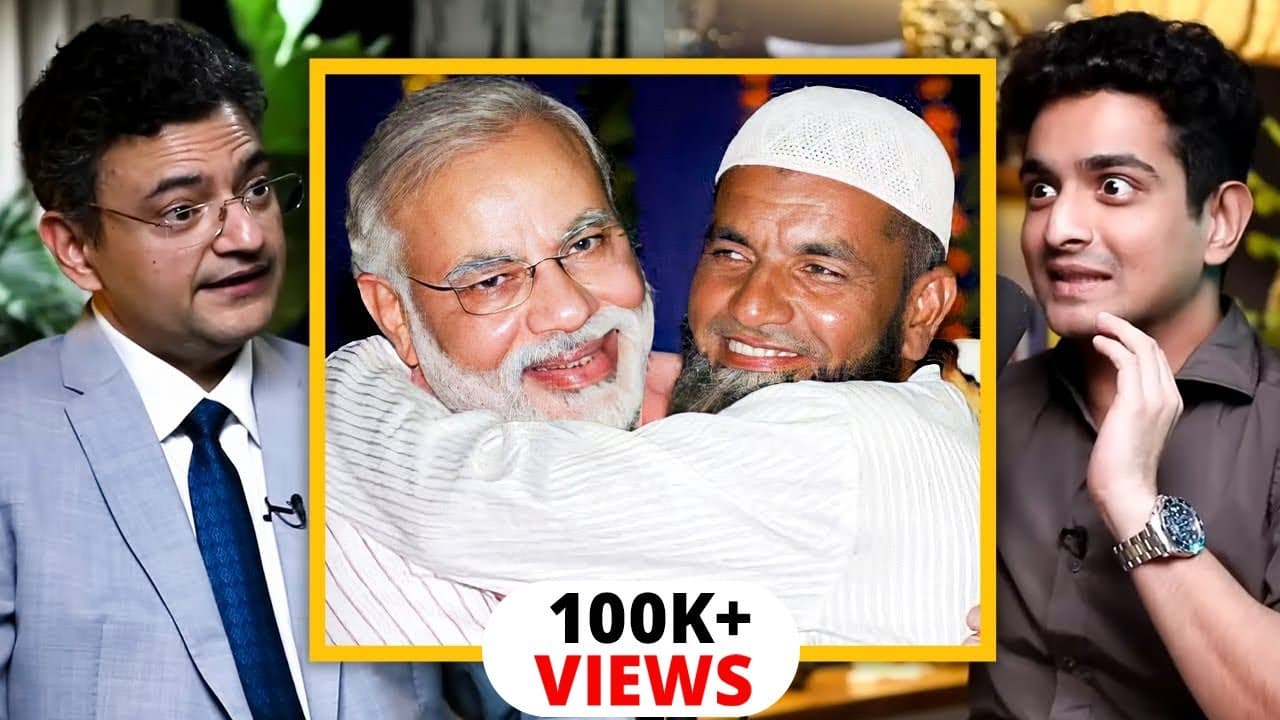
“PM Modi Has Done More For Muslims Than Hindus” - Anand Ranganathan
TL;DR
Anand Ranganathan argues that PM Modi has done more for Muslims than Hindus, though the excerpt does not present the underlying data. He says urban Muslims and Christians often fear Yogi Adityanath and perceive the BJP as hostile to minorities, while the government fails to counter such narratives with facts. Read on for his views on urban perceptions, the 2014 church attacks, and political messaging.
Transcript
binge watch and learn on TRS clips do people believe that Yogi is honest I'll tell you what have you watched a horror movie in your life oh yes so often the ghost shining oh perfect oh my God the ghost of Halloween comes at the end usually yeah you know usually yes uh now Muslims and Christians in our country are the characters in the horror movie ... Read More
Key Insights
- 😨 Urban minorities perceive Yogi Adityanath as a threat due to fears shaped by political history and current governance.
- 😨 There exists a dichotomy in perceptions of BJP's political stance towards Muslims and Christians, with varying levels of fear and trust.
- 👊 Historical incidents like church attacks contribute significantly to the narrative of minority persecution under BJP leadership.
- 🔉 Political narratives are often manipulated by both politicians and media, creating confusion and mistrust among communities.
- 🌉 The speaker emphasizes the need for factual disclosures from the government to bridge the gap in minority perceptions.
- 🥺 Misconceptions can thrive in political discourse when unchecked, leading to entrenched societal divides.
- 👾 The speaker warns of a ‘diabolical game’ in politics where misinformation can overshadow reality.
Install to Summarize YouTube Videos and Get Transcripts
Explore YouTube Video Summarizer or Get YouTube Transcript Extractor
Questions & Answers
Q: Why does Anand Ranganathan say PM Modi has done more for Muslims than Hindus?
Ranganathan says that “hard facts” support his claim that Modi has done more for Muslims than Hindus. However, this transcript excerpt does not provide those facts or identify specific policies, so the claim cannot be evaluated from the discussion alone.
Q: Do people perceive Yogi Adityanath as honest?
The discussion does not directly establish whether people regard Yogi Adityanath as honest. Ranganathan instead says that people in his Mumbai social circles are extremely afraid of Yogi and expect him to bring the same intensity associated with Uttar Pradesh to India as a whole.
Q: Why are urban minorities afraid of Yogi Adityanath?
Ranganathan says Muslims and Christians in urban centers view Yogi as a threatening figure, comparing their position to characters awaiting a ghost in a horror movie. He believes this fear is especially visible at Mumbai parties and acknowledges that perspectives outside big cities may differ.
Q: Why is the BJP perceived as anti-Muslim?
Ranganathan says the anti-Muslim perception persists even though he believes facts and data could dispel it. He further claims that Muslim politicians propagate the perception and that the BJP does not want the alleged fallacy cleared, calling the situation a “diabolical game.”
Q: Does Anand Ranganathan believe the BJP is anti-Christian?
No. He argues that the BJP is not anti-Christian and cites Goa, claiming it has more BJP Christian MLAs than its Christian share of the population would suggest.
Q: What does Ranganathan claim about constitutional discrimination against religious groups?
Ranganathan says he can demonstrate through the Constitution, law, Parliament, and society that Hindus are actively discriminated against. He argues that Muslims and Christians are not the groups facing constitutional discrimination, though the excerpt does not present his supporting evidence.
Q: What does the discussion say about the 2014 church attacks?
Ranganathan says the 2014 incidents were presented as Hindutva-linked church attacks and became a major anti-Christian narrative. He claims most, if not all, were arson or burglaries committed by thieves and were unrelated to Hindutva, adding that such incidents occurred more during the UPA period than during the NDA period.
Q: How could the government address fears and alleged misinformation about minorities?
Ranganathan says the BJP could use facts and data to dispel fear among Muslims and challenge allegedly false narratives. He criticizes Modi and the government for not publicly correcting the church-attack narrative during the three months it circulated.
Summary & Key Takeaways
-
The discussion highlights how urban perspectives on Yogi Adityanath's honesty often stem from fear among minorities, particularly Muslims, who worry about potential discrimination under his leadership.
-
It notes that while Christians may not face the same level of fear, there remains a perception of BJP being anti-Muslim, compounded by historical incidents such as church attacks.
-
The content suggests that political narratives are shaped by selective storytelling and the failure of the government to address misconceptions, indicating a complex relationship between politics, media, and minority communities.
Read in Other Languages (beta)
Share This Summary 📚
Summarize YouTube Videos and Get Video Transcripts with 1-Click
Try YouTube Summary with ChatGPT & Claude or YouTube Transcript Generator
Explore More Summaries from TRS Clips 📚



Summarize YouTube Videos and Get Video Transcripts with 1-Click
Try YouTube Summary with ChatGPT & Claude or YouTube Transcript Generator