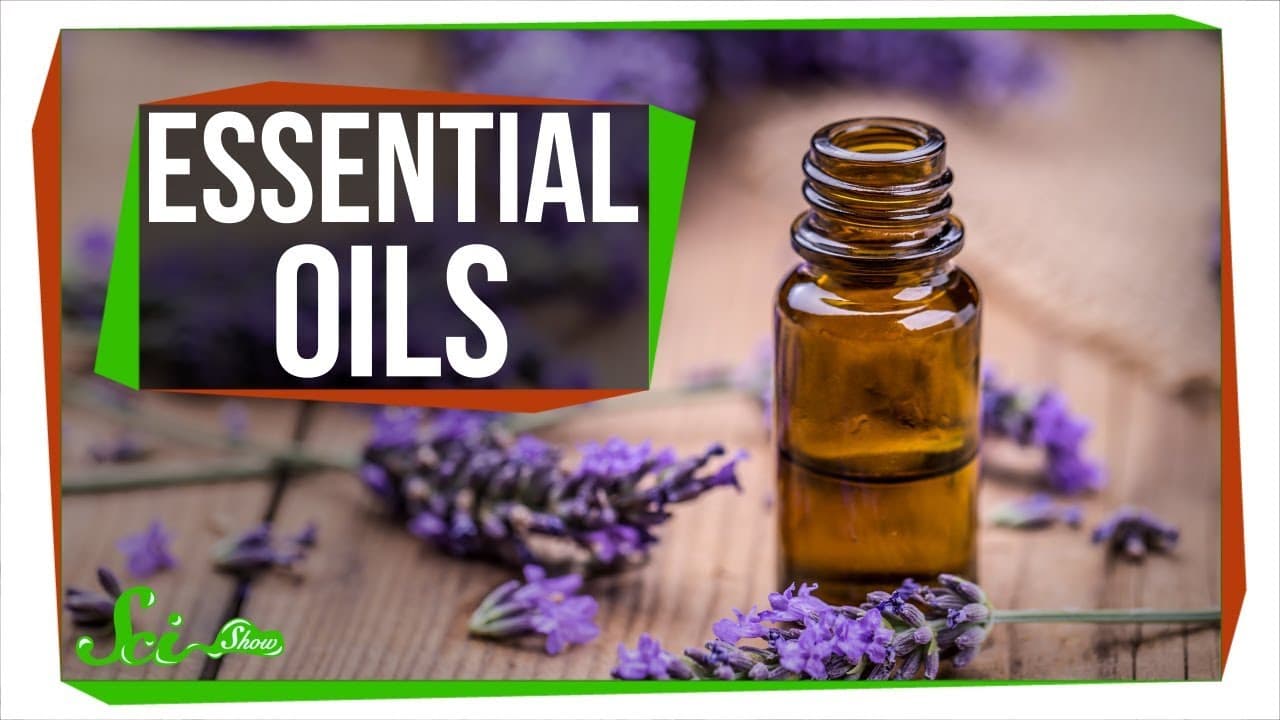
Do Essential Oils Really Improve Mood and Reduce Pain?
TL;DR
Essential oils can positively influence mood, promote relaxation, and alleviate pain, but the exact mechanisms behind these effects remain unclear. While numerous studies indicate benefits, factors such as rituals and the placebo effect may also contribute, making it hard to isolate the oils' impact. More rigorous research is needed to fully understand how and why essential oils work.
Transcript
When you come home at the end of a long day, you might unwind with a lavender bubble bath. Or maybe you light a zesty orange candle as part of your study ritual. These habits fall under the umbrella of aromatherapy: the idea that smelling so-called “essential oils” can change your mood or even have healing effects. It might all sound like pseudosci... Read More
Key Insights
- 👨🎨 Aromatherapy, using essential oils, has been shown to change mood, promote relaxation, and alleviate pain.
- 😤 Essential oils are complex mixtures of small compounds found in plants that can easily enter the nose and affect the brain.
- 🧑🏭 The exact mechanisms of how essential oils work are still unclear, but psychological factors such as ritual, preference, and the placebo effect may play a role.
- 😖 Scientific research on essential oils is limited by poorly designed studies and confounding variables.
- 👨🔬 More rigorous research is needed to understand the true effects of essential oils and why they cause specific feelings.
- 🛢️ Despite scientific limitations, there is evidence that using essential oils has an impact, even if it's not entirely clear whether it's the oils themselves or the experience of using them.
- 😒 The use of essential oils for relaxation and mood enhancement is supported by numerous studies.
Install to Summarize YouTube Videos and Get Transcripts
Explore YouTube Video Summarizer or Get YouTube Transcript Extractor
Questions & Answers
Q: Do essential oils have healing effects?
While there is evidence that essential oils can improve mood, relieve pain, and promote relaxation, there are few rigorous studies showing that they can treat clinical anxiety, depression, or cancer.
Q: How do essential oils affect our brain?
Some studies suggest that essential oils may boost feel-good neurotransmitters like dopamine and serotonin or dampen the autonomic nervous system, but the exact mechanisms are unclear.
Q: Could the psychological effect of using essential oils be responsible for their effects?
It's possible that the situation or ritual around using essential oils, as well as personal preference or the placebo effect, contribute to their effects on mood and relaxation.
Q: Are the studies on essential oils well-designed?
Many studies on essential oils are not controlled or double-blind, and the questionnaires used to measure effects may introduce bias, making it difficult to draw definitive conclusions.
Summary & Key Takeaways
-
Aromatherapy, the use of fragrant essential oils, has been shown to make people feel more positive, relaxed, or experience less pain.
-
Essential oils are complex mixtures of small compounds found in plants, and they can easily enter the nose to affect mood.
-
Scientific research on essential oils is not conclusive due to confounding variables and poorly designed studies, but using essential oils does have an impact.
Read in Other Languages (beta)
Share This Summary 📚
Summarize YouTube Videos and Get Video Transcripts with 1-Click
Try YouTube Summary with ChatGPT & Claude or YouTube Transcript Generator
Explore More Summaries from SciShow 📚


Summarize YouTube Videos and Get Video Transcripts with 1-Click
Try YouTube Summary with ChatGPT & Claude or YouTube Transcript Generator