How Does Mike CcClure, MBA ’15, Explain the Power of Bicycles?
TL;DR
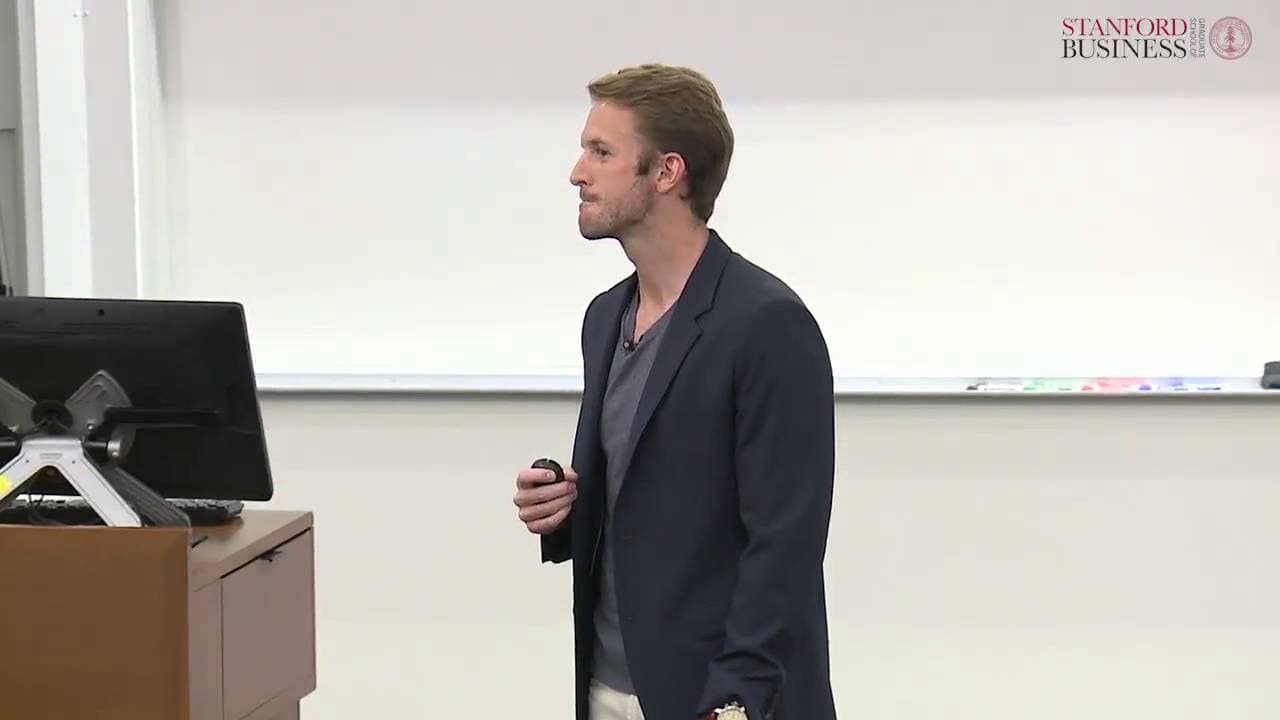
Bicycles create freedom by turning human effort into faster, more efficient transportation that can expand access to education and economic activity. In rural Zambia, a bicycle reduced Belita’s three-mile school commute from 90 minutes to 20 minutes and helped her increase attendance from three days to five days a week. Read on to see how Mike CcClure connects that transformation to the bicycle’s broader power.
Transcript
[MUSIC] Take a moment and picture your favorite childhood bicycle. What did it look like? What color was it? Did you have one of those weird banana seats that used to be so popular? Or perhaps you were the creative type with cards in your spokes and streamers coming from your handlebar. My bike was a bright red Schwinn with a cushy black seat and t... Read More
Key Insights
- Freedom changes across a lifetime: For a child who cannot drive, a bicycle opens independent routes to school, friends and the pool. For an adult, its value can shift toward adventure and temporary escape from work, stress and routine. CcClure uses these familiar experiences to establish freedom as the central idea connecting recreation with more consequential forms of mobility.
- Personal experience frames the argument: CcClure does not approach bicycles only as an observer. He rode throughout childhood and later raced mountain bikes professionally on the World Cup circuit. That lifelong relationship initially exposed him to bicycles as play, transportation, exercise and competition, before he began considering their capacity to address difficult problems faced by people without modern transportation.
- Distance creates educational barriers: Belita’s school was three miles from her village, but the distance became more severe because she traveled on foot over unmaintained dirt roads. Her 90-minute journey caused lateness and fatigue, while her morning responsibilities left little time for homework. The commute affected not merely convenience, but attendance, preparation, concentration and academic progress.
- Time savings reshape the day: Receiving a bicycle reduced Belita’s commute from 90 minutes to 20 minutes. The recovered time allowed her to reach school punctually and prepared, while the lower physical burden left her with energy to focus. The value of the bicycle therefore came from changing both the duration of the trip and her condition upon arrival.
- Attendance becomes a measurable outcome: Before receiving the bicycle, Belita attended school only three days each week and performed poorly. With the bicycle, her attendance increased to five days per week and her performance began soaring. CcClure presents these linked changes as evidence that transportation access can determine whether educational opportunity is practically reachable, even when a school already exists.
- Mobility supports long-term ambition: Belita’s improvement is connected to more than immediate school results. With renewed energy toward life and stronger participation in education, she was on track to pursue her lifelong dream of becoming a nurse. The bicycle mattered because it helped convert an existing aspiration into a more achievable path through consistent access to school.
- Efficiency depends on the tool: In the study CcClure recounts, humans were not naturally the fastest or most energy-efficient travelers. The unaided human finished roughly one-third of the way down the rankings, while the condor led. Adding a bicycle changed the result completely, moving the human above the condor and illustrating how a tool can compensate for physical limitations.
- Carrying capacity expands productivity: A person using a bicycle can carry five times the weight that a person on foot can manage. CcClure makes the multiplier concrete through a market journey that previously transported 40 pounds of rice but could transport 200 pounds with a bicycle. The improvement can make each trip substantially more productive without requiring a modern motor vehicle.
- Travel speed broadens access: A bicycle enables a person to travel four times faster than walking. That increase can shorten necessary journeys and make destinations more realistically accessible within a limited day. Belita’s experience gives the statistic a human scale, showing how faster movement can release time and energy for schoolwork rather than consuming them during the commute.
- Academic gains can be substantial: CcClure says studies have shown that a bicycle can increase academic performance by 60 percent in places such as Zambia. He compares the scale of that difference to moving from a GMAT score of 440 to 700. The comparison emphasizes why a transportation tool can have educational consequences far beyond merely making a journey more comfortable.
- Simple construction strengthens usefulness: The bicycle’s power does not depend on complicated construction. CcClure reduces it to two wheels, pedals, a handlebar and a seat connected by a metal frame. Its simplicity makes the contrast central to his message: a relatively basic device can produce major changes in speed, carrying capacity, school attendance and personal opportunity.
- Old technology remains relevant: The bicycle was invented in Germany in 1817, and CcClure says much of its original construction remained unchanged for the following 200 years. Its age does not diminish its usefulness. Although flat tires must be fixed and used bicycles repaired, he characterizes those needs as small hurdles compared with the tool’s life-changing potential.
Install to Summarize YouTube Videos and Get Transcripts
Explore YouTube Video Summarizer or Get YouTube Transcript Extractor
Questions & Answers
Q: How can bicycles improve education and reduce poverty?
Bicycles can make essential travel faster, less exhausting and more productive for people without access to cars or buses. Belita’s bicycle shortened her three-mile school commute from 90 minutes to 20 minutes, allowing her to arrive on time with energy to focus. Her attendance rose from three days to five days per week, and her academic performance began soaring. CcClure also argues that carrying five times more weight and traveling four times faster can improve access to markets and help free people from poverty.
Q: How did a bicycle change Belita’s life in rural Zambia?
Before receiving a bicycle, Belita walked three miles each way over unmaintained dirt roads to Chalala Basic School. A 90-minute commute left her late and tired, and she attended school only three days per week while performing poorly. After World Bicycle Relief provided a purpose-built bicycle, the journey took 20 minutes and her attendance increased to five days per week. Her performance improved, her energy toward life returned, and she moved closer to her dream of becoming a nurse.
Q: Why was Belita struggling at school before receiving a bicycle?
Belita woke before dawn to feed her family’s chickens and then faced a three-mile walk to school. On the day CcClure describes, the trip took 90 minutes over unmaintained dirt roads, so she arrived late and fatigued. She also lacked time that morning to complete her homework and quickly fell behind. These transportation and time pressures contributed to attendance of only three days per week and low academic performance.
Q: What is World Bicycle Relief’s role in Belita’s story?
World Bicycle Relief is identified as the charity organization that gave Belita her new bicycle. CcClure describes the organization as delivering purpose-built bicycles in places such as Zambia. Its bicycle transformed Belita’s recurring three-mile walk into a 20-minute ride. That practical change improved her punctuality, energy, attendance and ability to focus at school.
Q: How efficient is a human riding a bicycle?
CcClure recounts a Scientific American study measuring the energy animal species used to travel a fixed distance. The condor ranked first, while an unaided human finished about one-third of the way down the list. When researchers gave the human a bicycle, the human rose above the condor to the top of the ranking. He uses this result to show how human creativity and a simple tool can overcome natural limitations in movement.
Q: How much faster and stronger does a bicycle make transportation?
According to CcClure, a person with a bicycle can travel four times faster than someone on foot. The rider can also carry five times as much weight. He illustrates the carrying gain with a market trip increasing from 40 pounds of rice to 200 pounds. These multipliers matter because they can reduce travel time and increase the amount delivered during each journey.
Q: What evidence connects bicycles with academic performance?
Belita’s experience provides a direct example: her attendance increased from three school days per week to five after she received a bicycle. Her commute fell from 90 minutes to 20 minutes, helping her arrive punctually, prepared and able to focus. CcClure also says studies in places such as Zambia show that bicycles can increase academic performance by 60 percent. He illustrates that scale by comparing a GMAT score of 440 with a score of 700.
Q: Why does Mike CcClure call the bicycle both simple and powerful?
The bicycle is simple because it consists of two wheels, pedals, a handlebar and a seat joined by a metal frame. CcClure notes that it was invented in Germany in 1817 and that much of its construction remained unchanged for 200 years. It is powerful because it can multiply carrying capacity by five, increase travel speed fourfold and sharply reduce commuting time. Flat tires and used-bike repairs present challenges, but he treats them as manageable hurdles relative to the bicycle’s impact.
Summary & Key Takeaways
-
Remembering freedom on two wheels: Mike CcClure begins by asking listeners to picture their favorite childhood bicycle, recalling his bright red Schwinn and the places he rode it. For children without cars or driver’s licenses, a bicycle provides freedom and independence. Adults experience a different freedom through commuting, recreation and adventure, finding temporary relief from work, stress and routine. His experience even included racing mountain bikes professionally on the World Cup circuit.
-
Looking beyond recreation: After riding throughout his life, CcClure began asking whether a bicycle’s freedom could mean more than childhood independence or adult exercise. He introduces Belita, a 15-year-old girl living in rural Zambia in July 2009. She walked three miles each way over unmaintained dirt roads to reach Chalala Basic School. One morning, that journey took 90 minutes, leaving her late, fatigued, unprepared and falling behind academically.
-
Changing Belita’s school journey: By 2011, Belita had received a purpose-built bicycle from World Bicycle Relief, a charity delivering bicycles in places such as Zambia. Her three-mile commute fell from 90 minutes to 20 minutes. She could arrive on time with enough energy to focus, while her attendance rose from three days to five days per week. Her academic performance began soaring, and she was progressing toward her lifelong ambition of becoming a nurse.
-
Revealing bicycle-powered efficiency: CcClure describes a Scientific American study comparing how much energy animal species used to travel a fixed distance. The condor ranked first, while an unaided human placed about one-third of the way down the list. When researchers added one tool, a bicycle, the human moved above the condor to become the most efficient species in the comparison. The example shows how human creativity can overcome physical limitations through a simple machine.
-
Connecting simplicity with impact: A bicycle lets a person carry five times as much weight and travel four times faster than someone walking. CcClure illustrates this with a market trip increasing from 40 pounds of rice to 200 pounds and Belita’s commute shrinking to 20 minutes. He says studies in places such as Zambia found bicycles can increase academic performance by 60 percent. Despite flat tires and repair needs, the bicycle remains a powerful, simple and largely unchanged tool.
Read in Other Languages (beta)
Share This Summary 📚
Summarize YouTube Videos and Get Video Transcripts with 1-Click
Try YouTube Summary with ChatGPT & Claude or YouTube Transcript Generator
Explore More Summaries from Stanford Graduate School of Business 📚


Summarize YouTube Videos and Get Video Transcripts with 1-Click
Try YouTube Summary with ChatGPT & Claude or YouTube Transcript Generator