Targeting Iron to Fight Cancer | SciShow News
TL;DR
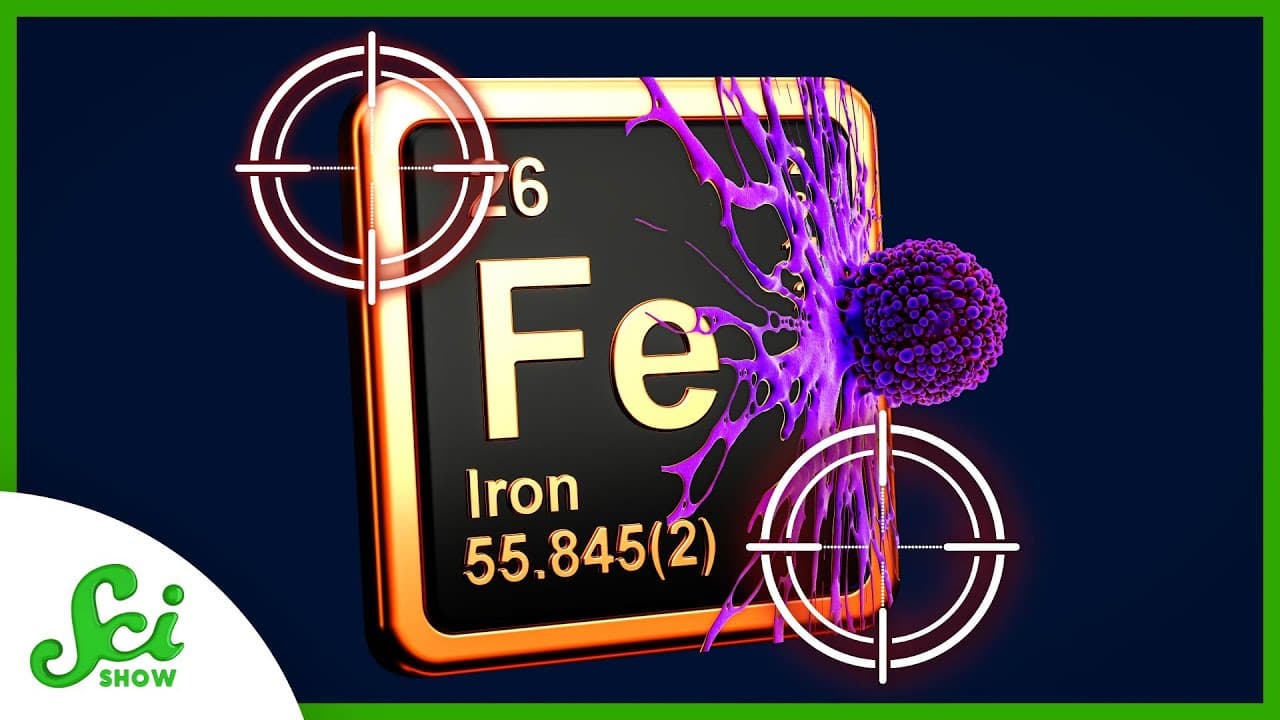
Researchers targeted cancer by linking cobimetinib to a ferrous iron-activatable drug conjugate, creating TRX-COBI, which switches on inside iron-rich tumor cells. In lab tests and mouse models of KRAS-driven pancreatic and lung cancers, it slowed tumor growth while avoiding much of the toxicity to normal tissue; combination therapies performed even better. Read on to understand the iron-based switch, its results, and why human testing remains premature.
Transcript
Thank you to Climeworks for sponsoring today’s video. Climeworks removes carbon dioxide from the atmosphere, helping reverse climate change. Go to gift.climeworks.com/scishow to give the sustainable gift of CO2 removal. [ INTRO ] Medical treatments have come a long way in the last couple of centuries. We now have all sorts of options, from carefull... Read More
Key Insights
- ✋ Pancreatic ductal adenocarcinoma (PDA) tumors have a high affinity for iron, which can be targeted for selective drug delivery.
- 🪛 Mutations in the KRAS protein drive uncontrolled cell growth in PDA tumors.
- 🫁 The drug TRX-COBI, activated by ferrous iron, successfully inhibited tumor growth in mouse models of PDA and lung cancer with reduced side effects.
- 🥺 This targeted approach could potentially lead to more effective cancer treatments with fewer side effects in the future.
- 👨🔬 The study was conducted in the lab and in mice, and further research is needed before human testing can take place.
- 🧑🚒 Climeworks, a sponsor of the video, offers technology to remove carbon dioxide from the atmosphere, contributing to the fight against climate change.
Install to Summarize YouTube Videos and Get Transcripts
Explore YouTube Video Summarizer or Get YouTube Transcript Extractor
Questions & Answers
Q: How can iron be targeted to fight cancer?
Researchers exploited the abundance of ferrous iron in certain tumor cells by creating a drug that remains inactive until it encounters that form of iron. The resulting treatment, TRX-COBI, released cobimetinib inside iron-rich tumor cells rather than healthy skin or eye cells.
Q: Why were researchers studying pancreatic ductal adenocarcinoma?
Pancreatic ductal adenocarcinoma, or PDA, is a particularly difficult pancreatic cancer with treatments that are not very effective. Its tumors begin at a microscopic size, which makes delivering drugs to them difficult and creates a need for targeted treatment.
Q: What role does mutated KRAS play in cancer growth?
In healthy cells, the KRAS protein acts as an on-off switch that sends signals telling cells to divide. Mutated KRAS becomes stuck in the on position, causing uncontrolled cell growth that leads to cancer.
Q: Why did researchers describe PDA tumors as addicted to iron?
Genes controlling iron intake and metabolism were highly active in PDA tumors. Consequently, the tumor cells accumulated large amounts of iron, particularly the reactive form called ferrous iron.
Q: What is TRX-COBI and how does it work?
TRX-COBI combines cobimetinib with an FeADC, or ferrous iron-activatable drug conjugate. The FeADC keeps the cancer drug switched off until it contacts ferrous iron, allowing the drug to activate inside iron-rich tumor cells.
Q: How did TRX-COBI perform in mouse cancer models?
Researchers tested TRX-COBI in mouse models of KRAS-driven cancers, including PDA and a type of lung cancer. It slowed tumor growth and worked as well as cobimetinib while avoiding much of the toxicity to regular cells.
Q: Did TRX-COBI harm organs that naturally store iron?
TRX-COBI did not target organs such as the liver, even though they naturally store iron. The researchers suggested this may be because the stored iron is inactive and cannot activate the drug as ferrous iron does.
Q: Is TRX-COBI ready for use in human cancer patients?
No. The research was conducted in the lab and in mice, so TRX-COBI was not ready for human testing at the time described; further work is needed before it could potentially provide more effective treatment with fewer side effects.
Summary & Key Takeaways
-
Researchers have identified a mutation in the KRAS protein that drives the growth of pancreatic ductal adenocarcinoma (PDA), a difficult-to-treat form of pancreatic cancer.
-
PDA tumors have a high affinity for iron, with genes controlling iron intake and metabolism being highly active in these tumors.
-
By developing a drug that is activated only in the presence of ferrous iron, researchers successfully inhibited tumor growth in mouse models of PDA and lung cancer, leading to potential new treatment options for cancer patients.
Read in Other Languages (beta)
Share This Summary 📚
Summarize YouTube Videos and Get Video Transcripts with 1-Click
Try YouTube Summary with ChatGPT & Claude or YouTube Transcript Generator
Explore More Summaries from SciShow 📚


Summarize YouTube Videos and Get Video Transcripts with 1-Click
Try YouTube Summary with ChatGPT & Claude or YouTube Transcript Generator