How to Stop Procrastinating by Taking Action
TL;DR
Procrastination often protects you from a feared outcome, so identify the fear and take the smallest useful action within five minutes. Motivation can emerge after movement creates momentum, while shorter deadlines, micro wins, focused work periods, and written next steps reduce overthinking. Treat delay as a real cost because repeated inaction compounds regret instead of improving the outcome.
Transcript
What if procrastination wasn't laziness? It's fear in disguise. What are you delaying because you're scared of the outcome? What are you putting off because you're actually scared of achieving, not failing? Think about it. I want you to do a few things. Number one, I want you to identify the real fear behind it today. Whatever that decision you're ... Read More
Key Insights
- Procrastination is a protection mechanism that attempts to shield a person from anticipated pain. The practical starting point is to identify and label the actual fear behind a delayed task, decision, or opportunity instead of describing the delay as laziness or perfectionism.
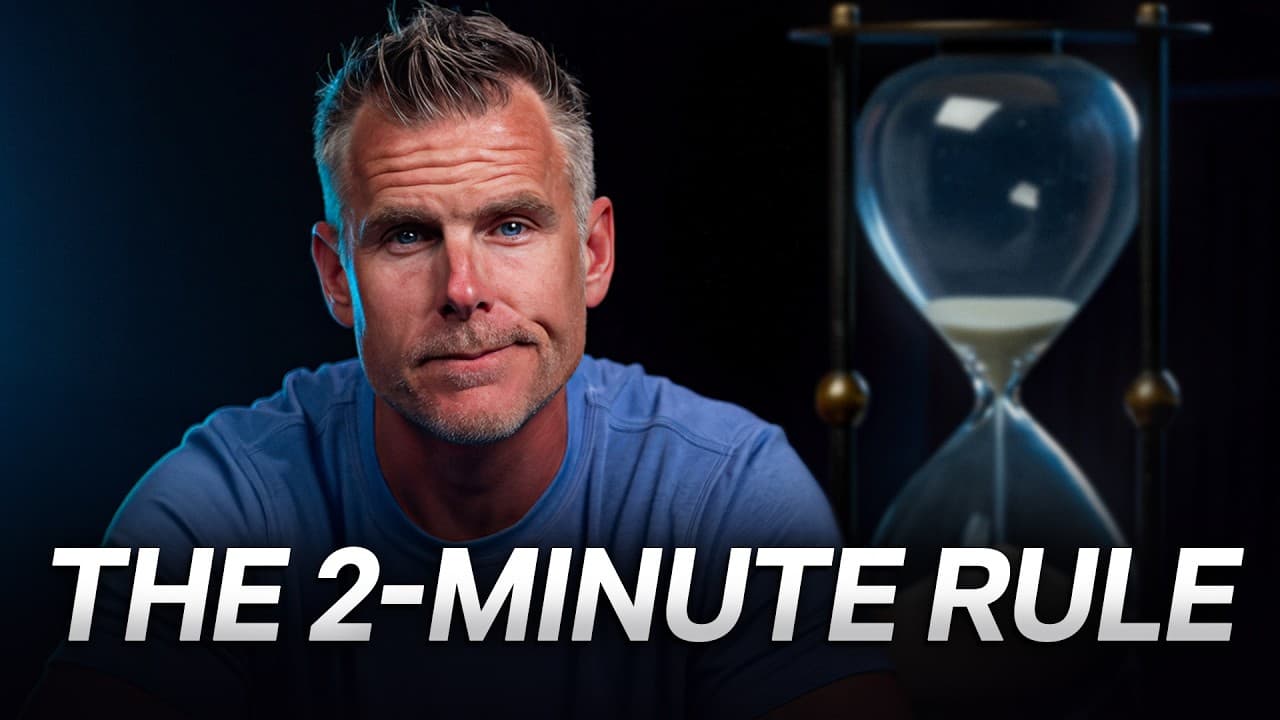
- The two-minute rule is a method for defaulting to action when a message, decision, or task creates anxiety. It asks for the smallest possible step that can move the matter forward, reducing the opportunity to slow down, overthink, or remain trapped in anticipation.
- Action is often less painful than anticipation because imagined failure or success can create more distress than making a decision and experiencing the actual result. A small action interrupts repeated thinking and supplies concrete information, movement, and momentum that continued worry cannot provide.
- Motivation follows action rather than preceding it. Physical movement, writing, or another immediate behavior can change a negative mental state and create momentum, which then generates greater willingness to continue. Waiting to feel motivated places progress behind an unreliable emotional requirement.
- Micro wins are small completed actions that build a sense of forward movement. Celebrating each win as part of a winning streak reinforces momentum, particularly when useful actions are stacked early in the day while attention is aligned with what a person wants to create.
- Shorter deadlines create a forcing function for concentration. Setting a deadline 20% or 30% shorter than the estimated requirement limits excess time, which might otherwise encourage delay, repeated reconsideration, and a growing cycle of procrastination around work that could have been completed sooner.
- Procrastination compounds regret because every delay can intensify negative thinking and increase the cost of a missed opportunity. Treating inaction as a substantial loss, including assigning a high value to each wasted hour, makes delay feel less like a neutral choice.
- Focused execution works by dividing large projects into 48-hour sprints and smaller Pomodoro periods of 25 minutes of work followed by five minutes of reset. Giving each work period a defined outcome helps maintain attention and turns an intimidating project into manageable actions.
Install to Summarize YouTube Videos and Get Transcripts
Explore YouTube Video Summarizer or Get YouTube Transcript Extractor
Questions & Answers
Q: How can I stop procrastinating when fear is the real cause?
Start by identifying and naming the exact fear behind the delayed task or decision. Then choose the smallest possible action that can move it forward within the next five minutes. The action might be creating an account, buying a domain, publishing a video, replying to a message, or making a decision. This interrupts anticipation and replaces overthinking with concrete momentum.
Q: What is the two-minute rule for overcoming procrastination?
The two-minute rule asks you to take the smallest possible action that advances an anxiety-producing task, message, or decision. Instead of trying to finish everything, determine the most important next step that can be handled immediately. The purpose is to default to action, reduce overthinking, and move the situation forward before fear creates more delay.
Q: Why does motivation follow action instead of coming first?
Motivation often appears after a person begins moving rather than before the work starts. An immediate behavior, such as exercising, writing a letter, or completing a small task, can change a negative mental state. That action creates momentum, and momentum makes continued effort easier. Requiring motivation before acting can therefore keep a person waiting and prolong procrastination.
Q: How do micro wins help build momentum?
Micro wins are small completed actions that provide visible evidence of progress. Celebrating each one as part of a winning streak strengthens momentum and encourages another useful action. Stacking these wins early in the day can be especially helpful because the morning may offer stronger alignment with what a person wants to create, accomplish, or advance.
Q: Why should deadlines be shorter than expected?
A deadline set 20% or 30% shorter than the estimated time creates a forcing function for focus. Extra time can invite delay, repeated reconsideration, and procrastination, even when the task could be completed sooner. A tighter deadline encourages concentrated execution and reduces the space available for overthinking, while still requiring the person to define and pursue a clear outcome.
Q: How can large projects be divided to reduce procrastination?
Break a large project into 48-hour sprints, with each sprint assigned a specific part of the work. Within each sprint, use 25-minute focused work periods followed by five-minute resets. Give every work period a defined outcome so attention remains directed toward completion. This structure converts a large, intimidating project into smaller actions with near-term deadlines.
Q: Why does procrastination compound regret?
Procrastination compounds regret because waiting does not necessarily improve an idea or protect its value. Delay can increase negative thinking, allow opportunities to pass, and make the eventual cost feel greater. The speaker illustrates this with a software idea considered for six months before another company launched the same concept and raised millions of dollars.
Q: How can I stop unfinished work from occupying my mind at night?
At the end of the day, write every unfinished item in a note and commit to starting the next day with those tasks. Recording the open loops makes it easier to disconnect from work and be present elsewhere because the remaining responsibilities no longer need to be held mentally. The written list also provides a direct starting point the following morning.
Summary & Key Takeaways
-
Procrastination is presented as fear in disguise rather than simple laziness. The first response is to name the specific fear behind a delayed decision, then use the two-minute rule to identify the smallest action that moves it forward. Acting usually creates less pain than continuing to anticipate failure or success.
-
Motivation is described as a result of action, not a prerequisite for it. Physical movement or a small task can change a negative mental state, create momentum, and produce motivation. Micro wins, especially early in the day, help maintain progress, while deadlines shortened by 20% or 30% create focus.
-
Repeated delay compounds regret because inaction is not a neutral choice. Large projects can be divided into 48-hour sprints, then handled through 25-minute work periods followed by five-minute resets. Writing down unfinished tasks at day's end closes mental loops and creates a clear starting point for tomorrow.
Read in Other Languages (beta)
Share This Summary 📚
Summarize YouTube Videos and Get Video Transcripts with 1-Click
Try YouTube Summary with ChatGPT & Claude or YouTube Transcript Generator
Explore More Summaries from Dan Martell 📚


Summarize YouTube Videos and Get Video Transcripts with 1-Click
Try YouTube Summary with ChatGPT & Claude or YouTube Transcript Generator