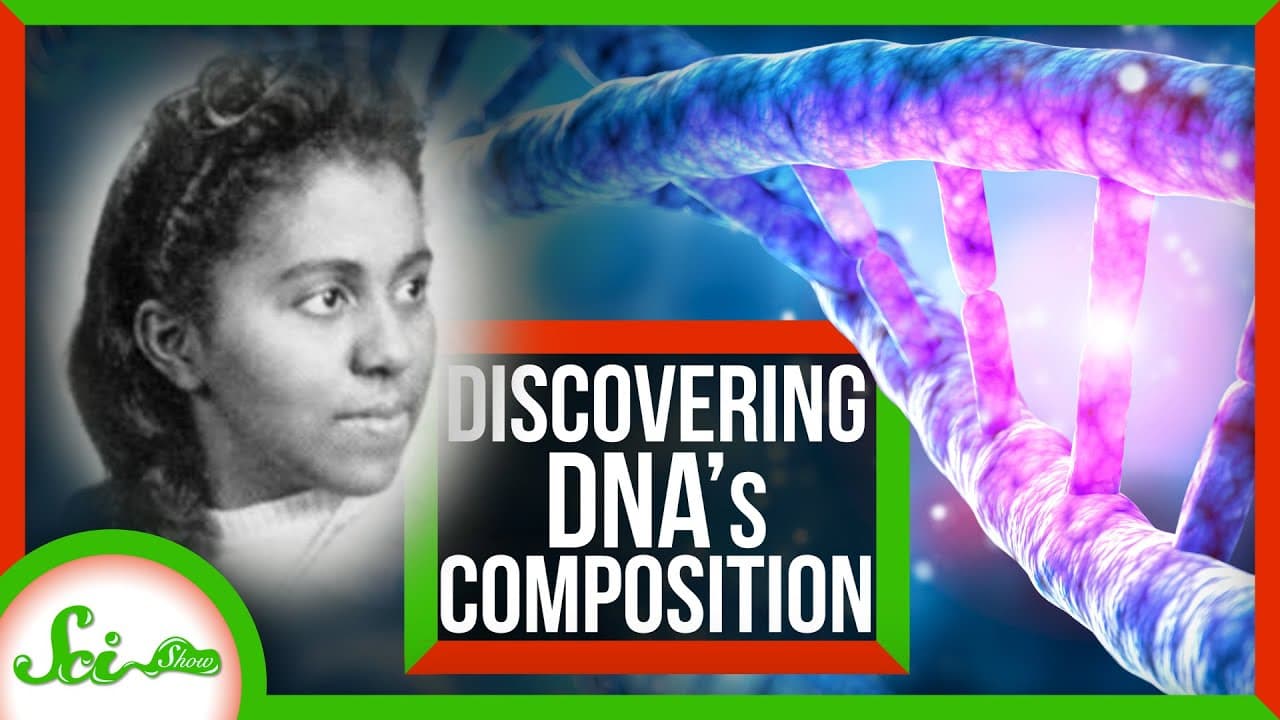
What Did Marie Maynard Daly Discover About DNA, Histones, and Cholesterol?
TL;DR
Marie Maynard Daly discovered that adenine, guanine, thymine, and cytosine are the significant bases in DNA, and she identified different kinds of histones. Her research also connected cholesterol, high blood pressure, and arterial lesions in rats. These findings helped lay foundations for medicine, genetics, and cell biology, so read on to see how her experiments changed scientists’ understanding of DNA and disease.
Transcript
Thanks to Brilliant for supporting this episode of SciShow. Go to Brilliant.org/SciShow to learn how you can take your STEM skills to the next level! [♪ INTRO] DNA is central to biology as we know it. On a big level, it shapes species and how they evolve over generations. And on a small level, it’s the code that keeps your body going day in and day... Read More
Key Insights
- ✋ Marie Maynard Daly's research on atherosclerosis expanded our understanding of the link between cholesterol, high blood pressure, and arterial lesions.
- 💦 Daly's work in isolating and analyzing DNA bases helped establish adenine, guanine, thymine, and cytosine as the primary building blocks of DNA.
- 🫠 Her discovery of different types of histones and their role in gene expression revolutionized the understanding of how the genome is read and translated into proteins.
- 💨 Daly's contributions to genetics and biology played a significant role in shaping the field and paved the way for further advancements.
- 👩🔬 Her research highlighted the importance of diversity and inclusion in scientific fields, as she became the first Black woman in the United States to receive a Ph.D. in chemistry.
- 💦 The understanding of DNA and histones that we have today is a direct result of Daly's pioneering work in the mid-20th century.
- 🏑 Daly's findings continue to impact various fields, including medicine, genetics, and cell biology.
Install to Summarize YouTube Videos and Get Transcripts
Explore YouTube Video Summarizer or Get YouTube Transcript Extractor
Questions & Answers
Q: What did Marie Maynard Daly discover?
Marie Maynard Daly found that adenine, guanine, thymine, and cytosine were the only DNA bases present in significant amounts. She also identified different kinds of histones and helped establish a connection between cholesterol, high blood pressure, and arterial lesions.
Q: What did Marie Daly discover about cholesterol?
Daly and her colleagues fed rats high-cholesterol diets and observed a connection between cholesterol, high blood pressure, and arterial lesions. This work on atherosclerosis was groundbreaking at the time and became a foundation for research into other high-blood-pressure diseases.
Q: How did Marie Maynard Daly study the building blocks of DNA?
Daly extracted DNA from different animals and plants, then separated and analyzed its components using a starch column. The method separated nucleic acids according to their chemical properties as solvents such as alcohol moved them through the column.
Q: Which DNA bases did Marie Maynard Daly identify in significant amounts?
Daly concluded that adenine, guanine, thymine, and cytosine were present in significant amounts. These bases, also called A, G, T, and C, are the main building blocks of DNA.
Q: How did Daly’s DNA research challenge the tetranucleotide hypothesis?
The tetranucleotide hypothesis proposed compounds in which A, T, C, and G were fused together. Daly’s separation and analysis of DNA bases showed that this was not possible.
Q: What did Marie Maynard Daly discover about histones?
Daly found that there were different kinds of histones. Some contained a large amount of lysine, while others contained a mixture of lysine and arginine.
Q: Why were Daly’s histone findings important?
Researchers later found that histones containing lysine and arginine help cells determine which parts of the genome to read. Modifying these amino acids with specific molecules acts like a tag that signals when a gene should be read to produce a needed protein.
Q: What did Marie Maynard Daly study before her DNA and heart disease research?
In graduate school, Daly studied substances involved in digestion, including amylases. These enzymes break down complex starches found in foods such as corn and potatoes.
Summary & Key Takeaways
-
Marie Maynard Daly conducted research on atherosclerosis, making observations about the connection between cholesterol, high blood pressure, and arterial lesions.
-
Daly's research on DNA bases led to the discovery of adenine, guanine, thymine, and cytosine as the main building blocks of DNA, debunking the hypothesis of tetranucleotides.
-
She also made significant contributions to the understanding of histones and their role in gene expression, by isolating different types of histones and uncovering their importance in directing the reading of certain sections of the genome.
Read in Other Languages (beta)
Share This Summary 📚
Summarize YouTube Videos and Get Video Transcripts with 1-Click
Try YouTube Summary with ChatGPT & Claude or YouTube Transcript Generator
Explore More Summaries from SciShow 📚

Summarize YouTube Videos and Get Video Transcripts with 1-Click
Try YouTube Summary with ChatGPT & Claude or YouTube Transcript Generator