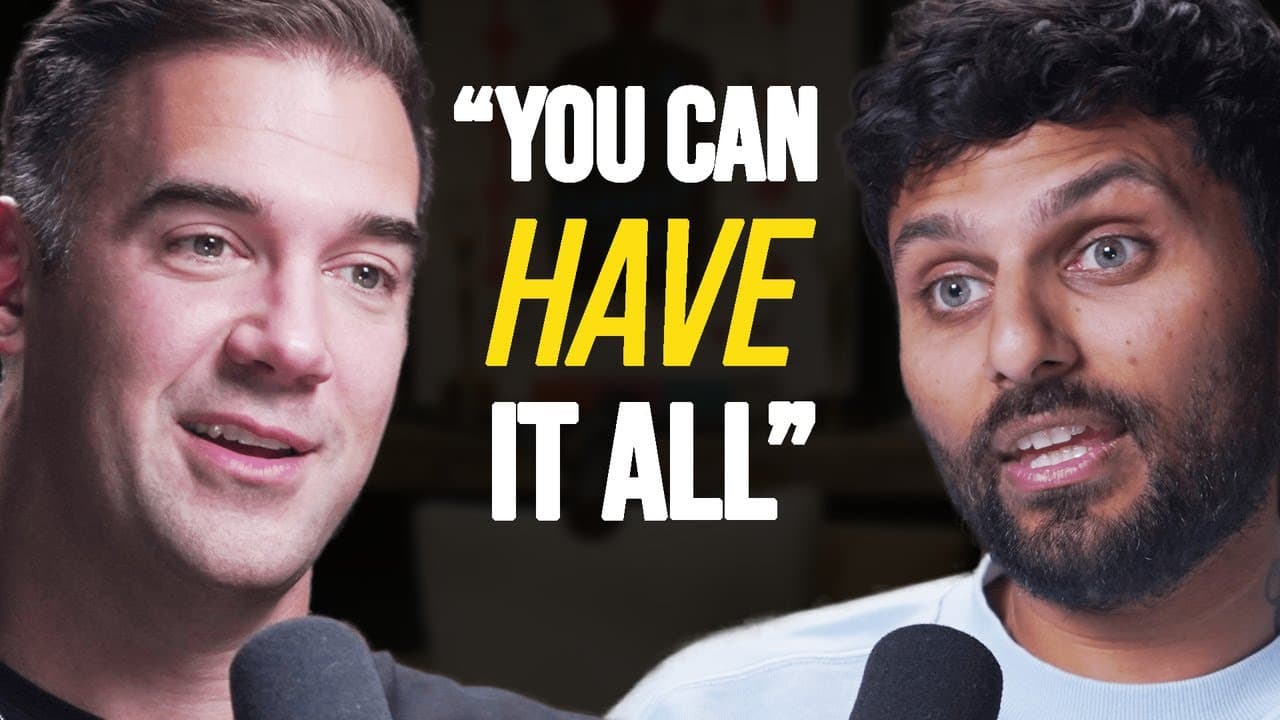
Lewis Howes ON: Unlocking The POWER OF YOUR MIND For Success & Abundance! | Jay Shetty
TL;DR
Healing the emotional wounds behind fear can remove internal blocks that achievement alone cannot resolve. Lewis Howes describes embracing feared outcomes, examining repeated relationship patterns, and replacing self-abandonment with authenticity, while emphasizing that inner harmony, discipline, and clarity of purpose support sustainable success and abundance.
Transcript
there was a moment where I was feeling this pain in my chest kind of on and off and I was telling you about this and other people I was like man I just feel like this pain and I feel like a clenching like I can't like I don't know something was holding me back that was the fear and I think when we can fully embrace it and say this might happen and ... Read More
Key Insights
- Outward achievement is not proof of inner harmony. Howes could accomplish goals, build a business, and function at a high level while still experiencing emotional pain, restricted breathing, and repeated relationship difficulties that affected several areas of his life.
- Fear can produce a powerful physical experience. Howes describes intermittent chest pain and clenching that eased after he fully acknowledged that an unwanted outcome might happen and chose to step into the fear instead of remaining constrained by it.
- Repeated relationship patterns can point to unresolved emotional wounds. Howes recognized that he repeatedly chose and remained in difficult situations, but he could not change the pattern until he became willing to investigate the childhood programming and fear beneath it.
- Self-abandonment is emotionally and physically draining. Changing one’s identity to please a loved person requires continual performance, role-playing, and suppression of authentic needs, leaving the person exhausted while still uncertain that acceptance or love will follow.
- Childhood experiences can shape adult intimacy. Howes linked feeling trapped in close relationships to early emotional programming that taught him to abandon himself for love, making single life feel free while intimacy felt restrictive and energetically costly.
- Authenticity requires courage and self-trust. Howes identified his central challenge as remaining fully himself in intimate relationships instead of changing to please another person, even though he was already capable of pursuing goals and creating professional success.
- Healing can release creative capacity. Shetty connects the removal of internal blocks with greater creativity, suggesting that energy previously consumed by fear, performance, and unresolved pain can become available for meaningful work, service, and personal mission.
- Financial beliefs can limit perceived potential. Shetty describes growing up with the ideas that his family had only enough and that wealthy people may have gained money through wrongdoing, creating doubts about whether good work could deserve substantial financial success.
Install to Summarize YouTube Videos and Get Transcripts
Explore YouTube Video Summarizer or Get YouTube Transcript Extractor
Questions & Answers
Q: How can embracing fear reduce an internal emotional block?
Embracing fear begins with acknowledging that an unwanted outcome might genuinely happen and that you may dislike it. Howes describes doing this rather than continuing to resist the possibility. When he chose to step into the fear, the clenching sensation in his chest seemed to unlock and disperse through his body, suggesting that acceptance changed his physical and emotional response.
Q: Why can successful people still feel emotionally blocked?
Professional effectiveness does not automatically resolve emotional wounds. Howes could achieve goals, build a business, and function at a high level, yet he still lacked inner harmony and experienced pain, restricted breathing, and recurring problems in intimacy. Those unresolved struggles drew energy from his health, work, friendships, family relationships, and mission despite the visible signs that his life was going well.
Q: How do repeated relationship patterns reveal unresolved wounds?
Repeated patterns can show that present choices are being influenced by unexamined beliefs or earlier emotional experiences. Howes noticed that he kept choosing, staying in, and recreating difficult relationship situations. He concluded that a wound was guiding the pattern, even though he had not fully identified it. Recognizing repetition became a reason to pursue intensive coaching, therapy, and deeper self-examination.
Q: Why does people-pleasing make intimate relationships exhausting?
People-pleasing requires a person to perform, suppress authentic preferences, give in, and continually adjust in hopes of receiving acceptance. Howes describes this process as self-abandonment. Because the person is maintaining a role rather than expressing a trusted, authentic self, the pattern becomes mentally, emotionally, and physically draining while leaving love dependent on continued performance.
Q: How can childhood programming affect adult intimacy?
Childhood emotional wounds can create beliefs about what a person must do to be loved. Howes believed that he needed to abandon or change himself so another person would accept him. That programming made intimate relationships feel trapping, while being single felt freeing. Healing involved examining the earlier wounds, learning to trust himself, and practicing authenticity instead of automatically pleasing a partner.
Q: What does authenticity require in a close relationship?
Authenticity requires trusting that you can express your real identity, needs, and choices without becoming a different person to secure another person’s approval. Howes identifies courage and self-trust as central challenges in intimacy. His goal was to remain fully authentic rather than pleasing someone he loved, because continual self-alteration created exhaustion, pain, and a loss of connection with himself.
Q: How can emotional healing support creativity and purpose?
Emotional healing can reduce the energy spent on fear, triggers, reactive behavior, repeated patterns, and constant performance. Shetty observes that removing these internal blocks can make creativity more available. Howes similarly says relationship difficulties were draining energy from his work, health, friendships, family, and mission, so greater inner peace created better conditions for purposeful and abundant creation.
Q: How can beliefs about money restrict financial success?
Beliefs learned in a family can define what level of financial success feels possible, moral, or deserved. Shetty recalls hearing that his family had just enough and absorbing the idea that wealthy people may have done something bad or manipulative to obtain money. Those assumptions created a block around earning, because goodness and substantial wealth seemed incompatible within that early financial framework.
Summary
In this video, Lewis Howes discusses his journey of overcoming fears and embracing the healing process. He talks about the importance of finding a meaningful mission, facing fears and turning them into superpowers, and the difference between motivation and discipline. Lewis also emphasizes the significance of taking time to reflect on our goals and passions, and recognizing that our journey may unfold in different seasons of life.
Questions & Answers
Q: What was the turning point for Lewis in overcoming his fear of being trapped in intimacy?
Lewis had been struggling with a pattern of choosing relationships that didn't align with his values and staying in them despite feeling stuck and unfulfilled. He realized that he feared the possibility of hurting someone and not being loved or accepted. Through an intensive therapy and coaching experience, he reached a tipping point where he fully embraced the fear and accepted that he had the power to walk away from an unhealthy relationship. This breakthrough led to the unlocking of the pain in his chest and a sense of inner peace.
Q: How did Lewis shift his mindset about money and abundance?
Lewis grew up with the belief that wealth was associated with negative actions, and that successful people must have done something shady to acquire money. He saw his family's mindset as one of scarcity, where there was always just enough. However, as he experienced success in his career, he realized that he had the power to change his relationship with money. His breakthrough came when he was able to give over six figures to a charity he believed in. This act of generosity made him realize that he could trust himself to use money for good and make a positive impact.
Q: What is the difference between motivation and discipline?
According to Lewis, motivation is for those who are solely focused on achieving personal success. It is driven by external factors and requires constant motivation to keep going. On the other hand, discipline comes from having a clear identity and meaningful mission in life. When someone is aligned with their purpose and values, discipline becomes the driving force that keeps them consistent in their actions, even when they face obstacles or challenges. Motivation alone is not enough to create lasting success; discipline is what sustains it.
Q: How can one find their meaningful mission in life?
Lewis suggests exploring three important elements: passion, power, and problem-solving. Passion involves identifying what excites and interests you the most, even if it doesn't result in immediate success. Power refers to recognizing your hidden strengths and talents that may not be obvious to you. Overcoming your fears and transforming them into superpowers can also be a part of this process. Lastly, identifying the problems or causes you feel compelled to solve can help you find a sense of purpose and meaning in life. It's important to remember that this process may evolve over time, and it's okay to explore different paths and seasons of life.
Q: How can one overcome the fear of not feeling ready to start a new venture?
Lewis encourages individuals to face their fears and move forward despite not feeling ready. He suggests changing the concept of "fake it till you make it" to "face it until you embrace it." By taking consistent action and confronting fears, we can embody and overcome them instead of pretending they don't exist. It's also important to reflect on our values and consider what we would regret if we didn't pursue our passions. Recognizing the impermanence of life and the potential for regret can provide the motivation and determination to push through feelings of unpreparedness.
Summary & Key Takeaways
-
Lewis Howes describes reaching professional goals while lacking inner harmony, especially in intimate relationships. Repeated patterns, physical tension, fear, and the feeling of being trapped prompted intensive coaching and therapy. His experience suggests that outward success can coexist with unresolved emotional wounds that quietly affect work, health, family, friendships, and personal authenticity.
-
Howes connects childhood programming with adult self-abandonment and people-pleasing. He believed he needed to change himself to receive love, which made intimacy exhausting and inauthentic. Healing required examining those beliefs, trusting himself, accepting his authentic identity, and developing the courage to stop performing a role for someone else’s approval or affection.
-
The conversation explores how beliefs can block success, purpose, money, discipline, and relationships. Jay Shetty recalls growing up with financial limitation and negative assumptions about wealth, while Howes discusses emotional barriers to intimacy. Both examples show that identifying internal programming can create space for clearer choices, authentic action, creativity, and focused growth.
Read in Other Languages (beta)
Share This Summary 📚
Summarize YouTube Videos and Get Video Transcripts with 1-Click
Try YouTube Summary with ChatGPT & Claude or YouTube Transcript Generator
Explore More Summaries from Building Confidence & Overcoming Fears 📚






Summarize YouTube Videos and Get Video Transcripts with 1-Click
Try YouTube Summary with ChatGPT & Claude or YouTube Transcript Generator