What Are the Latest Developments in US-Russia Peace Talks?
TL;DR
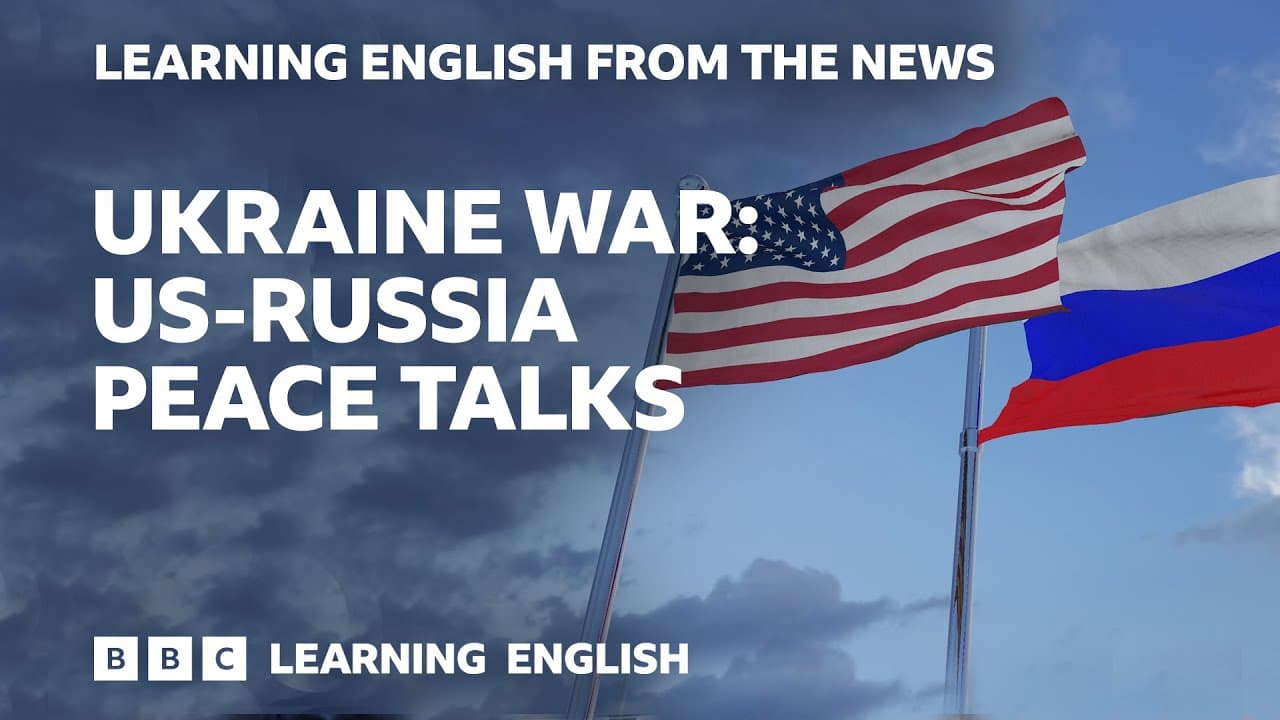
The US and Russia have begun peace talks aimed at ending the war in Ukraine, but neither Ukraine nor European leaders are included in the negotiations. Ukrainian President Zelensky insists that any peace deal must involve his country's participation, signaling the complexity and challenges in reaching a resolution.
Transcript
From BBC Learning English, this is Learning English from the News, our podcast about the news headlines. In this programme, US and Russia are in talks aimed at ending the war in Ukraine. Hello, I'm Beth. And I'm Pippa. In this programme, we look at one big news story and the vocabulary in the headlines that will help you understand it. You can find... Read More
Key Insights
- The US and Russia have initiated peace talks to potentially end the conflict in Ukraine, marking a significant diplomatic development.
- Ukraine and European leaders are not currently involved in these talks, raising concerns about the inclusivity and effectiveness of the negotiations.
- Ukraine's President Zelensky has stated that he will not accept any peace deal that does not involve Ukraine directly in the negotiations.
- The phrase 'gear up' is explained as preparing for something challenging, as used in the context of the US preparing for talks with Russia.
- The term 'end game' is discussed, referring to the final stages of a process, particularly in negotiations or disputes like the Ukraine conflict.
- European leaders are divided over the UK's proposal to send troops to Ukraine as part of a peacekeeping effort if a deal is reached.
- The expression 'split over' is used to describe the division of opinions among European leaders regarding military involvement in Ukraine.
- The podcast encourages listeners to use the discussed vocabulary in their own comments to practice English language skills.
Install to Summarize YouTube Videos and Get Transcripts
Explore YouTube Video Summarizer or Get YouTube Transcript Extractor
Questions & Answers
Q: What is the main focus of the US-Russia talks?
The main focus of the US-Russia talks is to negotiate a potential end to the ongoing war in Ukraine. These talks represent a significant diplomatic effort to address the conflict, although they currently do not include Ukraine or European leaders, which raises concerns about the inclusivity and potential effectiveness of the negotiations.
Q: Why is Ukraine's involvement in the talks significant?
Ukraine's involvement in the talks is significant because any peace deal directly affects its sovereignty and territorial integrity. President Zelensky has stated that Ukraine will not accept any agreement made without its participation, emphasizing the importance of including all affected parties in negotiations to ensure a fair and lasting resolution.
Q: What does the phrase 'gear up' mean in this context?
In this context, 'gear up' means to prepare or get ready for a challenging or significant event. The phrase is used to describe the US's preparations for the high-profile talks with Russia, highlighting the anticipation and effort required to engage in such complex diplomatic negotiations.
Q: How is the term 'end game' relevant to the Ukraine conflict?
The term 'end game' is relevant to the Ukraine conflict as it refers to the final stages of a process, particularly negotiations or disputes. In the context of the peace talks, it signifies the potential conclusion of the conflict and the strategic considerations involved in reaching a comprehensive peace agreement.
Q: What are the differing opinions among European leaders about?
European leaders have differing opinions about the UK's proposal to send troops to Ukraine as part of a peacekeeping effort if a deal is reached. This division, described as being 'split over,' reflects the varying perspectives on military involvement and the potential consequences of such actions in the region.
Q: Why might the exclusion of Ukraine from the talks be problematic?
The exclusion of Ukraine from the talks might be problematic because it undermines the legitimacy and potential success of the negotiations. Without Ukraine's involvement, any agreement reached may not address the country's concerns or be accepted by its government, leading to further tensions and prolonging the conflict.
Q: What role does vocabulary explanation play in the podcast?
Vocabulary explanation plays a crucial role in the podcast by helping listeners understand complex news topics through language learning. By breaking down terms like 'gear up' and 'end game,' the podcast enhances comprehension and encourages listeners to apply new vocabulary in their own discussions, thereby improving their English skills.
Q: How does the podcast encourage interactive learning?
The podcast encourages interactive learning by inviting listeners to use the vocabulary and phrases discussed in their own comments. This approach fosters a collaborative learning environment, allowing individuals to practice English in a real-world context and learn from each other's usage and insights.
Summary & Key Takeaways
-
The US and Russia have begun peace talks aimed at ending the war in Ukraine, but Ukraine and European leaders are not included. This raises questions about the effectiveness of such negotiations. The podcast explains relevant vocabulary like 'gear up' and 'end game' to help listeners understand the news.
-
Ukraine's President Zelensky insists on Ukraine's involvement in any peace deal, highlighting the complexity of the negotiations. The podcast discusses how the term 'split over' is used to describe differing opinions among European leaders on military involvement in Ukraine.
-
The podcast aims to improve English comprehension by explaining vocabulary within the context of current events. Listeners are encouraged to engage with the content by using new vocabulary in their own comments, fostering a collaborative learning environment.
Read in Other Languages (beta)
Share This Summary 📚
Summarize YouTube Videos and Get Video Transcripts with 1-Click
Try YouTube Summary with ChatGPT & Claude or YouTube Transcript Generator
Explore More Summaries from BBC Learning English 📚
Summarize YouTube Videos and Get Video Transcripts with 1-Click
Try YouTube Summary with ChatGPT & Claude or YouTube Transcript Generator