Why Did China Fly a WZ-7 Over the Pratas?
TL;DR
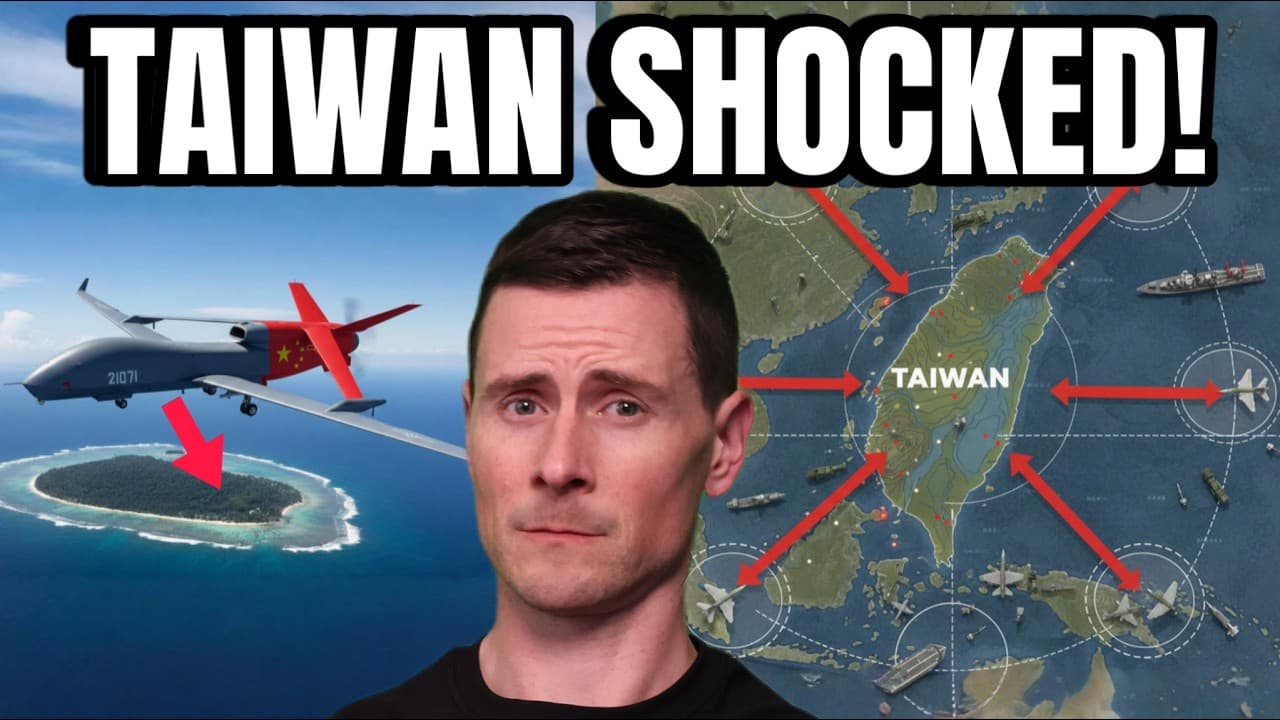
China’s WZ-7 flight over the Pratas Islands was presented as a gray-zone probe designed to collect intelligence, test Taiwan’s defenses, and apply pressure without opening fire. Taiwan tracked the drone, broadcast warnings, and reportedly held fire during its more than eight-minute presence, while wider PLA activity and U.S. Navy movements contributed to a tense cycle of signaling.
Transcript
Well, China reminded us that they're still here. Just in the last few days, picture this. Dawn over the South China Sea. And out of nowhere, a Chinese drone slips into Taiwan's backyard, testing the waters. For the first time, overflying islands owned by Taiwan. On January 17th, 2026, the People's Liberation Army sent its high-flying WZ7 Soaring Dr... Read More
Key Insights
- The January 17, 2026, WZ-7 flight was described as the first Chinese drone overflight of Taiwan-controlled Pratas Islands airspace. The drone reportedly remained there for more than eight minutes while Taiwan tracked it, issued radio warnings, and chose not to fire.
- The WZ-7 is described as China’s counterpart to the RQ-4 Global Hawk, designed for high-altitude, long-endurance reconnaissance. The transcript says its joined-wing configuration, lightweight composites, and single turbofan support missions exceeding 24 hours and ranges reaching 4,350 miles.
- The drone’s altitude is central to its effectiveness because the transcript places its operating ceiling around 59,000 to more than 60,000 feet. That height provides line of sight across hundreds of miles and can complicate interception by Taiwan’s fighters, although the aircraft is not described as completely unreachable.
- The wider January 17 operation reportedly included 26 PLA aircraft detected by 6:00 a.m. Seven crossed the median line into Taiwan’s air defense identification zone, with the force described as including J-10 and J-16 fighters, H-6 bombers, and the WZ-7 reconnaissance drone.
- Gray-zone pressure works by creating persistent military strain without immediately firing shots. The transcript characterizes repeated aircraft patrols, reconnaissance flights, and naval movements as methods for testing Taiwan’s defenses, gathering information, consuming readiness resources, and making genuine attack preparations harder to distinguish from training.
- Taiwan’s decision to hold fire reflected the risks and costs of escalation described in the transcript. An F-16V response could pursue the drone, but fighters use substantial fuel, and attacking a high-flying unmanned aircraft could transform a reconnaissance incident into a broader confrontation.
- U.S. Navy transits were presented as part of the surrounding cycle of signaling. The USS John Finn destroyer and the Mary Sears survey ship reportedly passed through the Taiwan Strait before the PLA activity, which the transcript interprets as a possible trigger for China’s subsequent pressure operation.
- The WZ-7’s mission was assessed in the transcript as intelligence collection rather than a confirmed attack. The drone may have mapped defenses or gathered electronic information, but these purposes were presented as interpretations, while the confirmed actions described were its overflight, Taiwan’s tracking, and broadcast warnings.
Install to Summarize YouTube Videos and Get Transcripts
Explore YouTube Video Summarizer or Get YouTube Transcript Extractor
Questions & Answers
Q: Why did China fly a WZ-7 over the Pratas Islands?
The flight was presented as a gray-zone operation intended to test Taiwan’s defenses, collect intelligence, and demonstrate that China could enter the area without immediately provoking armed conflict. The transcript suggests the drone may have mapped defensive positions or observed Taiwan’s response procedures. That purpose remains an assessment, while the reported facts are that the drone entered the airspace, stayed for more than eight minutes, and prompted warnings.
Q: What happened during the January 17, 2026, drone incursion?
A PLA WZ-7 Soaring Dragon reportedly flew into airspace over the Taiwan-controlled Pratas Islands and remained there for more than eight minutes. Taiwan’s radars tracked the aircraft, and Taiwanese forces broadcast radio warnings. The transcript says Taiwan prepared for a possible interception but held fire. The incident occurred alongside a larger operation involving 26 PLA aircraft detected around Taiwan by 6:00 a.m.
Q: Why did Taiwan decide not to shoot down the WZ-7?
The transcript links Taiwan’s restraint to escalation risks and the practical challenge of intercepting a high-altitude drone. The WZ-7 can reportedly operate around 59,000 to more than 60,000 feet, while an F-16V response would consume considerable fuel and might require a missile engagement from below. Shooting it down could also turn a controlled reconnaissance incident into a larger military confrontation, so Taiwan tracked it and issued warnings instead.
Q: What capabilities does the WZ-7 Soaring Dragon have?
The WZ-7 is described as a high-altitude, long-endurance unmanned reconnaissance aircraft with a distinctive joined-wing configuration. According to the transcript, it can travel about 4,350 miles, cruise near 466 mph, operate above 60,000 feet, and remain on missions for more than 24 hours. Its altitude and endurance allow it to observe broad areas while reducing the number of threats able to reach it.
Q: How was the WZ-7 flight connected to wider PLA activity?
The drone appeared during a broader PLA operation in which Taiwan reportedly detected 26 aircraft by 6:00 a.m. Seven aircraft crossed the median line into Taiwan’s air defense identification zone. The transcript describes J-10 and J-16 fighters and H-6 bombers among the types involved. One day later, the force reportedly declined to nine aircraft, while nine Chinese naval ships remained active beneath the patrol area.
Q: What is gray-zone warfare around Taiwan?
Gray-zone warfare is described in the transcript as sustained military pressure that stops short of open combat. China can send fighters, bombers, drones, electronic intelligence aircraft, and ships near Taiwan to collect information and force repeated defensive decisions without firing shots. Repetition may wear down personnel and equipment while making it more difficult to determine whether a future operation is another exercise or the beginning of an actual attack.
Q: How did U.S. Navy movements relate to the incident?
The transcript reports that the USS John Finn destroyer and the Mary Sears survey ship transited the Taiwan Strait before the Chinese activity. It interprets the subsequent drone flight and PLA aircraft operations as possible tit-for-tat signaling toward the United States. The connection is presented as an interpretation rather than a confirmed Chinese explanation, but the movements formed part of the same period of heightened regional military activity.
Q: Could repeated Chinese patrols conceal a future attack?
The transcript argues that repeated patrols could make a real attack harder to identify because Taiwan becomes accustomed to frequent aircraft and naval activity. It cites roughly 300 air defense identification zone violations per month since May 2024 and compares the pattern to repeated false alarms. Beijing could potentially change an exercise into a seizure operation, although the transcript presents that outcome as a risk scenario, not a confirmed plan.
Summary & Key Takeaways
-
A Chinese WZ-7 Soaring Dragon reportedly entered airspace over Taiwan-controlled Pratas Islands on January 17, 2026, remaining there for more than eight minutes. Taiwan tracked the aircraft and broadcast warnings but did not fire. The account characterizes the unprecedented overflight as a deliberate gray-zone test of Taiwan’s surveillance and response procedures.
-
Taiwan’s Ministry of National Defense reportedly detected 26 PLA aircraft by 6:00 a.m., including seven that crossed the median line into the air defense identification zone. Fighters, bombers, and the high-altitude drone formed a broader pressure operation. Activity declined to nine aircraft the following day, accompanied by nine Chinese naval ships.
-
The WZ-7 is described as a high-altitude, long-endurance reconnaissance drone built for extended surveillance rather than confirmed strike missions. Its joined-wing design, jet engine, high operating altitude, and long range allow it to observe large areas. The episode illustrates how repeated probes may collect intelligence while straining Taiwan’s limited interception resources.
Read in Other Languages (beta)
Share This Summary 📚
Summarize YouTube Videos and Get Video Transcripts with 1-Click
Try YouTube Summary with ChatGPT & Claude or YouTube Transcript Generator
Explore More Summaries from Max Afterburner 📚

Summarize YouTube Videos and Get Video Transcripts with 1-Click
Try YouTube Summary with ChatGPT & Claude or YouTube Transcript Generator