What Is Lazy Leadership and How Can It Transform Your Business?
TL;DR
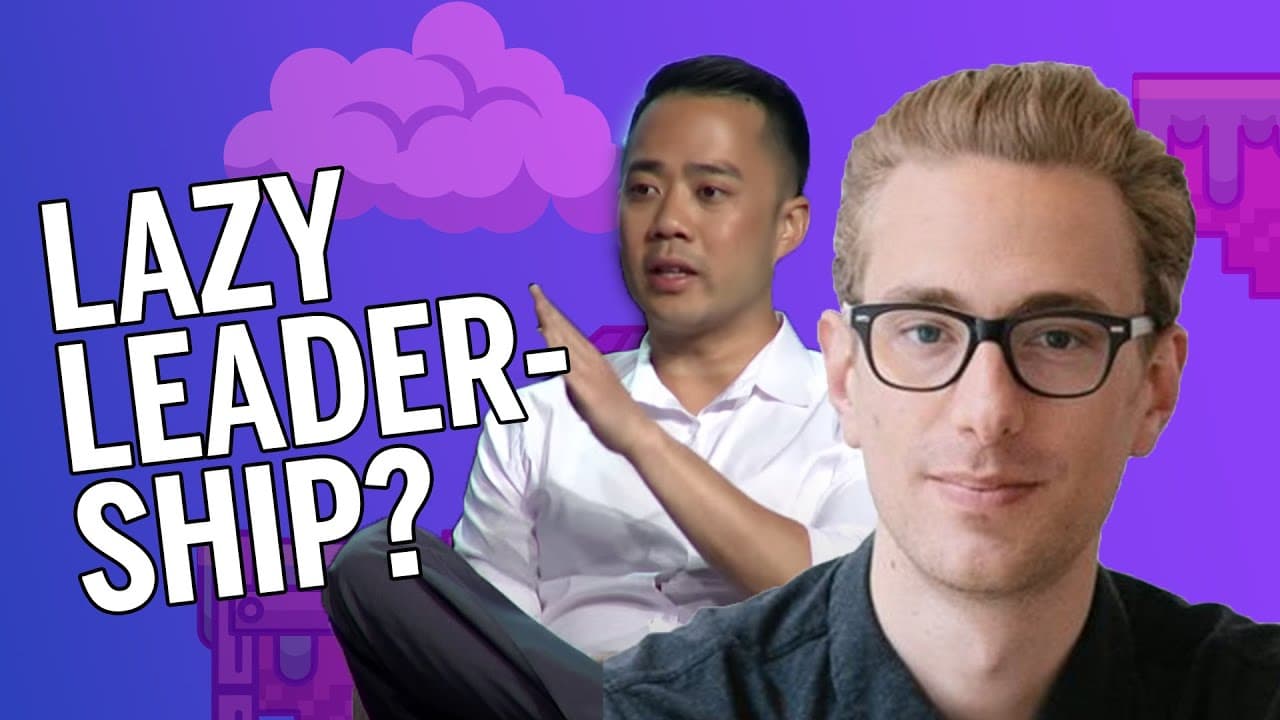
Lazy leadership involves aggressive delegation, allowing CEOs to focus on strategic goals while others handle day-to-day tasks. By hiring individuals who excel in areas the CEO dislikes, businesses can thrive without the founder's constant involvement. This approach enables freedom and satisfaction in entrepreneurship, making it essential for scaling companies effectively.
Transcript
right so if you're a ceo and you're on the phone doing sales all day you're failing as a ceo the goal i think of a ceo is to basically delegate away almost everything except for a few core things that's what are the kpis to use to track the business so monitoring the business understanding the health of the business setting the culture right so say... Read More
Key Insights
- Andrew Wilkinson highlights the importance of delegation, suggesting CEOs should focus on strategy, culture, and business health rather than day-to-day operations.
- He started his journey by positioning himself as an agency, securing work with major tech companies due to his strategic outreach and design focus.
- Wilkinson's approach shifted from starting businesses to acquiring profitable ones, emphasizing simplicity and ethical management in potential acquisitions.
- He stresses the importance of a 'launchpad business' that provides financial freedom and stability, allowing entrepreneurs to explore further ventures without significant risk.
- Wilkinson's investment strategy involves acquiring businesses that are simple, ethical, and fairly priced, avoiding complex operations or those requiring large teams.
- He advocates for a decentralized business model, where employees are dedicated to a single entity, avoiding the complications of multitasking across various projects.
- Wilkinson is interested in the potential of subscription podcasts as a revenue model, seeing them as an untapped opportunity.
- His concept of 'lazy leadership' focuses on aggressive delegation, aligning tasks with individuals' strengths and preferences to enhance productivity and job satisfaction.
Install to Summarize YouTube Videos and Get Transcripts
Explore YouTube Video Summarizer or Get YouTube Transcript Extractor
Questions & Answers
Q: What is the main role of a CEO according to Andrew Wilkinson?
Andrew Wilkinson believes that the main role of a CEO is to delegate tasks aggressively, focusing only on core responsibilities such as setting strategy, maintaining company culture, and monitoring business health. This approach allows CEOs to avoid getting bogged down in daily operations and instead focus on long-term goals and vision.
Q: How did Andrew Wilkinson start his entrepreneurial journey?
Andrew Wilkinson began his entrepreneurial journey by presenting himself as an agency rather than an individual freelancer. This strategy allowed him to charge higher rates and secure work with prominent tech companies. He leveraged his design skills and strategic outreach to carve out a niche in the Silicon Valley startup ecosystem, eventually working with major clients like Slack and Shopify.
Q: What is a 'launchpad business' according to Andrew Wilkinson?
A 'launchpad business,' as described by Andrew Wilkinson, is a venture that provides an entrepreneur with financial stability and freedom. It should generate sufficient income to cover personal expenses, allowing the entrepreneur to explore new opportunities without the fear of significant financial loss. This foundational business acts as a safety net, enabling experimentation and growth.
Q: What criteria does Wilkinson use for acquiring businesses?
Wilkinson looks for businesses that are simple, ethical, and available at a fair price. He avoids complex operations or those requiring large teams. The ideal business is one with a straightforward model, not reliant on middlemen, and managed by ethical founders. This approach ensures sustainable growth and aligns with his investment philosophy.
Q: Why does Wilkinson advocate for a decentralized business model?
Wilkinson supports a decentralized business model to avoid the complications of multitasking across various projects. He believes each employee should be dedicated to a single entity, understanding its mission and goals. This clarity prevents confusion and inefficiency, ensuring that everyone is aligned and focused on the success of the specific business they are part of.
Q: What potential does Wilkinson see in subscription podcasts?
Wilkinson sees subscription podcasts as a largely untapped revenue opportunity. He believes they can be an effective income-generating model due to their ability to build a dedicated audience willing to pay for exclusive content. This model aligns with the growing trend of consumers seeking personalized and ad-free media experiences.
Q: What is 'lazy leadership' and how does it benefit businesses?
'Lazy leadership,' as defined by Wilkinson, involves embracing delegation and aligning tasks with individuals' strengths and preferences. By doing so, leaders can enhance productivity and job satisfaction, achieving business goals without overburdening themselves. This approach allows leaders to focus on strategic decisions while empowering employees to excel in their roles.
Q: How does Wilkinson's investment strategy differ from traditional venture capital?
Wilkinson's investment strategy differs from traditional venture capital by focusing on acquiring already profitable, simple businesses rather than high-risk startups. He prioritizes ethical management and fair pricing, avoiding complex operations. This approach reduces risk and ensures sustainable growth, contrasting with the high-risk, high-reward model typical of venture capital investments.
Summary & Key Takeaways
-
Andrew Wilkinson discusses his journey from freelance designer to managing partner at Tiny Capital, emphasizing the role of delegation in scaling businesses. He shares how he transitioned from starting companies to acquiring them, focusing on simple, ethical, and profitable ventures.
-
Wilkinson's investment philosophy centers on acquiring straightforward businesses with fair valuations and ethical founders. He believes in the power of a launchpad business to provide financial freedom and reduce the risk of entrepreneurial failure.
-
The conversation covers the potential of subscription podcasts as a revenue model and Wilkinson's 'lazy leadership' style, which prioritizes delegation and aligning tasks with individuals' strengths to improve business outcomes and personal satisfaction.
Read in Other Languages (beta)
Share This Summary 📚
Summarize YouTube Videos and Get Video Transcripts with 1-Click
Try YouTube Summary with ChatGPT & Claude or YouTube Transcript Generator