How the Dambusters Raid Changed WW2 Bombing
TL;DR
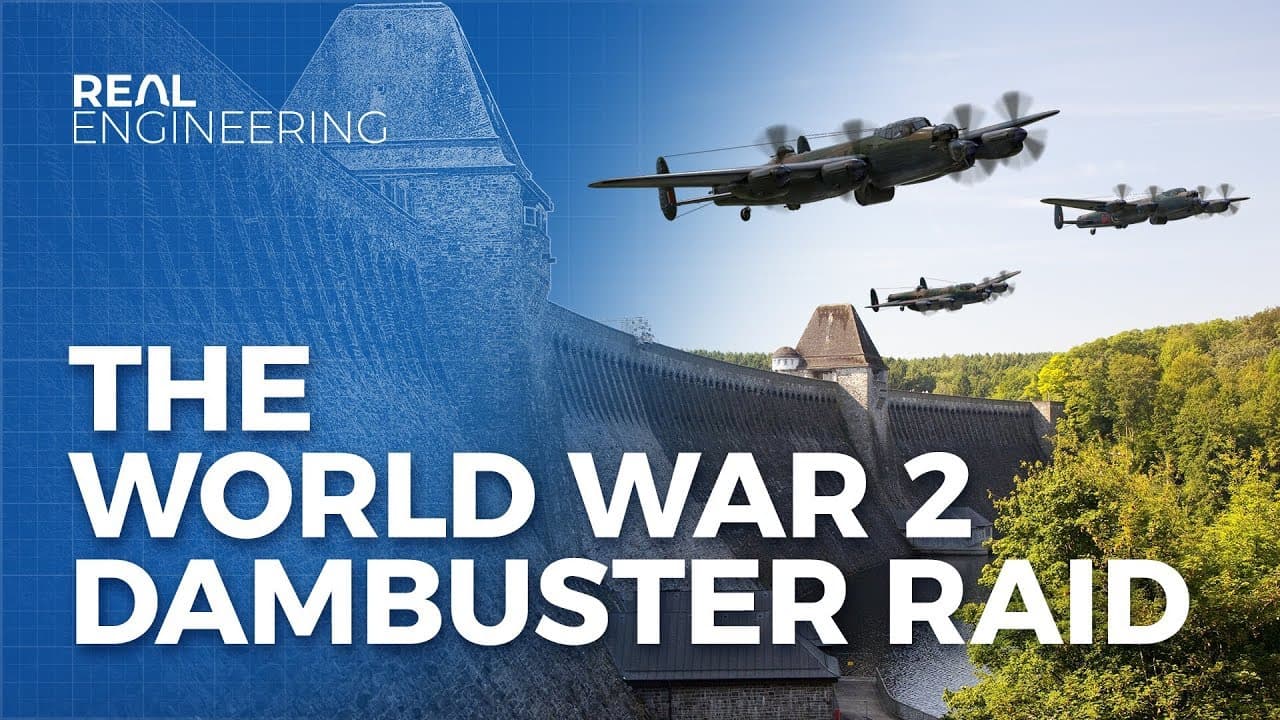
The Dambusters Raid was a pivotal World War II operation that demonstrated unprecedented precision bombing techniques. Barnes Wallis developed a unique bouncing bomb to breach German dams, causing significant damage to the Ruhr Valley. Despite quick German repairs, the raid diverted crucial resources away from the front lines, contributing to the Allied war effort.
Transcript
This episode of Real Engineering is brought to you by Brilliant, a problem solving website that teaches you to think like an engineer. If we were to define WW2 in just one technology, the likely winner would be aerial bombing. World War 1 revolved around stagnant and debilitating trench warfare, that both sides sought to avoid in future. Tanks and ... Read More
Key Insights
- Aerial bombing was a defining technology of World War II, evolving rapidly to increase precision and damage.
- The Stuka dive bomber was a key German aircraft, known for its terrifying siren and precision bombing capabilities.
- Barnes Wallis aimed to create a bomb capable of destroying seemingly invulnerable targets like dams.
- Dams were strategic targets due to their role in supplying hydroelectricity and water for industry.
- Wallis developed a bouncing bomb that could skip over torpedo nets and explode near dam walls.
- The bomb used backspin to enhance stability and trajectory, utilizing the Magnus effect for better skipping.
- The Dambusters Raid required low-altitude night flying and precise navigation by experienced RAF pilots.
- The raid caused significant damage to German infrastructure, diverting resources and impacting the war effort.
Install to Summarize YouTube Videos and Get Transcripts
Explore YouTube Video Summarizer or Get YouTube Transcript Extractor
Questions & Answers
Q: How did the Dambusters Raid impact World War II?
The Dambusters Raid significantly impacted World War II by demonstrating the potential of precision bombing to achieve strategic objectives. By breaching German dams, the raid caused extensive flooding, damaging infrastructure and diverting critical resources away from the front lines. This diversion of resources played a role in weakening German defenses, aiding the Allied war effort.
Q: What was the purpose of the bouncing bomb?
The bouncing bomb was designed to overcome torpedo nets protecting dams by skipping over the water's surface and exploding near the dam walls. This innovative design allowed the bomb to bypass traditional defenses and cause significant damage to strategic targets, such as dams, by utilizing the Magnus effect for stability and improved trajectory.
Q: Who developed the bouncing bomb used in the Dambusters Raid?
Barnes Wallis, an aeronautical engineer at Vickers, developed the bouncing bomb used in the Dambusters Raid. His design aimed to breach German dams by skipping over torpedo nets and exploding near the dam walls. Wallis's innovation demonstrated the potential of precision bombing and significantly impacted the war effort by diverting German resources.
Q: Why were dams targeted in the Dambusters Raid?
Dams were targeted in the Dambusters Raid because they were strategic assets, supplying hydroelectricity and water for German industry and population. Breaching the dams would cause flooding, disrupting infrastructure and diverting resources. The raid aimed to weaken the German war effort by forcing the reallocation of resources to repair the damage and maintain industrial output.
Q: What challenges did the RAF face during the Dambusters Raid?
The RAF faced several challenges during the Dambusters Raid, including flying at extremely low altitudes at night to avoid detection and anti-aircraft fire. Pilots had to navigate with limited information, relying on landmarks and communication with bomb aimers. The mission's success depended on precise timing and coordination, as well as innovative technology like the bouncing bomb.
Q: How did the bouncing bomb work?
The bouncing bomb worked by utilizing backspin to skip over water, bypassing torpedo nets and exploding near dam walls. The spin provided stability and enhanced trajectory, allowing the bomb to impact at a low angle and continue bouncing until momentum was lost. Once submerged, the spin helped the bomb stay close to the dam wall, maximizing the explosion's impact.
Q: What was the outcome of the Dambusters Raid?
The Dambusters Raid resulted in significant damage to German infrastructure, including the destruction of bridges, factories, and mines. The flooding caused by breached dams disrupted coal production and agriculture, while diverting resources from the front lines. Despite quick repairs, the raid demonstrated the effectiveness of precision bombing and contributed to the Allied war effort.
Q: Why is the Dambusters Raid considered significant in military history?
The Dambusters Raid is considered significant in military history because it showcased the potential of precision bombing to achieve strategic objectives. The innovative use of the bouncing bomb to breach dams demonstrated the importance of engineering and technology in warfare. The raid's impact on German resources and infrastructure highlighted the effectiveness of targeted attacks and influenced future military strategies.
Summary & Key Takeaways
-
The Dambusters Raid demonstrated the effectiveness of precision bombing during World War II. Barnes Wallis's innovative bouncing bomb breached German dams, causing floods that damaged infrastructure and diverted resources. Despite quick repairs, the raid's impact on the war effort was significant.
-
Barnes Wallis developed a unique bomb that skipped over water to bypass torpedo nets and explode near dam walls. This innovation was crucial in the Dambusters Raid, which targeted German dams and caused widespread destruction and resource diversion.
-
The Dambusters Raid highlighted the importance of precision engineering in warfare. The operation required skilled pilots and innovative technology to achieve its objectives, ultimately contributing to the Allies' strategic advantage by forcing Germany to reallocate resources.
Read in Other Languages (beta)
Share This Summary 📚
Summarize YouTube Videos and Get Video Transcripts with 1-Click
Try YouTube Summary with ChatGPT & Claude or YouTube Transcript Generator
Explore More Summaries from Real Engineering 📚






Summarize YouTube Videos and Get Video Transcripts with 1-Click
Try YouTube Summary with ChatGPT & Claude or YouTube Transcript Generator