Products
Features
YouTube Video Summarizer
Summarize YouTube videos
Web & PDF Highlighter
Highlight web pages & PDFs
Chat with PDF
Ask any PDF questions with AI
Ask AI Clone
Chat with your highlights & memories
Audio Transcriber
Transcribe audio files to text
Glasp Reader
Read and highlight articles
Kindle Highlight Export
Export your Kindle highlights
Idea Hatch
Hatch ideas from your highlights
Integrations
Obsidian Plugin
Notion Integration
Pocket Integration
Instapaper Integration
Medium Integration
Readwise Integration
Snipd Integration
Hypothesis Integration
Apps & Extensions
Chrome Extension
Safari Extension
Edge Add-ons
Firefox Add-ons
iOS App
Android App
Discover
Discover
Ideas
Discover new ideas and insights
Articles
Curated articles and insights
Books
Book recommendations by great minds
Posts
Essays and notes from readers
Quotes
Inspiring quotes collection
Videos
Curated videos and summaries
Explore Glasp
Glasp Newsletter
Weekly insights and updates
Glasp Talk
Interview series with great minds
Glasp Blog
Latest news and articles
Glasp Use Cases
Learn how others use Glasp
Build & Support
Glasp API
Access Glasp's API for developers
MCP Connector
Connect Glasp to Claude & ChatGPT
Community
Glasp Reddit Community
Students
Student discount and benefits
FAQs
Frequently Asked Questions
AboutPricing
DashboardLog inSign up

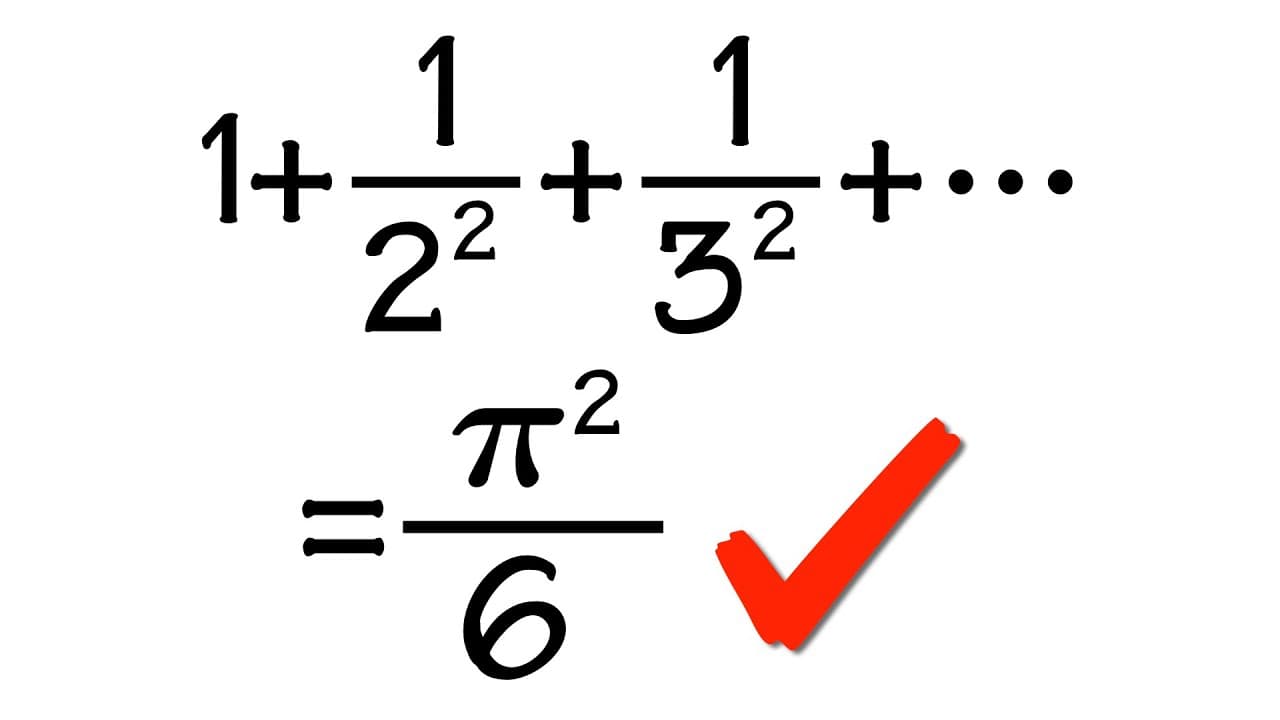
a spectacular solution to the Basel problem (sum of 1/n^2 via a complex integral)
302.3K views
•
August 23, 2018
by
blackpenredpen
YouTube video player
a spectacular solution to the Basel problem (sum of 1/n^2 via a complex integral)

TL;DR

The video discusses complex integrals and uses them to solve the Basel Problem, resulting in the famous result of π^2/6.

Transcript

this integral it's super amazing in fact not the  real version of it even though everything's real   but rather we'll talk about the complex version  of this and that's the one that's going to keep   us very very nice result (solution to the Basel  Problem) and you guess I kinda liked it so much   I didn't come with the following though I want  to ... Read More

Key Insights

  • 💁 Complex integrals can be used to solve real integrals by converting them into a complex form.
  • 🤝 Series expansion is a useful technique to solve complex integrals, especially when dealing with logarithmic functions.
  • 🛀 The famous result of the Basel Problem, π^2/6, can be derived using the complex integral technique shown in the video.
  • 0️⃣ The imaginary part of a real integral must be zero for the integral to have a real value.

Install to Summarize YouTube Videos and Get Transcripts

Explore YouTube Video Summarizer or Get YouTube Transcript Extractor

Questions & Answers

Q: What is the complex definition of cosine used in the video?

The complex definition of cosine used in the video is e^(ix) + e^(-ix)/2.

Q: How is the complex integral separated into two parts?

The presenter factors out e^(ix) from the integral, resulting in the sum of ln(e^(ix)) and ln(e^(-ix)).

Q: Why does the presenter choose to solve the second integral over the first one?

The presenter chooses to solve the second integral because the ln and e terms cancel each other out, making the integration simpler.

Q: How is series expansion used to solve the complex integral?

The presenter applies the series expansion for ln(1 + x) to the e^(-2ix) term in the integral. This expansion allows the integration to be expressed as a sum of series terms.

Summary & Key Takeaways

  • The content introduces the concept of complex integrals, specifically using the complex version of the integral from 0 to π/2 of ln(2*cos(x)).

  • The presenter shows the steps to convert the real integral into a complex one using the complex definition of cosine.

  • The video demonstrates the integration of the complex integral and separates it into two parts.

  • The presenter applies series expansion to solve the complex integral and derives the result of π^2/6 for the Basel Problem.


Read in Other Languages (beta)

English

Share This Summary 📚

Summarize YouTube Videos and Get Video Transcripts with 1-Click

Download browser extensions on:

Try YouTube Summary with ChatGPT & Claude or YouTube Transcript Generator

Explore More Summaries from blackpenredpen 📚
Solving a System of Equations by Substitution thumbnail
Solving a System of Equations by Substitution
blackpenredpen
What does a ≡ b (mod n) mean? Basic Modular Arithmetic, Congruence thumbnail
What does a ≡ b (mod n) mean? Basic Modular Arithmetic, Congruence
blackpenredpen
delta y vs. dy (differential) thumbnail
delta y vs. dy (differential)
blackpenredpen
(Q1.) Graph of negative sqrt(x) thumbnail
(Q1.) Graph of negative sqrt(x)
blackpenredpen
How to Find the Derivative of x^π Using Gamma Function thumbnail
How to Find the Derivative of x^π Using Gamma Function
blackpenredpen
Three Pretenders, by Mr. HIll! thumbnail
Three Pretenders, by Mr. HIll!
blackpenredpen

Summarize YouTube Videos and Get Video Transcripts with 1-Click

Download browser extensions on:

Try YouTube Summary with ChatGPT & Claude or YouTube Transcript Generator

Apps & Extensions

  • Chrome Extension
  • Safari Extension
  • Edge Add-ons
  • Firefox Add-ons
  • iOS App
  • Android App

Key Features

  • YouTube Video Summarizer
  • Web & PDF Summarizer
  • Web & PDF Highlighter
  • Chat with PDF
  • Ask AI Clone
  • Audio Transcriber
  • Glasp Reader
  • Kindle Highlight Export
  • Idea Hatch

Integrations

  • Obsidian Plugin
  • Notion Integration
  • Pocket Integration
  • Instapaper Integration
  • Medium Integration
  • Readwise Integration
  • Snipd Integration
  • Hypothesis Integration

More Features

  • APIs
  • MCP Connector
  • Blog & Post
  • Embed Links
  • Image Highlight
  • Personality Test
  • Quote Shots

Company

  • About us
  • Blog
  • Community
  • FAQs
  • Job Board
  • Newsletter
  • Pricing
Terms

•

Privacy

•

Guidelines

© 2026 Glasp Inc. All rights reserved.