Can Digital Screens Really Damage Your Eyes?
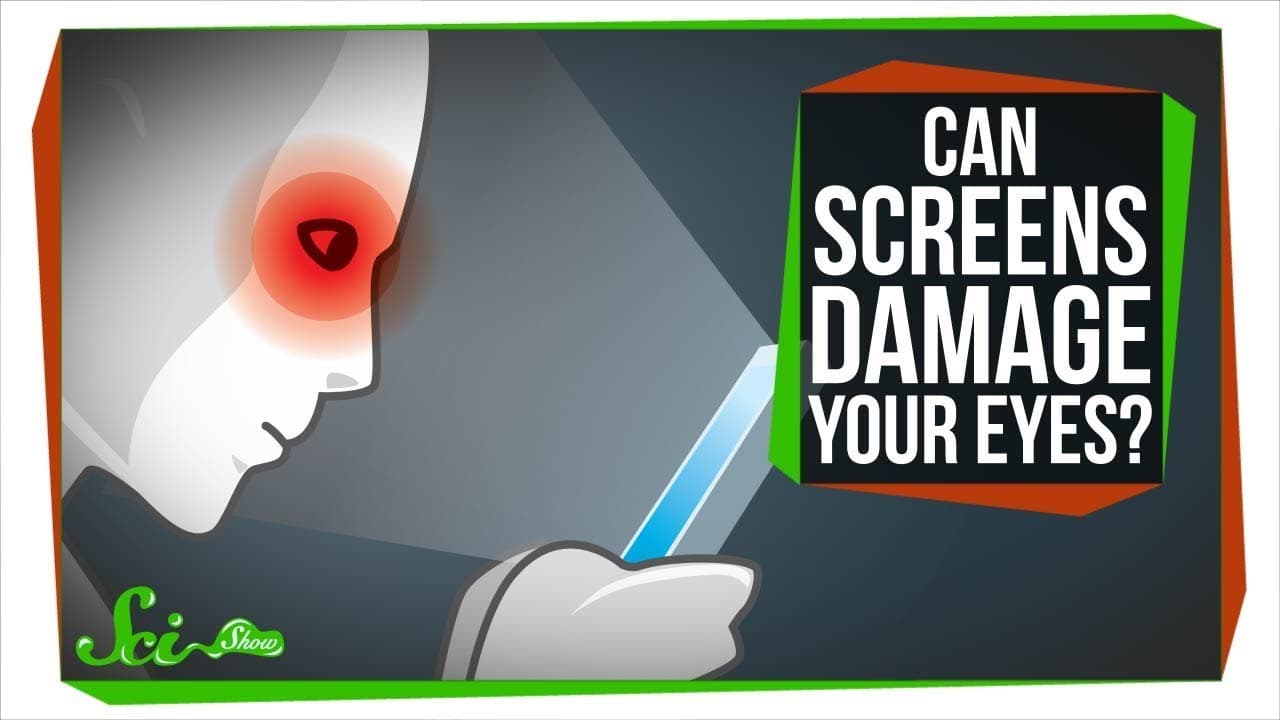
TL;DR
Digital screens can cause temporary eye strain symptoms like headaches and blurred vision, but there is no evidence of long-term damage. While blue light from screens may harm retinal cells, its intensity is much lower compared to natural daylight, making it not a biohazard for long-term viewing.
Transcript
[ ♪INTRO ] If you’re watching this video, you probably spend a lot of time around digital screens. Like right now, for example. And unless you’re watching this far in the future after we’ve had some sort of apocalypse, there are screens all around us. So of course, a lot of people are worried that exposure to all this unnatural light is harmful. Bu... Read More
Key Insights
- 🥺 Extended screen time can lead to digital eye strain, causing temporary symptoms like headaches and blurred vision.
- 😝 Various factors contribute to digital eye strain, including reduced blinking, squinting, and incorrect lens prescriptions.
- 🩵 Evidence suggests that blue light from screens can damage and kill retinal cells, but most studies focus on high-intensity light and not real-life screen usage.
- 🩵 Lower intensity blue light at shorter wavelengths has a higher chance of generating harmful reactive oxygen species (ROSes).
- 🩵 Comparatively, the amount of blue light from screens is much lower than the intensity of natural daylight.
- 😃 Taking regular breaks and using the correct lens prescription can help alleviate digital eye strain symptoms.
- 😃 There is no evidence of long-term effects from digital eye strain, even with regular occurrence.
Install to Summarize YouTube Videos and Get Transcripts
Explore YouTube Video Summarizer or Get YouTube Transcript Extractor
Questions & Answers
Q: Can staring at screens for too long cause permanent eye damage?
There is currently no evidence to suggest that extended screen time leads to permanent eye damage. Digital eye strain symptoms can be temporary and can be relieved by taking regular breaks and using the correct lens prescription.
Q: What are the common symptoms of digital eye strain?
Blurred vision, headaches, and neck/shoulder pain are the most common symptoms associated with digital eye strain. These symptoms typically go away with proper rest and reducing screen time.
Q: Does blue light from screens kill retinal cells?
Studies have shown that high-intensity blue light can damage and eventually kill retinal cells. However, most studies focus on artificial LED lamps and not real-life screen usage. Low-intensity blue light at shorter wavelengths is more likely to generate harmful reactive oxygen species (ROSes) that cause cell damage.
Q: Is the blue light from screens more harmful than natural daylight?
No, the blue light from screens is significantly less intense compared to natural daylight. Studies have found that the blue light emitted from electronic screens does not pose a biohazard, even with long-term viewing.
Summary & Key Takeaways
-
Extended screen time can lead to digital eye strain, characterized by symptoms like blurred vision, headaches, and neck/shoulder pain.
-
Various factors contribute to digital eye strain, including reduced blinking, squinting, and exposure to blue light.
-
Giving your eyes regular breaks and using the correct lens prescription can help alleviate symptoms, and there is no evidence of long-term effects.
-
Blue light from screens can damage and kill retinal cells, but most studies focus on high-intensity light and not real-life screen usage.
-
Low-intensity blue light at shorter wavelengths (449 nanometers) causes an increase in harmful reactive oxygen species (ROSes), while slightly longer wavelengths (470 nanometers) have less damaging effects.
-
Comparatively, the amount of blue light from screens is much lower than the intensity of natural daylight, which is not considered a biohazard for long-term viewing.
Read in Other Languages (beta)
Share This Summary 📚
Summarize YouTube Videos and Get Video Transcripts with 1-Click
Try YouTube Summary with ChatGPT & Claude or YouTube Transcript Generator
Explore More Summaries from SciShow 📚


Summarize YouTube Videos and Get Video Transcripts with 1-Click
Try YouTube Summary with ChatGPT & Claude or YouTube Transcript Generator