What Makes the Pycnandra Acuminata Tree Unique?
TL;DR
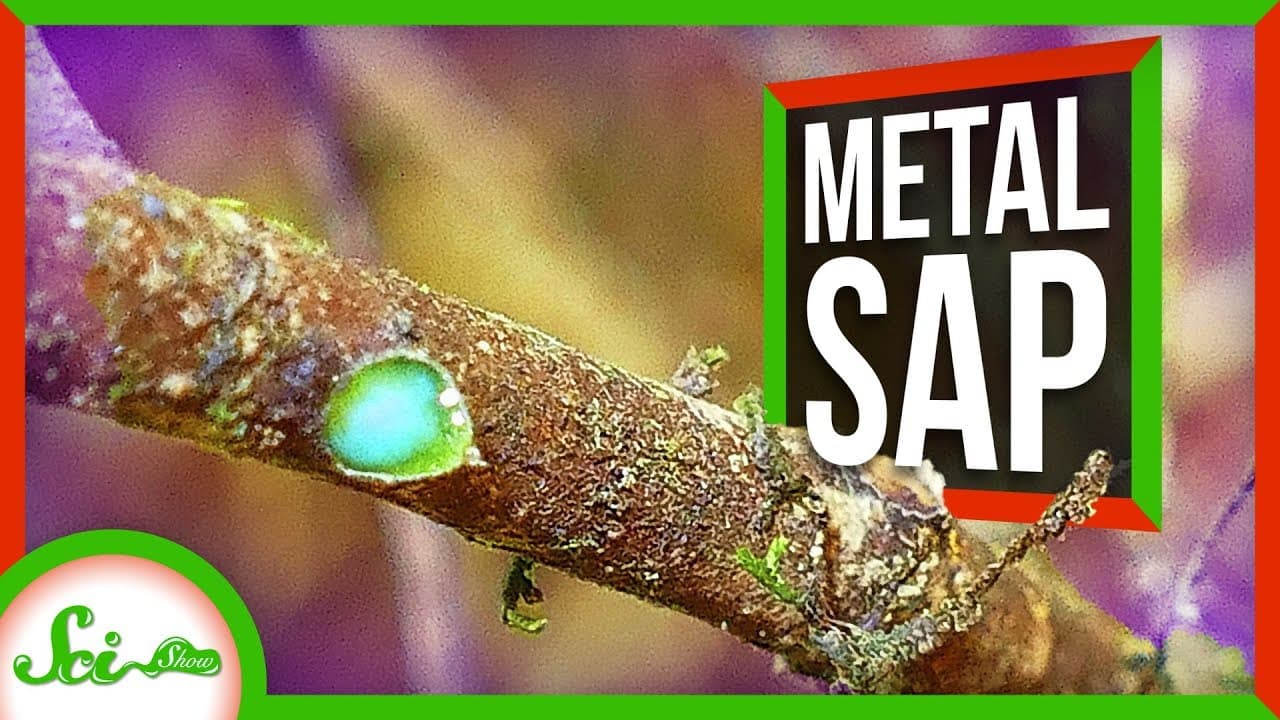
The Pycnandra acuminata tree has a green sap due to its ability to accumulate around 250 grams of nickel per kilogram, making it a metal hyperaccumulator. While scientists hypothesize about the reasons for this adaptation, including survival in toxic soils and protection against herbivores, the exact purpose is still unclear. This tree's unique properties might also aid in soil decontamination efforts.
Transcript
[INTRO ♪] The South Pacific island of New Caledonia has one of the weirdest plants on Earth. It’s a tree whose sap is this teal-ish, blue-green color that you don’t usually see in nature—especially not in living things. But as alien as it looks, the green color is totally natural, and it comes from the fact that more than a quarter of the sap… is m... Read More
Key Insights
- 🌲 Pycnandra acuminata is a tree in New Caledonia that accumulates high levels of nickel in its sap, giving it a tealish blue-green color.
- 💗 The tree grows in ultramafic soils that have large concentrations of nickel, which are rare and typically hard for plants to grow in.
- 🤘 Pycnandra acuminata is considered a metal hyperaccumulator and can store about 250 thousand times more nickel than other plants.
- ✋ The tree's ability to tolerate and store high levels of nickel may have evolved to survive in ultramafic soils, but the exact reason is still unknown.
- 🧑🔬 Scientists have proposed hypotheses, including protection against predators and allelopathy, as possible reasons for the accumulation of nickel.
- 🫀 The ligands in Pycnandra acuminata capture and bind to nickel atoms, preventing them from reacting with other chemicals and negatively affecting the plant's metabolism.
- 👾 The nickel accumulation in Pycnandra acuminata could potentially be used to remove metal pollutants from soils, offering benefits on Earth and in future space exploration.
Install to Summarize YouTube Videos and Get Transcripts
Explore YouTube Video Summarizer or Get YouTube Transcript Extractor
Questions & Answers
Q: Why does the sap of Pycnandra acuminata have a tealish blue-green color?
The sap of Pycnandra acuminata contains a high concentration of nickel, which gives it its unique color.
Q: How does Pycnandra acuminata tolerate high levels of nickel?
Pycnandra acuminata has developed the ability to capture nickel with ligands, preventing it from reacting with other chemicals and affecting the plant's metabolism.
Q: What is the possible reason for Pycnandra acuminata to accumulate so much nickel?
The exact reason is still unknown, but hypotheses include survival in metallic soils, protection against predators, or allelopathy.
Q: How can metal hyperaccumulators like Pycnandra acuminata be useful?
Metal hyperaccumulators have the potential to remove metal pollutants from soils, which could be beneficial on Earth and even in future civilizations on Mars.
Summary & Key Takeaways
-
Pycnandra acuminata, a tree in New Caledonia, has sap that is naturally tealish blue-green due to its high concentration of nickel, which it accumulates from ultramafic soils.
-
The roots of Pycnandra acuminata can tolerate high levels of nickel and store around 250 grams of nickel per kilogram of sap, much higher than other plants.
-
Scientists are not sure why these trees have evolved to store such high levels of metal, but hypotheses include survival in metallic soils, protection against predators, or allelopathy.
Read in Other Languages (beta)
Share This Summary 📚
Summarize YouTube Videos and Get Video Transcripts with 1-Click
Try YouTube Summary with ChatGPT & Claude or YouTube Transcript Generator
Explore More Summaries from SciShow 📚


Summarize YouTube Videos and Get Video Transcripts with 1-Click
Try YouTube Summary with ChatGPT & Claude or YouTube Transcript Generator