These Lice Dive Kilometers Under the Ocean!
TL;DR
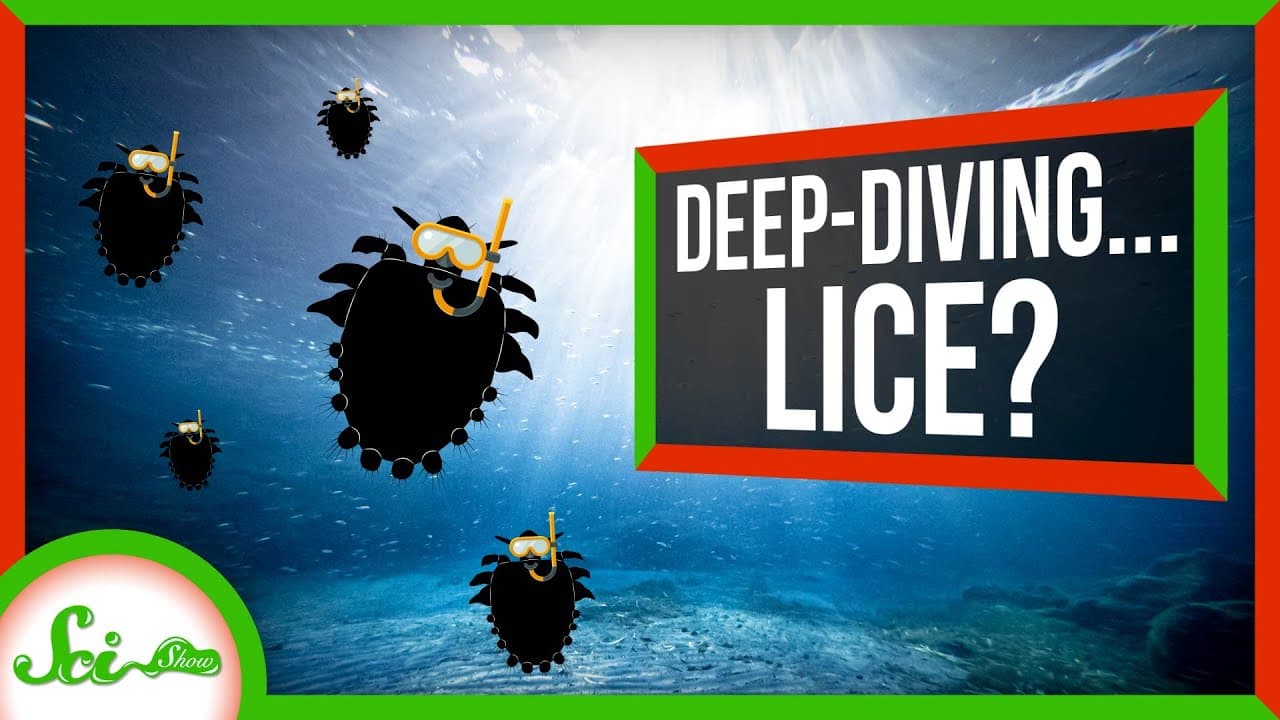
Insects are scarce in the oceans, but there is a species of lice that can survive extreme depths on elephant seals due to their unique adaptations.
Transcript
thanks to brilliant for supporting this episode of scishow go to brilliant.org scishow to check out their math history course if you go almost anywhere on earth you can find an insect seriously there are ones living in antarctica's ice and others hanging out on lava flows in hawaii there is however one place that's pretty bug-free the oceans a few ... Read More
Key Insights
- 🏝️ Insects are rare in the oceans, with most species found on land or near the coastline.
- 🦭 Laos lice are an exception and can survive deep-sea dives on elephant seals.
- 👮 The lice's survival is likely attributed to adaptations such as hard scales, immobile systems, and potentially unique respiratory mechanisms.
- 🚨 Studying the lice's adaptations can shed light on why other insects do not venture into the deep ocean.
- 👨🔬 Further research could explore the possibility of collecting lice to monitor oxygen consumption during dives.
- 🛟 Understanding oceanic adaptations can have implications for the broader study of marine life and ecological systems.
- 👨🔬 Mistakes happen in scientific research, emphasizing the importance of learning from them, as highlighted in Brilliant's math history course.
Install to Summarize YouTube Videos and Get Transcripts
Explore YouTube Video Summarizer or Get YouTube Transcript Extractor
Questions & Answers
Q: Why are insects so rare in the oceans compared to other habitats?
The exact reason is unknown, but the oceans present unique challenges for insects, such as pressure, scarcity of resources, and the need for specialized adaptations to survive.
Q: How do laos lice manage to survive the extreme pressures of deep-sea dives?
Scientists suspect that the lice's hard scales serve as a protective armor. Additionally, they may be able to immobilize their digestive and breathing systems, reducing the risk of damage from high pressures.
Q: Can the lice breathe underwater during their dives?
There are several theories regarding the lice's respiratory adaptations, including the storage of air underneath their scales or the ability to extract oxygen from the surrounding water. Alternatively, they might slow down their metabolism to minimize oxygen consumption.
Q: What are the potential implications of studying the survival of laos lice?
Understanding the unique adaptations of these lice could provide insights into why other insects do not or cannot survive in the deep ocean. It may also contribute to a broader understanding of marine life and the limits of adaptation.
Summary & Key Takeaways
-
Insects are abundant on land but rare in the oceans, with only a few species living near the shore.
-
However, a specific type of lice, known as laos, has adapted to survive on elephant seals and can dive to depths of over two kilometers.
-
Scientists conducted pressure experiments on the lice and found that they are incredibly resilient, potentially due to their hard scales and ability to slow down their metabolism.
Read in Other Languages (beta)
Share This Summary 📚
Summarize YouTube Videos and Get Video Transcripts with 1-Click
Try YouTube Summary with ChatGPT & Claude or YouTube Transcript Generator
Explore More Summaries from SciShow 📚


Summarize YouTube Videos and Get Video Transcripts with 1-Click
Try YouTube Summary with ChatGPT & Claude or YouTube Transcript Generator