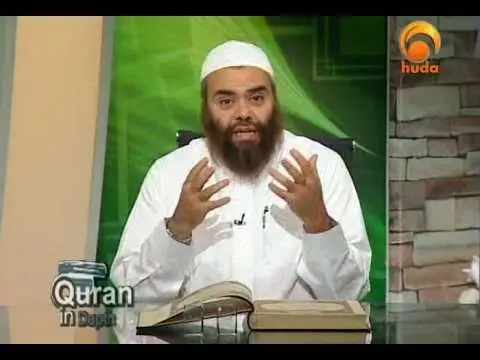
The Creation of Adam & the Story of the Devil - Yusuf Estes - Beauties of Islam - Episode 9

TL;DR
Adam succeeded after disobeying Allah because he repented, while the devil refused to repent after arrogantly rejecting the command to bow to Adam. Yusuf Estes explains that angels lack free choice, whereas jinn and humans can choose to obey or disobey. He also defines Toba as turning back to Allah and distinguishes human choice from Allah’s will, making the full discussion worth reading for its account of obedience, repentance, and control.
Transcript
peace Salam alaykum welcome to this episode of the beauties of Islam we have a website by the way called beauties of islam.com where you can continue to watch this series because it's quite lengthy have quite a few episodes and you may like to continue and see more about these subjects one of the things I've been talking about is the concepts of be... Read More
Key Insights
- 🛟 Islam emphasizes the concept of belief, providing clarity and purpose in life.
- 🥺 Obedience to Allah's commandments is vital, as disobedience leads to negative consequences.
- 👻 Repentance allows individuals to seek forgiveness and turn back to Allah's guidance.
- 🛟 Life's experiences, whether good or bad, are under the control of Allah and serve a greater purpose.
- 😀 Both good and bad people face trials and ultimate rewards or punishments in the afterlife.
- 🥹 Showing gratitude for blessings and patience during hardships are important qualities for believers.
- 🆘 The concept of belief in Islam helps individuals put their experiences into perspective and seek solace in Allah.
Install to Summarize YouTube Videos and Get Transcripts
Explore YouTube Video Summarizer or Get YouTube Transcript Extractor
Questions & Answers
Q: What is the story of Adam and the devil in Beauties of Islam Episode 9?
Allah commanded those present to bow to Adam, and all the angels obeyed, while the devil, who was a jinn, refused. Adam later ate the fruit he had been commanded not to eat; Adam repented, but the devil refused to repent.
Q: Why did the devil refuse to bow to Adam?
The devil said that he was better than Adam and therefore would not bow. Yusuf Estes describes this attitude as arrogance, or “kber” in Arabic, and identifies it as where the devil went wrong.
Q: How are jinn different from angels in Islam?
Both angels and jinn are unseen, but the transcript says angels do not have free choice. Jinn can choose to obey or disobey Allah, just as human beings can.
Q: How were Adam’s disobedience and the devil’s disobedience different?
The devil was ordered to do something, bow to Adam, but did not do it. Adam was ordered not to do something, eat the fruit, but did it; both broke a commandment, but Adam repented afterward.
Q: Why was Adam successful after breaking Allah’s commandment?
Adam was successful in coming out from under his mistake because he repented. The devil, by contrast, continued to refuse repentance.
Q: What does Toba mean in Arabic?
Toba means to turn around and go back, like making a U-turn after traveling in the wrong direction. In this teaching, it means returning to Allah and apologizing for breaking His commandments.
Q: Does the episode say humans have free will or free choice?
Yusuf Estes says humans have free choice rather than free will. A person may choose an action, but it happens only if Allah allows that choice to work.
Q: What should someone do after breaking a commandment?
The speaker says the person should turn back to Allah, who created them and listens to their prayers, and apologize to Him. If the wrongdoing affected other people, the person should also seek their forgiveness.
Summary & Key Takeaways
-
Islam teaches that there are various creations of Allah, including angels, jinn, and humans.
-
The story of Adam and the devil highlights the importance of obedience to Allah's commandments.
-
Repentance (Toba) is encouraged in Islam, as it allows individuals to turn back to Allah and seek forgiveness for their mistakes.
Read in Other Languages (beta)
Share This Summary 📚
Summarize YouTube Videos and Get Video Transcripts with 1-Click
Try YouTube Summary with ChatGPT & Claude or YouTube Transcript Generator
Explore More Summaries from Digital Mimbar 📚
Summarize YouTube Videos and Get Video Transcripts with 1-Click
Try YouTube Summary with ChatGPT & Claude or YouTube Transcript Generator