7 Dinosaur Mysteries We Haven't Fully Figured Out
TL;DR
Major dinosaur mysteries include the purposes of Spinosaurus’s sail, Stegosaurus’s plates, and Therizinosaurus’s over-half-a-meter-long claws, as well as dinosaur sleep patterns and reproductive anatomy. Paleontologists investigate behavior through direct fossil evidence, comparisons with living animals, and computer-reconstructed skeletons, but each method has limitations. Read on to explore the leading hypotheses and why the evidence remains inconclusive.
Transcript
[♩INTRO] We can learn some things about dinosaurs from their fossils, from bones to tracks to poop. But knowing how they behaved is a real challenge. Because we can’t, like, reanimate those rocks and watch them hunt, eat, and mate. Paleontologists use a few main methods to try and figure out dinosaur behavior, or determine what a given structure wa... Read More
Key Insights
- 💯 Paleontologists rely on various methods, including direct fossil evidence, comparison with living animals, and computer models, to understand dinosaur behavior, but these methods are not perfect.
- 🍽️ The function of certain features, such as the sail on Spinosaurus' back and the bony plates of Stegosaurus, are still debated.
- 😅 Clues from teeth and biomechanical studies suggest that Therizinosaurus had plant-eating habits and used its long claws for grasping vegetation.
- 😴 The sleeping habits of dinosaurs remain a mystery due to the lack of time stamps in fossils.
Install to Summarize YouTube Videos and Get Transcripts
Explore YouTube Video Summarizer or Get YouTube Transcript Extractor
Questions & Answers
Q: What dinosaur mysteries have paleontologists not fully figured out?
Unresolved mysteries include the functions of Spinosaurus’s sail, Stegosaurus’s plates, and Therizinosaurus’s enormous claws. Dinosaur sleeping habits and reproductive anatomy also remain uncertain because the available fossil evidence cannot provide complete answers.
Q: How do paleontologists study dinosaur behavior?
They use direct fossil evidence, compare dinosaur features with those of living animals, and reconstruct skeletons with computer models. The models help researchers test what a skeleton could do without breaking its joints, but none of these methods is perfect.
Q: What might the sail on Spinosaurus’s back have been used for?
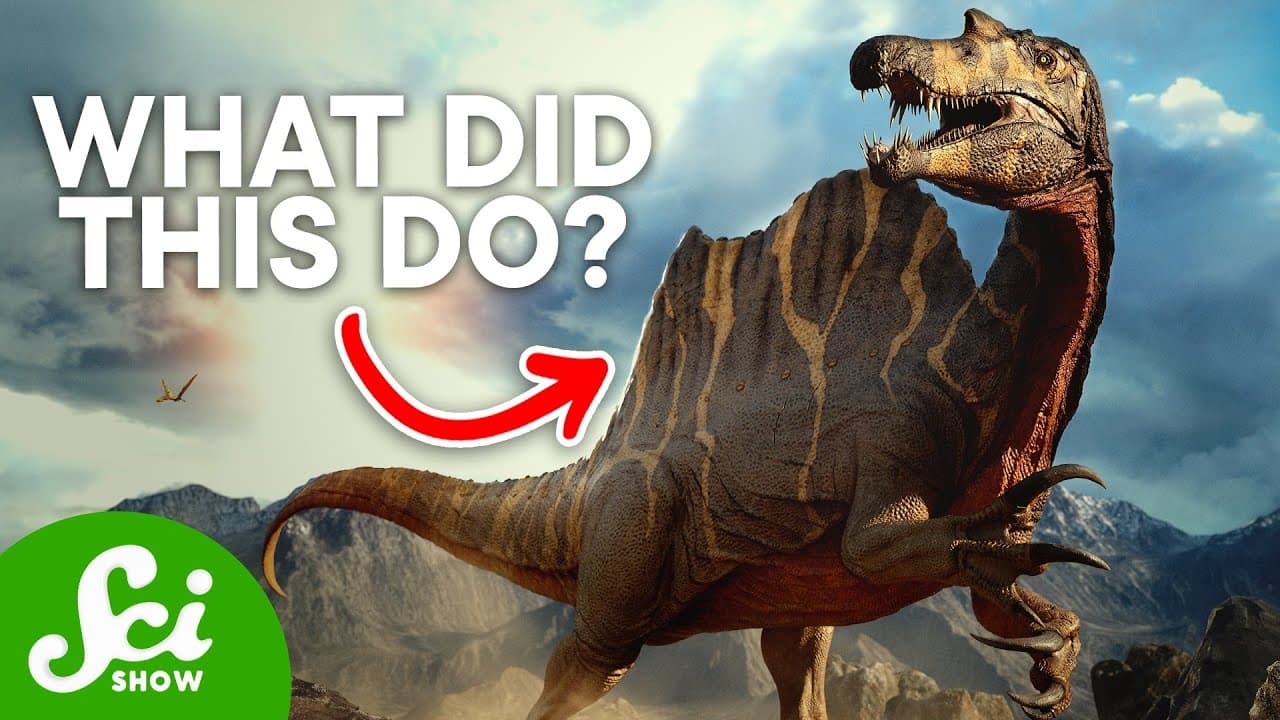
The sail may have attracted mates, intimidated rivals, helped regulate body temperature, or supported a hump of fat. A 2016 Geological Magazine article proposed that it might instead have provided stability in water while Spinosaurus grouped and attacked fish, though further biomechanical studies are needed.
Q: Why did researchers compare Spinosaurus’s sail with a sailfish’s sail?
Sailfish use their sails for stability while herding smaller fish into tight groups, then injure the prey with their long bills. Researchers suggested that Spinosaurus might similarly have combined its sail with its long, narrow head while hunting in water, but its sail may also have served multiple functions.
Q: What were the plates on Stegosaurus used for?
Proposed functions include managing body heat, attracting mates, and helping members of a species recognize one another. None has been universally accepted, so paleontologists remain far from resolving the debate.
Q: Could Stegosaurus plates have regulated body temperature?
Some plate fossils preserve channels that scientists interpret as networks of blood vessels capable of distributing heat like radiator coils. Other researchers argue that even if the plates sometimes radiated heat, temperature control was not necessarily the reason they evolved.
Q: What were Therizinosaurus’s long claws used for?
Biomechanical studies suggest that Therizinosaurus may have used its claws to grasp vegetation and pull it closer. The exact function remains uncertain because no nearly complete Therizinosaurus skeleton has been found, only fragments including forelimbs with claws over half a meter long.
Q: Why do paleontologists think Therizinosaurus ate plants?
Therizinosaurus was related to bipedal carnivores such as T. rex and Velociraptor, but paleontologists consider it a pot-bellied plant-eater. Its relatives have leaf-shaped teeth suited to shredding plant matter, unlike the piercing teeth of predatory dinosaurs such as T. rex.
Summary & Key Takeaways
-
Paleontologists are still unsure of the function of the huge sail on the back of Spinosaurus.
-
The purpose of the diamond-shaped bony plates along the back of Stegosaurus has yet to be agreed upon.
-
Therizinosaurus, a plant-eating dinosaur, possessed enormous forelimbs with over-half-a-meter-long claws, and the purpose of these claws is still unknown.
-
The sleeping habits of dinosaurs remain a mystery as fossils do not come with time stamps.
-
The reproductive organs of dinosaurs are still a topic of speculation, and the positioning and structure of dinosaur reproductive organs are unknown.
Read in Other Languages (beta)
Share This Summary 📚
Summarize YouTube Videos and Get Video Transcripts with 1-Click
Try YouTube Summary with ChatGPT & Claude or YouTube Transcript Generator
Explore More Summaries from SciShow 📚


Summarize YouTube Videos and Get Video Transcripts with 1-Click
Try YouTube Summary with ChatGPT & Claude or YouTube Transcript Generator