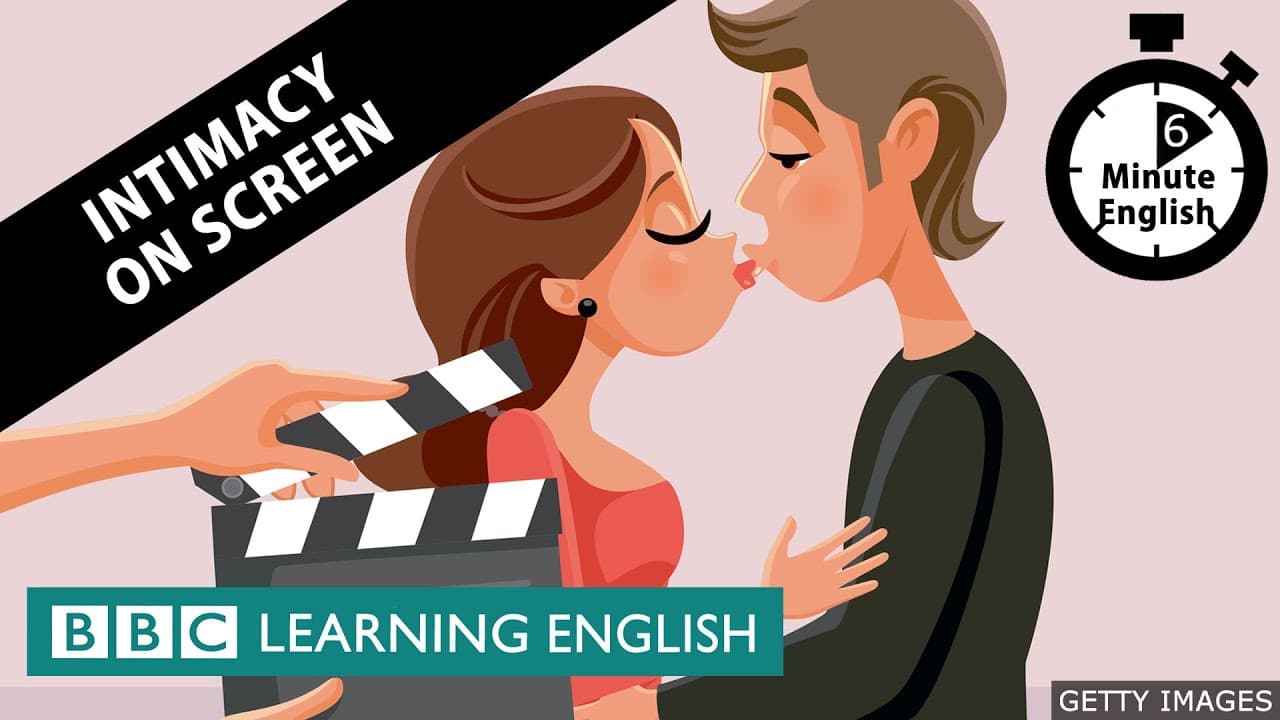
What Is the Role of Intimacy Coordinators in Film?
TL;DR
Intimacy coordinators, like Ita O'Brien, ensure that actors are comfortable during intimate scenes by choreographing these moments and obtaining consent for each specific scene. In the US, actors sign a waiver for each intimate scene, while UK actors typically sign one overarching nudity clause for the entire production. This distinction highlights the importance of clear communication and legal agreements in filmmaking.
Transcript
Hello. This is 6 Minute English from BBC Learning English. I'm Neil. And I'm Georgina. When we think about romantic Hollywood movies, there have been some famous examples over the years. There are classic black-and-white romance movies like 1951's, A Streetcar Named Desire, and the love affair between Humphrey Bogart and Ingrid Bergman in Casablanc... Read More
Key Insights
- Intimacy in films ranges from simple gestures like hand-holding to simulated sex scenes, requiring careful coordination.
- Intimacy coordinators, like Ita O'Brien, ensure actors are comfortable with intimate scenes through planning and consent.
- US actors sign a waiver for each intimate scene, while UK actors sign one nudity clause for the entire production.
- The role of intimacy coordinators has grown due to past scandals, emphasizing the need for clear boundaries on set.
- Intimacy scenes are choreographed much like dance sequences to ensure authenticity while maintaining actor comfort.
- Blockbuster films often owe their success to the chemistry and on-screen romance between leading actors.
- The term 'waiver' refers to a legal document allowing or preventing actions that deviate from the norm.
- The phrase 'each and every' is used to emphasize the importance of individual consent for every intimate scene.
Install to Summarize YouTube Videos and Get Transcripts
Explore YouTube Video Summarizer or Get YouTube Transcript Extractor
Questions & Answers
Q: What is the role of an intimacy coordinator in films?
An intimacy coordinator, like Ita O'Brien, ensures that actors are comfortable with intimate scenes, which range from simple gestures to simulated sex. They choreograph these scenes to maintain authenticity while ensuring that all parties involved have given informed consent, thus creating a safe environment on set.
Q: How do US and UK approaches to filming intimate scenes differ?
In the US, actors sign a waiver for each intimate scene, which provides specific consent for that scene. This contrasts with the UK, where actors typically sign a single nudity clause that covers the entire production. This difference highlights varying approaches to consent and legal protection in film industries.
Q: Why has the role of intimacy coordinators become more prominent?
The role of intimacy coordinators has gained prominence due to past scandals involving inappropriate on-set behavior. These coordinators help establish clear boundaries and ensure that all intimate scenes are consensual and choreographed, protecting actors and maintaining professional standards in the film industry.
Q: What is meant by the term 'simulate' in the context of film intimacy?
In the context of film intimacy, 'simulate' refers to creating the illusion of intimacy or sexual activity without it actually occurring. This involves actors pretending to engage in these activities, with the scenes carefully choreographed to appear realistic while ensuring the actors' comfort and consent.
Q: What is a 'waiver' and how is it used in filming intimate scenes?
A waiver is a legal document that allows or prevents certain actions that deviate from the usual practices. In filming intimate scenes, a waiver provides specific consent for each scene, outlining what is permissible. This ensures clarity and protects both the actors and the production from potential legal issues.
Q: How do intimacy scenes contribute to the success of a film?
Intimacy scenes often enhance the emotional depth and realism of a film, contributing to its appeal and success. The chemistry between actors in these scenes can make a movie more relatable and engaging, often becoming iconic moments that help drive the film's popularity and box office success.
Q: What vocabulary related to intimacy and film is discussed in the episode?
The episode discusses vocabulary such as 'blockbuster,' referring to a successful film; 'intimacy,' indicating a close relationship; 'stroke,' meaning to touch gently; 'simulate,' to create a realistic illusion; 'waiver,' a legal consent document; and 'each and every,' emphasizing individual consent for all scenes.
Q: What historical changes in film intimacy are highlighted?
The episode highlights the shift from the taboo nature of on-screen intimacy in early films to its commonplace presence in modern cinema. This evolution reflects broader societal changes in attitudes towards sexuality and the increasing importance of ensuring actor comfort and consent in the portrayal of intimate scenes.
Summary & Key Takeaways
-
The discussion centers on how intimacy is portrayed in films, highlighting the role of intimacy coordinators in ensuring actors' comfort during intimate scenes. The differences in the handling of such scenes in the US and UK are also explored, noting the legal implications of waivers and nudity clauses.
-
Ita O'Brien, an intimacy coordinator, describes the broad spectrum of intimacy in films, from gentle gestures to simulated sex. She emphasizes the importance of choreographing these scenes and ensuring actors' consent for each scene, contrasting the US and UK approaches.
-
The episode highlights the evolution of intimacy in films, moving from taboo to commonplace. It underscores the significance of clear communication and legal agreements in the filmmaking process to protect actors and maintain the integrity of the scenes.
Read in Other Languages (beta)
Share This Summary 📚
Summarize YouTube Videos and Get Video Transcripts with 1-Click
Try YouTube Summary with ChatGPT & Claude or YouTube Transcript Generator
Explore More Summaries from BBC Learning English 📚
Summarize YouTube Videos and Get Video Transcripts with 1-Click
Try YouTube Summary with ChatGPT & Claude or YouTube Transcript Generator