Anthropic’s Digital God, Pope vs. AI, Job Loss Narrative, and an Open-Source Crackdown?

TL;DR
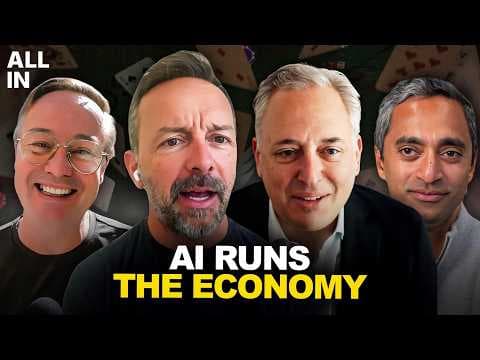
AI is more likely to transform jobs than simply eliminate them, with automation changing tasks while demand grows for AI-savvy professionals. The All-In podcast discussion also examines Anthropic’s push for AI regulation, possible restrictions on open-source models, and concerns about safety, control, and competitive advantage. Read on for the episode’s key arguments about employment, software development, and AI oversight.
Transcript
Okay, we are gathered here today in holy unity, brothers and sisters, to convene and discuss on this most holy day, the day the All-In podcast drops many topics. AI data centers, China, justice, human dignity, Daario unwinding these SPVS hasn't been good for the Vatican. We got in at 20 billion. That was a 50 bagger for us. So, let's get started. >... Read More
Key Insights
- AI is not inherently evil but reflects the characteristics of its creators.
- Anthropic is vocal about AI regulation, possibly for competitive advantage.
- Open-source AI models face potential regulation due to safety concerns.
- AI automation may change job roles rather than eliminate them.
- Software development jobs are increasing despite AI's coding capabilities.
- AI efficiency drives some companies to reduce workforce size.
- AI proficiency is becoming a highly marketable skill across industries.
- Regulations in the EU may target open-source AI due to lack of oversight.
Install to Summarize YouTube Videos and Get Transcripts
Explore YouTube Video Summarizer or Get YouTube Transcript Extractor
Questions & Answers
Q: Is AI causing massive job loss?
The discussion finds no clear evidence that AI is directly causing massive job loss. It argues that AI is changing tasks and roles while also creating opportunities for people who can use the technology effectively.
Q: How does AI affect the job market?
AI can automate specific tasks, increase productivity, and contribute to workforce reductions at some companies. At the same time, it creates new kinds of work and increases demand for professionals who can integrate AI into their roles.
Q: Why is AI proficiency becoming a valuable job skill?
AI proficiency helps workers automate routine tasks and concentrate on higher-level problem-solving. The episode presents this ability as increasingly marketable across industries because it can improve productivity and support innovation.
Q: How is AI affecting software development jobs?
The discussion says software development job postings are increasing despite AI’s growing coding capabilities. AI-assisted code generation and new applications are expanding the amount of software work rather than simply eliminating developers.
Q: What is Anthropic’s position on AI regulation?
Anthropic publicly advocates AI regulation around safety and ethical concerns. The discussion questions whether that position reflects only genuine safety concerns or also gives the company a competitive advantage in shaping regulatory frameworks.
Q: Why could open-source AI face a regulatory crackdown?
Open-source models can be modified to remove guardrails and lack centralized oversight, raising concerns about harmful misuse. The discussion suggests that regulators, including those in the EU, may target these models while trying to balance safety, innovation, and accessibility.
Q: What role does competition play in AI-driven workforce changes?
Competition pushes companies to use AI to innovate, improve efficiency, and reduce costs. It can also pressure businesses to shrink workforces, although the discussion argues that some productivity gains may reach customers and employees rather than becoming additional profit alone.
Q: What does Bill Gurley’s Running Down a Dream fellowship offer?
The fellowship offers $5,000 grants to people who want to pursue their dreams but need help. Gurley says applications opened the previous week through rdad.org, and the program is aimed at a different demographic from the Thiel Fellows program.
Summary & Key Takeaways
-
AI's influence on jobs is complex, with both positive and negative aspects. While automation can replace specific tasks, it also creates new opportunities and enhances productivity. The narrative is shifting from job loss to job transformation, emphasizing the importance of adapting to AI technologies.
-
Anthropic's stance on AI regulation raises questions about their motivations, whether for genuine safety concerns or competitive positioning. The debate continues on how to balance innovation with regulation, particularly concerning open-source AI models.
-
The job market is experiencing a shift, with some companies citing AI as a reason for workforce reductions. However, the demand for AI-savvy professionals is increasing, suggesting that those who adapt to new technologies will thrive in the evolving landscape.
Read in Other Languages (beta)
Share This Summary 📚
Summarize YouTube Videos and Get Video Transcripts with 1-Click
Try YouTube Summary with ChatGPT & Claude or YouTube Transcript Generator
Explore More Summaries from All-In Podcast 📚





Summarize YouTube Videos and Get Video Transcripts with 1-Click
Try YouTube Summary with ChatGPT & Claude or YouTube Transcript Generator