Why Are US Cities Still Segregated by Race?
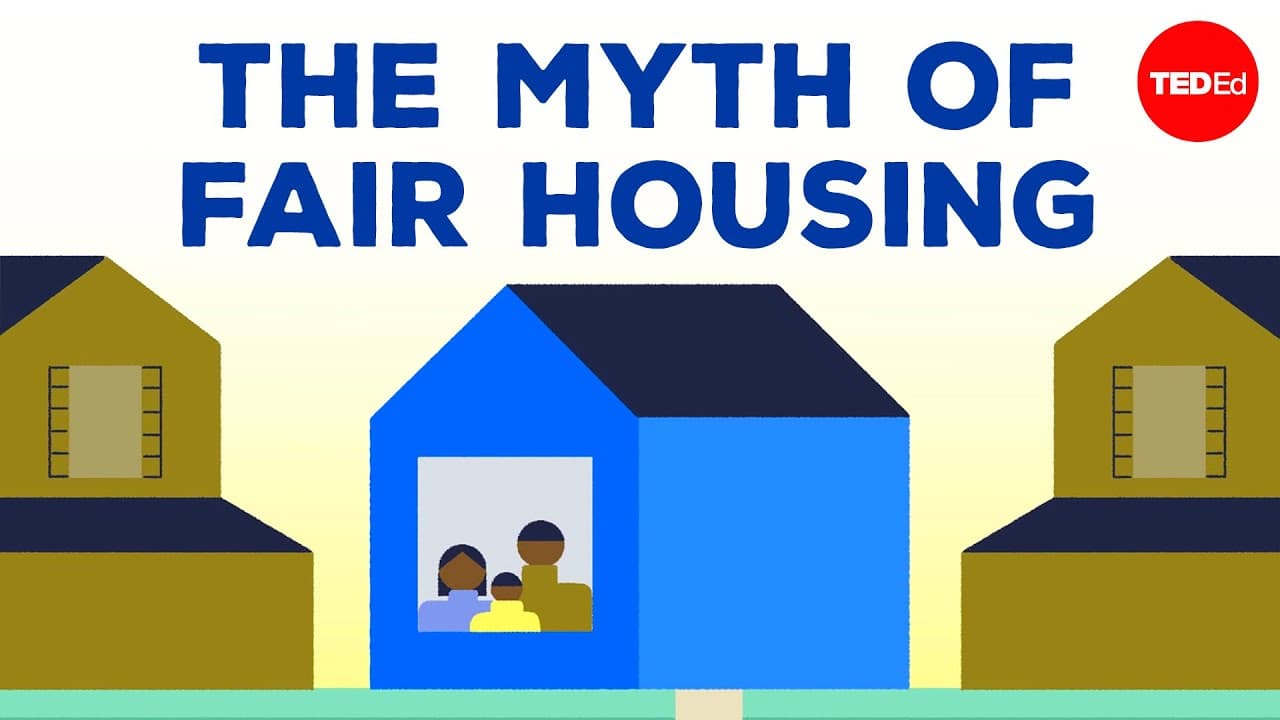
TL;DR
US cities remain segregated due to the legacy of racial covenants that restricted property ownership to white residents, combined with discriminatory practices like redlining and biased lending. These policies concentrated wealth in predominantly white neighborhoods, negatively impacting communities of color with lower home values and increased health risks, a disparity that persists today.
Transcript
On October 21st, 1909, 125 residents
of an affluent Minneapolis neighborhood approached William Simpson,
who’d just bought a plot in the area, and told him to leave. The Simpsons would be the second
Black family in the otherwise white neighborhood,
where they intended to build a home. When the Simpsons refused offers
to buy them out, their nei...
Read More
Key Insights
- 🥺 Racial covenants were used to enforce racial segregation in American suburbs, leading to long-lasting inequalities and disparities.
- 👯 The combination of redlining, discriminatory lending practices, and racial covenants restricted access to homeownership for people of color, perpetuating the racial wealth gap.
- 😀 The legacy of racial covenants can still be seen in the racial segregation of neighborhoods today, with predominantly white suburbs and neighborhoods of color facing environmental and health issues.
Install to Summarize YouTube Videos and Get Transcripts
Explore YouTube Video Summarizer or Get YouTube Transcript Extractor
Questions & Answers
Q: What were racial covenants and how were they used?
Racial covenants were clauses written into property deeds that restricted the sale or lease of the property to certain racial or ethnic groups, primarily Black people. These covenants aimed to maintain racial segregation and were particularly prevalent between the 1920s and 1950s.
Q: How did racial covenants contribute to the racial segregation of American suburbs?
Racial covenants ensured that suburbs were reserved for white occupants only, leading to the phenomenon of "white flight" in the mid-20th century. This resulted in the doubling of the white population in the suburbs, while neighborhoods of color were left behind in the cities.
Q: What were the consequences of racial covenants and discriminatory practices in property ownership?
Racial covenants concentrated wealth and amenities in white neighborhoods, while neighborhoods of color experienced lower home values and environmental issues. People of color were often forced to spend their income on rent and were unable to create generational wealth through homeownership.
Q: Are racial covenants still in effect today?
Racial covenants were banned in 1968 under the Fair Housing Act, so they are no longer legally enforceable. However, they can still be seen on many housing deeds as a reminder of the discriminatory practices of the past.
Summary & Key Takeaways
-
In the early 1900s, the Simpson family faced harassment and discrimination when they tried to build their home in a predominantly white neighborhood in Minneapolis, leading to the implementation of racial covenants in the area.
-
Racial covenants spread throughout the US between 1920 and 1950, segregating cities and restricting suburbs to white occupants only.
-
The combination of racial covenants, redlining, and discriminatory lending practices resulted in the concentration of wealth and amenities in white neighborhoods, while neighborhoods of color experienced lower home values and environmental issues.
Read in Other Languages (beta)
Share This Summary 📚
Summarize YouTube Videos and Get Video Transcripts with 1-Click
Try YouTube Summary with ChatGPT & Claude or YouTube Transcript Generator
Explore More Summaries from TED-Ed 📚






Summarize YouTube Videos and Get Video Transcripts with 1-Click
Try YouTube Summary with ChatGPT & Claude or YouTube Transcript Generator