What Are the Most Incredible Ancient Acoustics?
TL;DR
Ancient structures like the theater at Epidaurus and Stonehenge showcase remarkable acoustic properties that enhanced sound experiences. These designs, utilizing techniques like diffraction and waveguides, allowed specific frequencies to be amplified or distorted, providing insights into ancient cultural practices and potentially evoking emotional responses in listeners.
Transcript
[♪ INTRO] Around the world, ancient people built incredible structures, as performance venues, sites of worship, and lots of other things. And these structures can be visually stunning, but often, there’s more to them than just their looks. In a field of science known as acoustic archaeology, engineers and archaeologists have shown that many ancien... Read More
Key Insights
- 👋 Ancient structures like theaters and pyramids were designed to manipulate sound waves and create unique acoustics.
- 🖐️ Diffraction played a significant role in the acoustic properties of these structures, amplifying or canceling out certain frequencies.
- 👱 Different designs, such as steps or air ducts, were utilized to achieve specific acoustic effects.
- 😒 The intentional or unintentional use of these acoustic properties provided insights into ancient cultural practices and possibly influenced future architectural designs.
- ❓ Specific frequencies and resonances potentially had emotional or spiritual effects on listeners.
Install to Summarize YouTube Videos and Get Transcripts
Explore YouTube Video Summarizer or Get YouTube Transcript Extractor
Questions & Answers
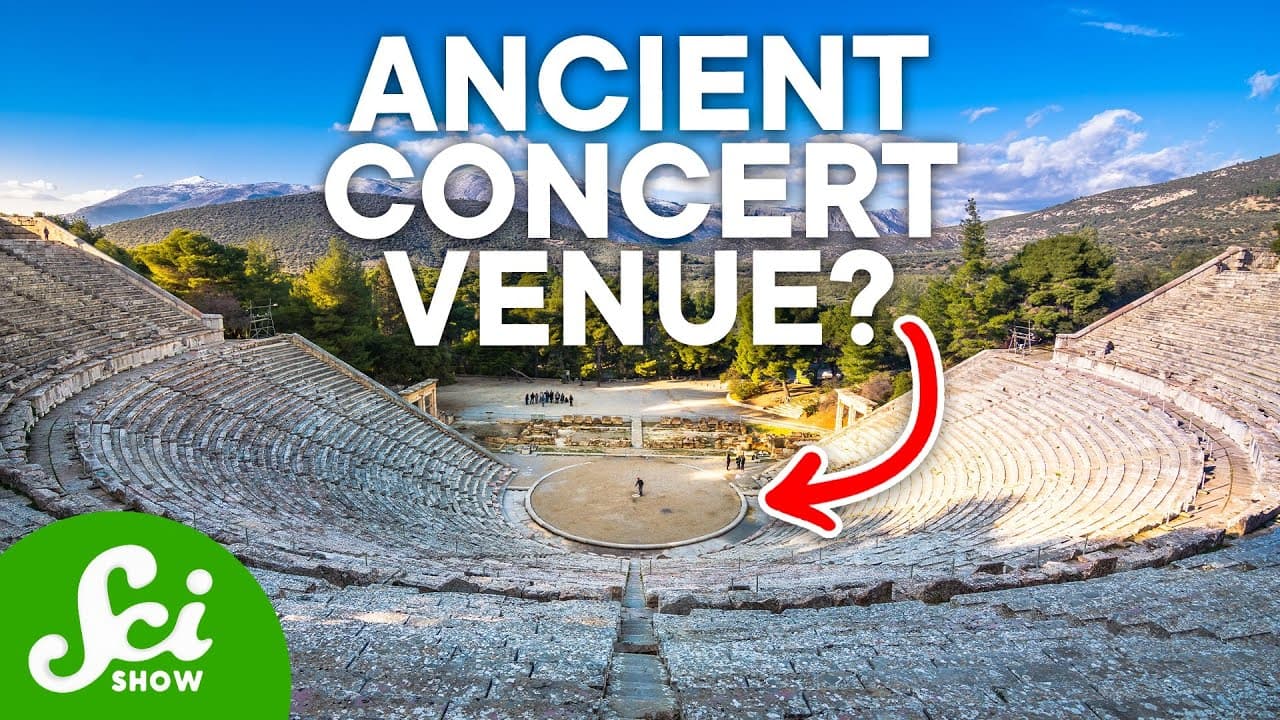
Q: How did the design of the steps in the theater at Epidaurus contribute to its excellent acoustics?
The steps at Epidaurus caused interference and cancellation of low-pitch sounds, while higher-pitched sounds reinforced themselves, allowing the voices of performers to carry and canceling out background noise.
Q: What caused the chirp-like echo at the El Castillo pyramid in Chichén Itzá?
The shape of the steps at El Castillo pyramid diffracted sound waves, causing higher frequencies to be reflected more than lower frequencies. This resulted in a stretched-out echo that sounded like a chirp.
Q: Why do voices within Stonehenge seem to come from everywhere at once?
Simulations showed that the arrangement of rocks within Stonehenge caused sound waves to scatter off inner rocks before hitting the outer ring, creating the perception of voices coming from multiple directions.
Q: How did the Chavín people use air ducts to amplify sound in the temple?
The air ducts acted as waveguides, reinforcing specific frequencies of sound produced by the pututu conch shells, effectively turning the entire temple into an instrument that channeled sounds to the plaza below.
Summary & Key Takeaways
-
The theater at Epidaurus in ancient Greece had excellent acoustics due to the design of its steps, which amplified higher-pitched sounds and canceled out low-pitch background noise.
-
The El Castillo pyramid in Chichén Itzá created an echo that sounded like a chirp due to diffraction off its steps, with higher pitches reaching the listener first and dropping off in pitch.
-
Stonehenge had a diffuse field of sound, making it difficult to pinpoint where voices originated due to echoes bouncing off the inner and outer rocks.
-
The Chavín de Huántar temple in Peru used specially designed air ducts as waveguides to amplify the sounds of pututu conch shell horns.
-
The Hypogeum of Hal Saflieni in Malta had chambers that created standing waves, amplifying specific frequencies and potentially evoking specific sensations in listeners.
Read in Other Languages (beta)
Share This Summary 📚
Summarize YouTube Videos and Get Video Transcripts with 1-Click
Try YouTube Summary with ChatGPT & Claude or YouTube Transcript Generator
Explore More Summaries from SciShow 📚


Summarize YouTube Videos and Get Video Transcripts with 1-Click
Try YouTube Summary with ChatGPT & Claude or YouTube Transcript Generator