Episode 348: How Does Enleaf Founder Adam Chronister Use Data-Driven SEO to Drive Growth?
TL;DR
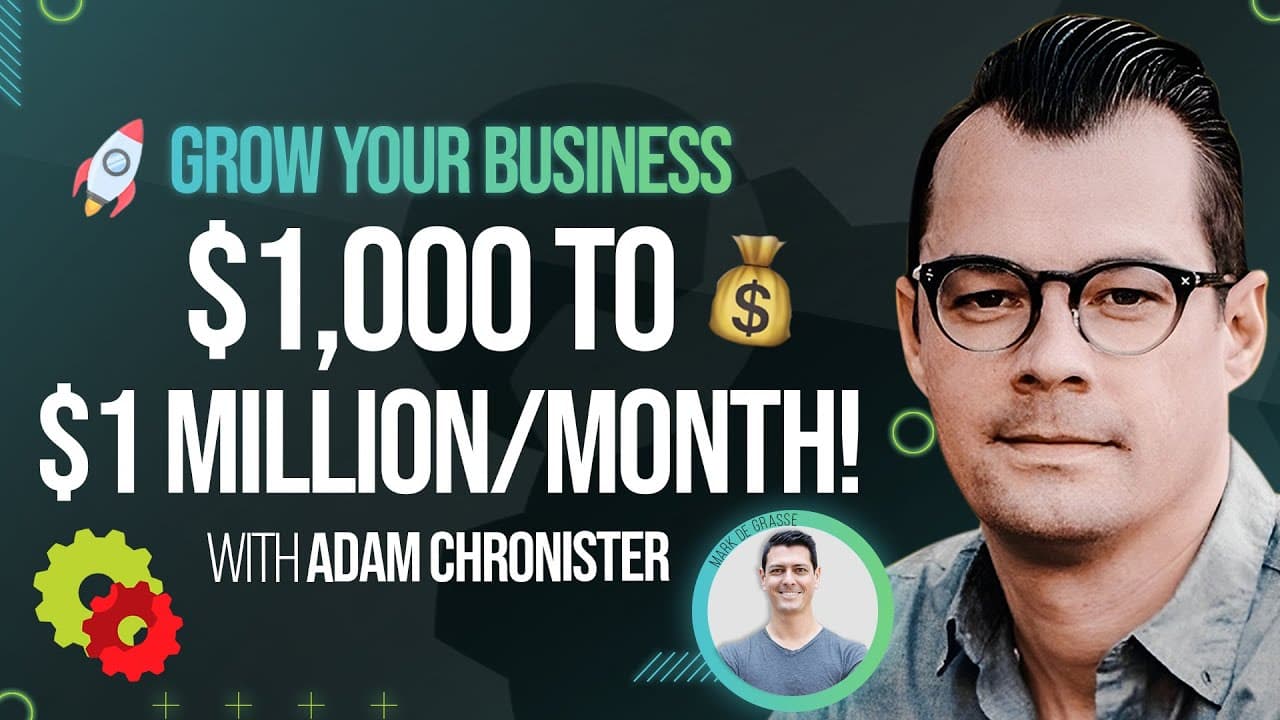
Data-driven SEO succeeds by combining analytical strategy with creative content that serves a clear business purpose. Adam Chronister describes an organic SEO engagement that helped grow a business from $1,000 per month to $1 million per month over a couple of years through extensive content, healthy link acquisition, a new website and coordinated teamwork. Read on for his reasoning about costs, topical authority, search semantics and content volume.
Transcript
we can take you know either our strategic partners that are more on the creative side or even our clients and their resources and bake and data and strategy into those existing creative processes that's and that's what we find works well and those relationships uh when merged tend to be the ones that perform the best thank you hey everyone this is ... Read More
Key Insights
- Growth required multiple coordinated levers: The featured success was not attributed to a single keyword, article or technical adjustment. Chronister names substantial content production, healthy link acquisition and a full website replacement as parts of the organic program. He then credits team alignment, showing that the result depended on coordinated execution across several areas rather than an isolated SEO tactic.
- Organic results may take years: DeGrasse characterizes organic content as hard work over the next one to three years before it might generate money. Chronister acknowledges that this framing makes SEO difficult to sell. The exchange establishes a fundamental tradeoff: businesses may have to tolerate delayed returns in exchange for the prospect of lower costs and a foundation that can support them over the long term.
- SEO can lower cost barriers: Chronister’s case for SEO centers on economics as well as rankings. If the work is done correctly, he says it can reduce the cost barrier and set a business up for life. The claim is contrasted with continued dependence on paid acquisition, where every competitor can keep directing money toward the same limited opportunity.
- Easy paid media invites competition: DeGrasse suggests that more effective, generative paid tools could make campaign setup and maintenance accessible to almost anyone. The resulting participation could make paid media extremely expensive. His concern is not that paid media stops working, but that easier execution increases competition and may steadily weaken the economics of acquiring customers through that channel alone.
- A niche can hide organic opportunity: Chronister’s client operates in a niche where competition is concentrated in paid media. The client wants to expand its paid budget, yet neither it nor its competitors are pursuing SEO. Chronister views that absence as an opening to build visibility and reduce costs in an area competitors have neglected, while recognizing that paid spending can still be necessary.
- Paid success does not settle strategy: The client’s paid program is already working, which explains the desire to spend more. Chronister nevertheless argues that successful paid performance should not prevent consideration of SEO. His reasoning is diversification: expanding the existing channel may produce growth, but developing organic visibility can address costs and exploit a competitive gap that additional paid budget does not resolve.
- Content and SEO are inseparable: DeGrasse describes SEO and content as two sides of the same coin. Content must be optimized so people can find it, but it must also give them something interesting to consume. This distinction prevents optimization from becoming purely mechanical, because discoverability creates little value when the resulting material cannot hold attention or support a meaningful audience response.
- Google faces a structural tension: Chronister believes Google has reasons both to retain users within search results and to recognize external quality content. Accelerated Mobile Pages illustrates the first impulse by fetching information and presenting it through search. Google’s emphasis on helpful and quality material illustrates the second, because useful search experiences still depend on content that audiences actually want to engage with.
- Creativity supplies algorithmic systems: Chronister rejects the idea that engaging material simply appears from automated systems without an originating creative process. Algorithms may leverage what creators produce, but the creative ideas themselves do not happen in a vacuum. This makes human creativity an input to search systems, even when those systems increasingly organize, reproduce or present information without sending every user to a publisher’s page.
- Data should enter existing workflows: Chronister does not describe data-driven SEO as replacing the people already producing creative work. His team can collaborate with creatively focused strategic partners or use a client’s own resources, adding data and strategy to their established processes. This approach preserves creative capability while giving production clearer analytical direction and a closer connection to search goals.
- Purpose should govern production: The existing page guidance warns against creating content merely for the sake of increasing output. Content should have a defined objective, draw on data and remain relevant to the audience. This makes volume subordinate to business goals and competitive conditions, while quality and usefulness determine whether the work can engage people and convert their interest into action.
- Topical coverage beats isolated terms: The page’s existing insights emphasize search semantics and topical authority rather than a narrow focus on individual keywords. A business should demonstrate subject-matter depth through relevant, connected coverage. Competitive analysis and business objectives then determine how much content is justified, preventing arbitrary publishing targets from replacing the more important goal of building credible authority around a topic.
Install to Summarize YouTube Videos and Get Transcripts
Explore YouTube Video Summarizer or Get YouTube Transcript Extractor
Questions & Answers
Q: How can data-driven SEO reduce marketing costs?
Data-driven SEO can reduce marketing costs by building organic visibility instead of relying exclusively on paid placement. Chronister describes a niche client whose competitors are all spending in paid media while leaving SEO largely untouched. Entering that organic space could lower the client’s cost barrier and reduce dependence on continually expanding its advertising budget. The benefit requires correct execution through purposeful content, links, website work and sustained team coordination.
Q: What drove the growth from $1,000 to $1 million per month?
Chronister says the business grew from $1,000 per month to $1 million per month over a couple of years, primarily through organic SEO. The program involved producing a large amount of content, acquiring healthy links and implementing a completely new website. He explicitly notes that the outcome did not occur in a vacuum. A strong team remained in sync, which allowed those separate activities to reinforce one another and produce the reported growth.
Q: Why can SEO be difficult to sell?
SEO can be difficult to sell because its value may require a long commitment before financial results appear. DeGrasse describes asking clients to work hard for the next one to three years before they might make money from organic content. Chronister agrees that this presentation creates a difficult sales proposition. The reason to accept that delay is the possibility of lowering costs and creating a durable organic foundation rather than paying for every increment of visibility.
Q: Why should a business combine SEO with paid media?
Paid media can work well and may justify more budget, as it did for the niche client Chronister discusses. However, competitors can all direct money toward the same paid space, and DeGrasse expects easier campaign tools to make that competition more expensive. SEO provides a second route to visibility where competitors may not yet be active. Combining the channels therefore preserves immediate paid opportunities while developing an organic asset that can reduce long-term cost pressure.
Q: What role does creativity play in data-driven SEO?
Creativity produces the material people find interesting enough to engage with. Chronister argues that creative ideas do not arise in a vacuum and remain difficult for an algorithm or machine to replicate completely. Algorithms can leverage creative work, but they still need worthwhile material to process and present. His approach is to preserve existing creative processes while baking data and strategy into them, so engagement and discoverability support each other.
Q: How should data and strategy be added to content creation?
Chronister recommends integrating data and strategy into creative processes that already exist. His team can work with creatively focused strategic partners or with a client’s internal resources rather than displacing them. The creative side continues developing engaging ideas, while the analytical side guides those ideas toward search and business objectives. He reports that relationships merging these capabilities tend to perform best because neither creativity nor analysis has to operate alone.
Q: Why does helpful, quality content still matter to Google?
Chronister sees Google as balancing two interests. It may try to keep people in search results, as illustrated by Accelerated Mobile Pages fetching information and presenting it through search. At the same time, Google continues to emphasize helpful and quality content because people need material they genuinely want to engage with. External creativity therefore remains important even when algorithms increasingly control how information is selected and displayed.
Q: How should businesses decide how much SEO content to create?
Content volume should follow competitive analysis and business objectives rather than an arbitrary publishing target. The page’s existing guidance prioritizes in-depth, authoritative and relevant material over production for its own sake. Search semantics and topical authority help determine which related aspects of a subject deserve coverage. This approach avoids wasting resources on unnecessary pieces while building enough meaningful content to demonstrate expertise, attract attention and support conversion.
Summary & Key Takeaways
-
A dramatic organic growth story: Mark DeGrasse introduces Enleaf founder Adam Chronister by discussing a business that grew from $1,000 per month to $1 million per month over a couple of years. Chronister confirms that organic SEO was the primary driver. The work included producing extensive content, conducting healthy link acquisition and implementing a completely new website. He also stresses that the result did not happen in a vacuum, because a capable, synchronized team supported the strategy and execution.
-
Why SEO demands patience: DeGrasse recalls explaining organic content as a commitment requiring hard work for the next one to three years before it might produce money. Chronister agrees that SEO can be difficult to sell when presented that way. However, he argues that correctly executed SEO can lower a company’s cost barrier and establish an enduring foundation. Their exchange frames consistency and teamwork as necessary companions to content production, especially when a company expects meaningful long-term organic growth.
-
Balancing paid and organic acquisition: The discussion turns to paid media becoming easier to set up, more effective and increasingly generative. DeGrasse reasons that easier access could attract more advertisers and make paid media much more expensive. Chronister describes a niche-market client that wants to increase paid spending while doing no SEO. Because its competitors also concentrate on paid channels, he sees an organic opening that could reduce costs rather than requiring the client to keep throwing money at the same problem.
-
Considering Google’s competing incentives: DeGrasse asks why Google would continue sending traffic elsewhere when it possesses extensive user information and could generate content itself. Chronister recalls Accelerated Mobile Pages as an attempt to fetch publishers’ information and present it within search. He sees Google as having a double-sided interest: keeping people in search results while also relying on helpful, quality material. That tension makes original work important because engaging creative ideas must come from somewhere before algorithms can leverage or present them.
-
Joining creativity with analysis: Chronister ultimately identifies a middle ground between machine-produced information and human creativity. Algorithms can leverage creative material, but creativity remains difficult to replicate purely through a machine. His preferred operating model is to work with strategic partners or client resources already responsible for creative production, then bake data and strategy into those processes. He says relationships formed by merging those capabilities tend to perform best, supporting content that is both engaging and strategically informed.
Read in Other Languages (beta)
Share This Summary 📚
Summarize YouTube Videos and Get Video Transcripts with 1-Click
Try YouTube Summary with ChatGPT & Claude or YouTube Transcript Generator
Explore More Summaries from DigitalMarketer 📚
Summarize YouTube Videos and Get Video Transcripts with 1-Click
Try YouTube Summary with ChatGPT & Claude or YouTube Transcript Generator