How to Survive the Long Road to Product-Market Fit
TL;DR
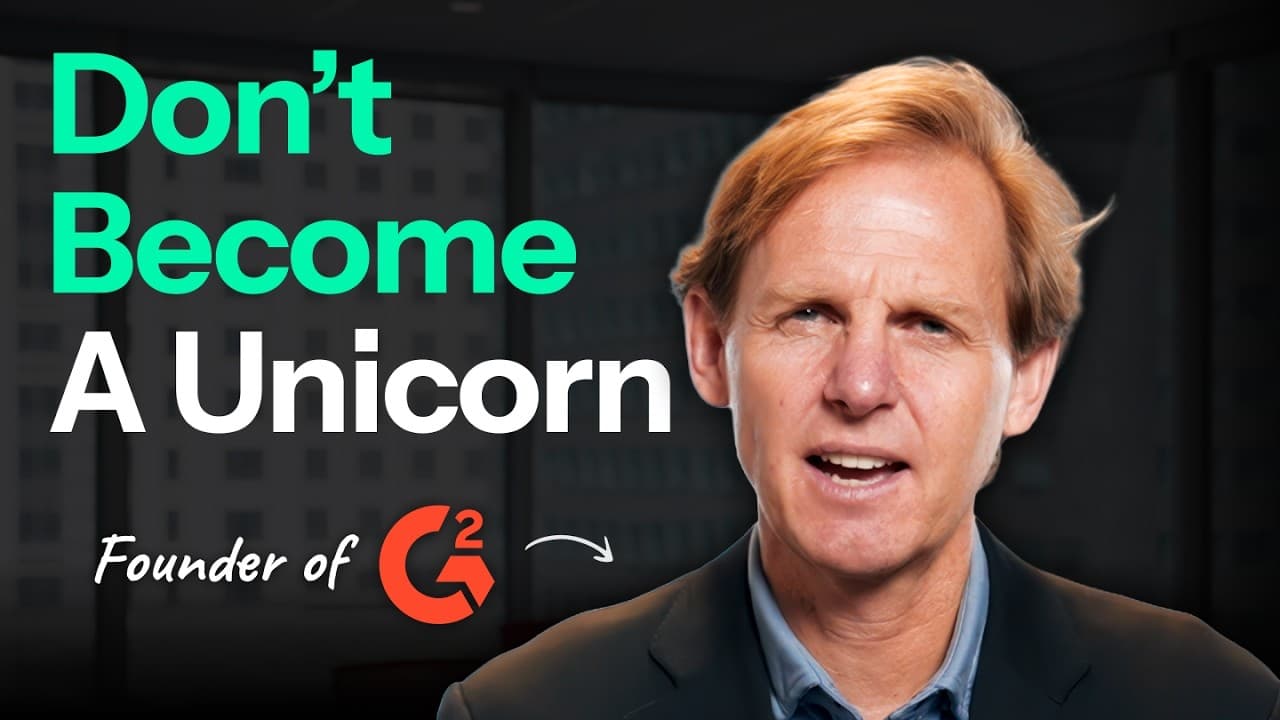
Delay aggressive hiring until product-market fit is evident, keep founder-led selling in place, and make every hire productive as quickly as possible. Godard Abel’s first company nearly failed after spending $19 million, but customer focus, organic growth, and emotional fortitude helped it become profitable within a year and eventually find product-market fit seven years after launch.
Transcript
I think the most difficult thing for me as entrepreneur is letting people go. The first year funding we scaled to 70 people. Then we had to cut down to 20 and that was over three rounds of layoffs. And I think those are always my worst days as an entrepreneur. Probably the thing I remember most is even just having to let one person go. First time I... Read More
Key Insights
- Big Machines’ biggest early mistake was spending capital and hiring aggressively before establishing product-market fit. The company raised $20 million, expanded to 70 employees, and hired two sales vice presidents when its founders should still have been leading sales and learning directly from customers.
- The dot-com crash exposed the danger of building a company around favorable funding conditions. Investors stopped backing internet businesses, manufacturers became skeptical about selling online, and Big Machines signed only two customers in a year when its business plan expected 20, pushing the company close to bankruptcy.
- Big Machines’ survival depended on a severe operational reset after it had spent $19 million of its $20 million in funding. The company reduced its workforce from 70 to 20 and committed to becoming profitable and cash-flow positive within one year through organic growth.
- Customer focus provided a practical path out of the crisis. Abel concentrated on winning the next deal and making the next customer happy, reasoning that sufficiently rapid revenue generation would produce profitability. That approach helped Big Machines become profitable within a year of its restructuring.
- True product-market fit became visible through inbound demand and faster-than-expected deal conversion. Big Machines experienced those signals in 2007, seven years after its founding, when Salesforce’s move into larger accounts created demand for the company’s configure, price, and quoting technology.
- Strategic partnerships can turn established technology into market momentum. Salesforce brought Big Machines into enterprise opportunities that required quoting software, while partnerships with Salesforce and Oracle positioned the product as a complementary tool for their customer relationship management offerings.
- Early customer results gave the founders a reason to persevere before the broader market was ready. About a dozen customers were successfully using Big Machines, completing quotes 80 percent faster and processing orders online in real time, which supported the founders’ belief in eventual adoption.
- Emotional fortitude is a defining entrepreneurial capability because company building repeatedly involves layoffs, lost customers, missed deals, and departing employees. Abel argues that founders who continue through those painful periods are the ones positioned to experience later successes, including major deals, strong recruits, and liquidity events.
Install to Summarize YouTube Videos and Get Transcripts
Explore YouTube Video Summarizer or Get YouTube Transcript Extractor
Questions & Answers
Q: What was Godard Abel’s biggest early startup mistake?
Godard Abel’s biggest early mistake was spending money and scaling the organization before Big Machines had established product-market fit. The company raised $20 million, grew from two people to 70 in its first year, and hired two vice presidents of sales. Abel later concluded that the founders should have continued founder-led selling while learning what customers truly needed.
Q: How did Big Machines survive after nearly running out of money?
Big Machines survived by abandoning its earlier growth assumptions and shifting to organic growth. After spending $19 million of the $20 million it had raised, the company reduced its workforce from 70 to 20 and aimed to become profitable and cash-flow positive within a year. Its operating focus became winning the next deal, satisfying each customer, and generating revenue quickly.
Q: How long did Big Machines take to find product-market fit?
Big Machines took seven years to find product-market fit, reaching the turning point in 2007 after struggling and missing sales plans through its first six years. The clearest evidence was the arrival of inbound demand from large companies and deals converting faster than expected. Salesforce’s growing enterprise ecosystem helped create demand for Big Machines’ quoting technology.
Q: What are the signs of true product-market fit?
The signs of true product-market fit described by Abel are customers actively wanting to buy, inbound demand appearing without the company having to force every opportunity, and deals converting faster than expected. Big Machines saw those conditions in 2007, when large companies began approaching it through the Salesforce ecosystem and purchasing its configure, price, and quoting software.
Q: Why is founder-led selling important before product-market fit?
Founder-led selling is important before product-market fit because founders still need direct exposure to customer needs, objections, and buying behavior. Big Machines hired two vice presidents of sales too early, before it had a repeatable market. Abel identified that decision as part of the company’s premature spending and concluded that the founders should have remained personally responsible for selling at that stage.
Q: How should founders reduce the risk of painful layoffs?
Founders can reduce layoff risk by maintaining a financial buffer, raising enough capital to persevere longer, and ensuring that new employees become productive quickly. Abel specifically advises connecting hiring to the company’s ability to produce revenue. His caution came from reducing Big Machines from 70 employees to 20 through three rounds of layoffs after the dot-com crash.
Q: Why does emotional fortitude matter for entrepreneurs?
Emotional fortitude matters because entrepreneurship includes painful events that intellectual analysis alone cannot remove, such as letting employees go, losing deals, losing customers, and watching valued people leave. Abel believes successful entrepreneurs are distinguished by their ability to persevere through those moments. The later highs, including new customers, excellent recruits, and liquidity events, require enduring the preceding lows.
Q: How did partnerships help Big Machines succeed?
Partnerships with Salesforce and Oracle helped Big Machines reach customers that needed quoting software alongside customer relationship management tools. As Salesforce moved into larger accounts, enterprise buyers required configure, price, and quoting capabilities. Salesforce consequently brought Big Machines into deals because it already had the necessary technology, creating inbound demand and helping the company become a leading complementary quoting tool.
Summary & Key Takeaways
-
Godard Abel started Big Machines in 2000 after gaining experience at McKinsey, Stanford Business School, and an early internet startup. The company raised $20 million and expanded from two people to 70 during its first year, when investors expected internet businesses to grow rapidly and potentially go public within a short period.
-
The dot-com crash reversed investor and customer sentiment, leaving Big Machines with weak sales and no realistic path to new funding. After burning through $19 million, the company reduced its staff from 70 to 20, pursued organic growth, and concentrated on winning deals, satisfying customers, generating revenue, and becoming cash-flow positive.
-
Big Machines became profitable within a year of its reset but needed until 2007 to find product-market fit. Partnerships with Salesforce and Oracle generated inbound enterprise demand for its quoting software. Oracle eventually acquired the company for $400 million, reinforcing Abel’s belief that entrepreneurial success depends heavily on emotional fortitude and perseverance.
Read in Other Languages (beta)
Share This Summary 📚
Summarize YouTube Videos and Get Video Transcripts with 1-Click
Try YouTube Summary with ChatGPT & Claude or YouTube Transcript Generator
Explore More Summaries from EO 📚
Summarize YouTube Videos and Get Video Transcripts with 1-Click
Try YouTube Summary with ChatGPT & Claude or YouTube Transcript Generator