How Can Mathematics Revolutionize Art Conservation?
TL;DR
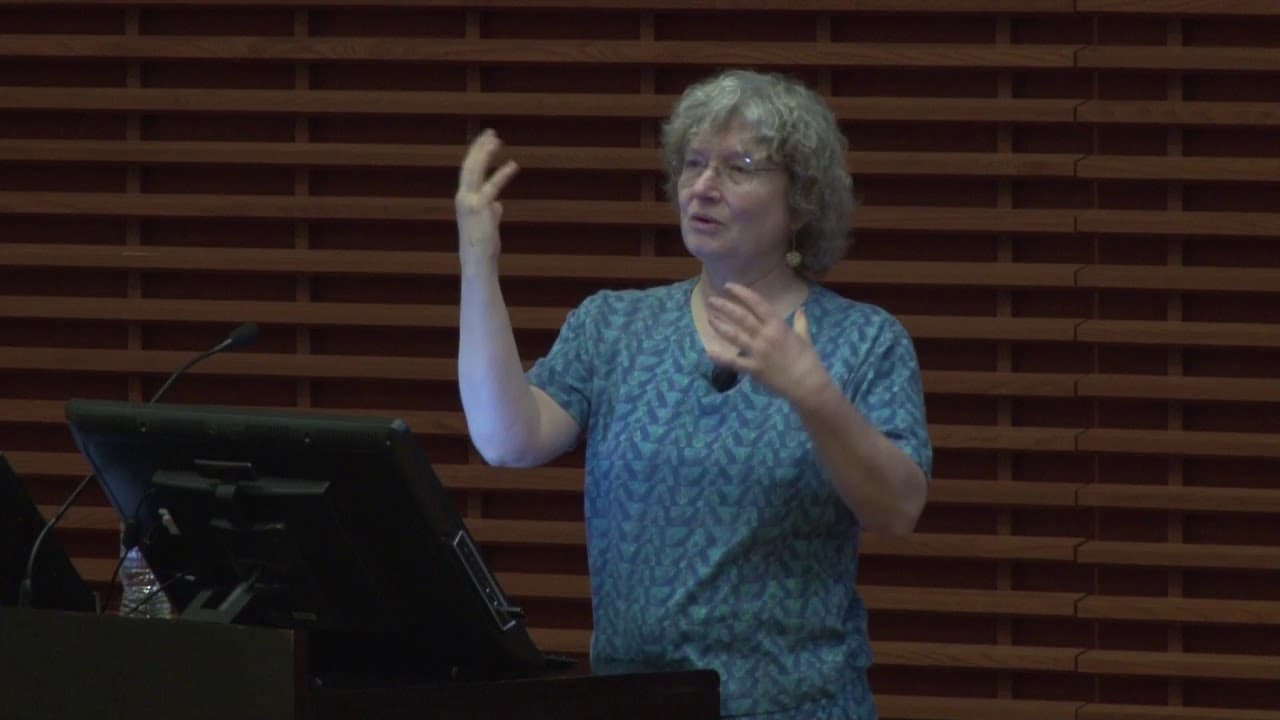
Mathematics is transforming art conservation by enabling the reconstruction of damaged frescoes and analyzing hidden details in artwork through techniques like image processing and X-ray fluorescence. These methods help art historians and conservators identify fragments, uncover original intentions, and enhance the appreciation of art while collaborating across disciplines to preserve cultural heritage.
Transcript
hello hello hi everybody I would like to welcome you all to this evening's lecture my name is Eleni O'Neill and I am the chair of the mathematics department here at Stanford this lecture is one in a series of public lectures that is organized by the Stanford mathematics department and is sponsored by Stanford mathematics mathematical Research Cente... Read More
Key Insights
- 🥰 Mathematics and image analysis have become powerful tools in the field of art conservation, allowing for the restoration and understanding of damaged and fragmented artwork.
- 📤 X-ray fluorescence analysis has proven useful in identifying hidden text and revealing the artist's original intentions.
- 🫵 Algorithms have been developed to digitally remove distracting elements from paintings, enhancing the viewer's appreciation of the artwork.
- 🥰 Collaboration between mathematicians, art historians, and conservators has led to significant advancements in the understanding and preservation of art.
- 🥰 The use of mathematical algorithms and digital tools is opening new possibilities for art conservation and analysis, enriching our understanding of artistic techniques and styles.
- 🥰 The combination of traditional art restoration techniques with mathematical analysis can provide valuable insights into the history, meaning, and condition of artwork.
Install to Summarize YouTube Videos and Get Transcripts
Explore YouTube Video Summarizer or Get YouTube Transcript Extractor
Questions & Answers
Q: How did mathematicians use circular harmonics to solve the puzzle of reconstructing fragmented frescoes?
Circular harmonics were used to decompose the content of each fragment into a superposition of coefficients, allowing for easy rotation and precise placement of the fragments.
Q: How did x-ray fluorescence analysis help in identifying hidden text in artwork?
X-ray fluorescence analysis identified specific elements present in the artwork, such as antimony or arsenic, which were used in pigments. By analyzing the distribution of these elements, conservators were able to determine the hidden text and its significance.
Q: How were algorithms developed to remove cradles from paintings?
By analyzing the crack patterns and wood grain of both the panel and the cradle, algorithms were able to separate the two and digitally remove the cradle. This allowed for a more focused appreciation of the artwork without the distraction of the cradle.
Q: What insights were gained from the analysis of the missing panel in the Gisé Altarpiece?
Through the analysis of historical records and the use of experts in art history, a missing panel of the altarpiece was reconstructed. This allowed for a more complete understanding of the altarpiece's story and the intentions of the artist.
Summary & Key Takeaways
-
Mathematics and image analysis have been used to reconstruct fragmented frescoes, such as those damaged in World War II, by digitally piecing together thousands of fragments.
-
X-ray fluorescence analysis has been instrumental in analyzing artwork, revealing hidden text, and identifying the original intentions of artists.
-
Algorithms have been developed to remove distracting elements, such as cradles, from paintings, allowing for a more focused appreciation of the artwork.
Read in Other Languages (beta)
Share This Summary 📚
Summarize YouTube Videos and Get Video Transcripts with 1-Click
Try YouTube Summary with ChatGPT & Claude or YouTube Transcript Generator
Explore More Summaries from Stanford 📚
Summarize YouTube Videos and Get Video Transcripts with 1-Click
Try YouTube Summary with ChatGPT & Claude or YouTube Transcript Generator