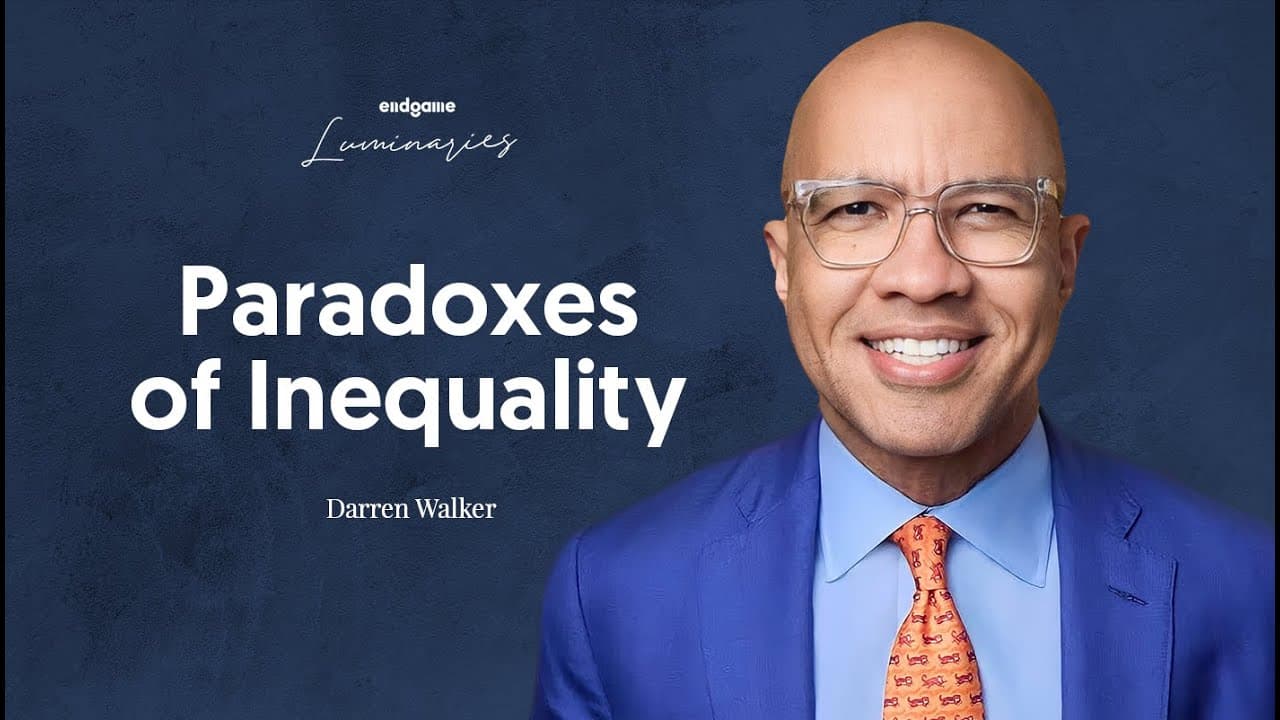
Darren Walker: Justice in the Eyes of the Privileged | Endgame #140 (Luminaries)
TL;DR
Darren Walker discusses philanthropy's role in justice and democracy.
Transcript
There's no doubt that technological innovation has the potential of creating a more unjust, unfair, and unequitable world. But it doesn't have to be that way. Empathy is a critical ingredient to succeed in the world and to also lead and manage in a very complicated changing dynamic world. We have to be able to listen to each other, to build bridges... Read More
Key Insights
- Technological innovation can create a more unjust world, but empathy and listening can mitigate this. Engaging indigenous voices can provide solutions to global issues, including biodiversity conservation.
- Philanthropy is shifting from charity to justice, aiming to address root causes of inequality, such as racism and classism, rather than merely ameliorating conditions.
- Inequality threatens democracy, as it erodes societal hope. Philanthropy can address inequality by empowering marginalized communities and holding elites accountable.
- Developed nations' narratives often undermine the potential of developing countries. Recognizing countries like Indonesia as peers can foster better global partnerships.
- Education should foster curiosity and empathy, essential for leadership in a complex world. Current overstimulation from technology challenges sustained engagement and learning.
- Leadership today is influenced by sensationalism over intellectualism, risking the quality of future leaders. Citizens must demand leaders who unite rather than divide.
- Artificial intelligence presents both opportunities and risks. Policies and responsible leadership are crucial to prevent AI from exacerbating inequality.
- Climate justice involves balancing carbon neutrality goals with the needs of developing nations. Indigenous communities hold key insights for achieving sustainable transitions.
Install to Summarize YouTube Videos and Get Transcripts
Explore YouTube Video Summarizer or Get YouTube Transcript Extractor
Questions & Answers
Q: What is the role of empathy in addressing technological innovation's impact?
Empathy plays a crucial role in mitigating the potentially negative impacts of technological innovation. By fostering empathy, individuals and leaders can better listen to and understand diverse perspectives, particularly those of marginalized communities. This approach helps build bridges and find common ground, ensuring that technological advancements contribute to a more equitable and just world.
Q: How is philanthropy evolving according to Darren Walker?
Philanthropy is evolving from a focus on charity and generosity to one centered on justice and dignity. This shift involves addressing root causes of inequality, such as racism and classism, rather than merely ameliorating conditions. Walker highlights the emergence of a new generation of philanthropists committed to justice-oriented approaches, aiming to create systemic change and sustainable solutions.
Q: What is the relationship between inequality and democracy?
Inequality poses a significant threat to democracy, as it undermines societal hope and trust. In societies with growing inequality, democracy is at greater risk. Philanthropy can play a role in addressing inequality by empowering marginalized communities, amplifying their voices, and holding elites accountable. By doing so, philanthropy can help strengthen democratic systems and promote shared prosperity.
Q: How can developing countries be better recognized globally?
Developing countries can be better recognized globally by challenging outdated narratives that undermine their potential. Recognizing countries like Indonesia as peers, rather than viewing them through a narrow lens, can foster better global partnerships and collaboration. This involves acknowledging their vibrant democracies, economic potential, and the contributions they can make on the global stage.
Q: What does it mean to be educated according to Darren Walker?
Being educated, according to Darren Walker, involves having a sense of curiosity about the world and an openness to diverse perspectives. Education should be a mind-opening experience, fostering empathy and understanding. It is not just about acquiring knowledge but also about developing the ability to listen, build bridges, and find common ground with others, which are essential qualities for leadership and democracy.
Q: What challenges does leadership face in the post-truth era?
In the post-truth era, leadership faces the challenge of sensationalism overshadowing intellectualism. This environment prioritizes feelings over empirical evidence, making it difficult to ensure the emergence of leaders with qualities akin to historical figures like Martin Luther King and Mahatma Gandhi. Citizens must demand leaders who prioritize unity and bridge-building over divisiveness and sensationalism.
Q: What are the potential impacts of AI on society?
Artificial intelligence has the potential to be transformational in areas such as healthcare and infrastructure. However, without regulation, AI could exacerbate existing inequalities and create a more unjust world. Responsible leadership and policy interventions are crucial to ensure that AI contributes positively to society, preventing its misuse and ensuring it benefits all, not just the elites.
Q: How can indigenous voices contribute to climate justice?
Indigenous voices are crucial in achieving climate justice, as they control 80% of the world's biodiversity and possess valuable insights for sustainable solutions. By centering their perspectives in global discussions, such as those at COP meetings, we can develop more effective strategies for achieving carbon neutrality and addressing environmental challenges. Their involvement ensures that solutions are inclusive and consider local contexts.
Summary & Key Takeaways
-
Darren Walker emphasizes the potential of philanthropy to shift from charity to justice, aiming to address systemic inequalities and empower marginalized voices. He highlights the importance of empathy and listening in fostering a more equitable world.
-
Walker discusses the role of philanthropy in strengthening democracy by addressing inequality. He stresses the need for global recognition of developing countries' potential and the importance of inclusive leadership in addressing complex global challenges.
-
The conversation touches on the impact of technology and AI on society, highlighting the need for regulation and responsible innovation. Walker also addresses climate justice, advocating for indigenous voices to be central in developing sustainable solutions.
Read in Other Languages (beta)
Share This Summary 📚
Summarize YouTube Videos and Get Video Transcripts with 1-Click
Try YouTube Summary with ChatGPT & Claude or YouTube Transcript Generator
Explore More Summaries from Gita Wirjawan 📚



Summarize YouTube Videos and Get Video Transcripts with 1-Click
Try YouTube Summary with ChatGPT & Claude or YouTube Transcript Generator