How to Sound Smart About Modern Art
TL;DR
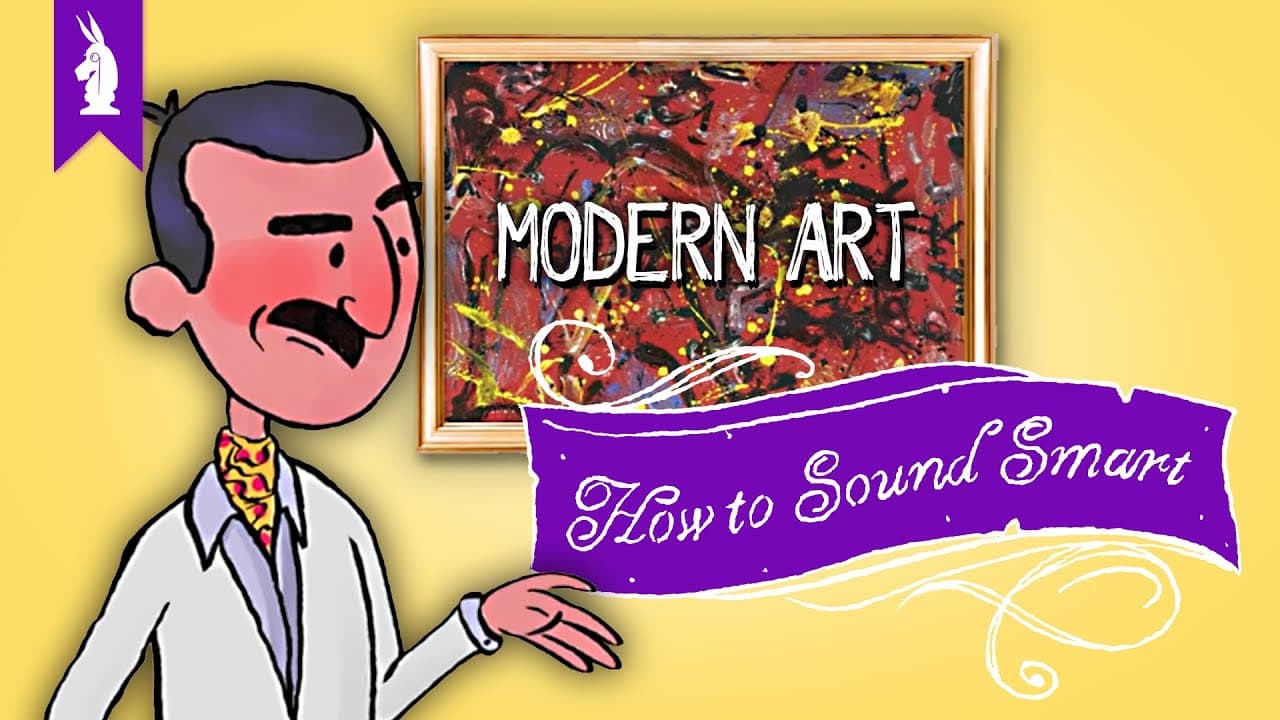
The video explains modern art's evolution and its significance in today's society.
Transcript
- [Announcer] This video is sponsored by BetterHelp. (upbeat music) - [Narrator] You're hiding out in a dimly lit corner at a crowded house party when a chaotic, abstract painting catches your eye. This $10 bootleg Jackson Pollock print seems like more charismatic company than that guy shotgunning a a craft beer, so you stop and really soak it in. ... Read More
Key Insights
- 💝 Modern art responds to the rapidly changing urban environment from the late 19th to mid-20th century, aiming to provoke deeper emotional connections.
- 〽️ Intermingling of art and advertisements blurs the lines of artistic intention, altering perceptions about what can be deemed art in society.
- 〽️ The transition from achieving classical beauty to exploring conceptual truths marks modern art's evolution.
- 🥰 Factors influencing art prices include cultural shifts, investor activity, and the marketization of creativity, raising questions about art's intrinsic value.
- 😑 Modern artists favored emotional engagement over moral didacticism, leading to diverse expressions and evoking varied viewer reactions.
- 💨 Surrealism represents a significant departure from realism, focusing on accessing subconscious experiences and interpreting reality in poignant, often unsettling ways.
- 🤗 The impact of psychological theories, particularly Freud's, led many artists to explore the depths of human experience, opening new avenues for artistic expression.
Install to Summarize YouTube Videos and Get Transcripts
Explore YouTube Video Summarizer or Get YouTube Transcript Extractor
Questions & Answers
Q: What distinguishes modern art from contemporary art?
Modern art refers to artistic movements from approximately the 1860s to the 1970s, while contemporary art encompasses all art produced after that timeframe. This distinction is important as it reflects the evolving ideas and techniques of artists, as well as how society interprets art in different eras.
Q: How did historical events influence the development of modern art?
The rapid changes in urban life, technological advancements, and the aftermath of World War I significantly influenced modern artists. They sought to represent the complexities and truths of human existence, often choosing to express disillusionment and chaos through abstract forms rather than realistic portrayals.
Q: What role did Sigmund Freud play in the evolution of modern art?
Freud's theories on the subconscious and human emotions profoundly influenced modern artists, particularly surrealists. They aimed to access deeper feelings hidden beneath rational thought, encouraging viewers to engage with their subconscious through the unconventional imagery and themes presented in their work.
Q: Why did the value of modern art increase significantly in the 1980s?
The rise of global art investors, combined with tax changes affecting art donations and a culture of materialism, led to skyrocketing prices for modern art. Additionally, as more artists passed away, their work became more sought after, further driving up the value and sparking debates on art's true worth.
Q: What is the significance of the urinal art piece by Marcel Duchamp?
Duchamp's urinal challenged the conventional definition of art by presenting a mass-produced item as art, prompting viewers to reconsider the nature of creativity and what constitutes artistic expression. This act questioned the authority of curators and the elitism often found in the art world.
Q: How did the transition from realism to abstraction occur in art?
As photography advanced in capturing realistic images, artists pivoted towards abstraction to explore and express concepts beyond visible realities. This shift allowed artists to present unique interpretations of life and comment on social issues, thus redefining art’s purpose and capability in society.
Q: How did modern artists respond to critics who demanded moral or educational messages in art?
Modern artists often rejected the notion that art must serve moral or educational functions, choosing instead to create for art's sake. This shift freed artists to explore abstract and unconventional ideas, as demonstrated by James McNeill Whistler who even won a lawsuit against a critic for such claims.
Q: What overarching message does modern art convey about human experiences?
Modern art often reflects the complexities and struggles of modern existence, capturing emotions and societal realities that may be uncomfortable or untraditional. It challenges viewers to engage with these truths, provoking thought and conversation about what it means to be human in contemporary society.
Summary & Key Takeaways
-
Modern art emerged from the 1860s to the 1970s, moving away from hyper-realistic representation towards experimentation with forms and ideas, fundamentally changing how art is perceived.
-
Influential figures like Paul Cezanne and Edouard Manet sought to evoke emotional responses rather than depict beauty, reflecting society's complexities post-World War I.
-
The commercialization of art began in the 1980s, revealing a clash between the intrinsic value of art and its monetary worth, provoking discussions on what art truly represents.
Read in Other Languages (beta)
Share This Summary 📚
Summarize YouTube Videos and Get Video Transcripts with 1-Click
Try YouTube Summary with ChatGPT & Claude or YouTube Transcript Generator