That’s Not a Rattlesnake… It’s an Owl!
TL;DR
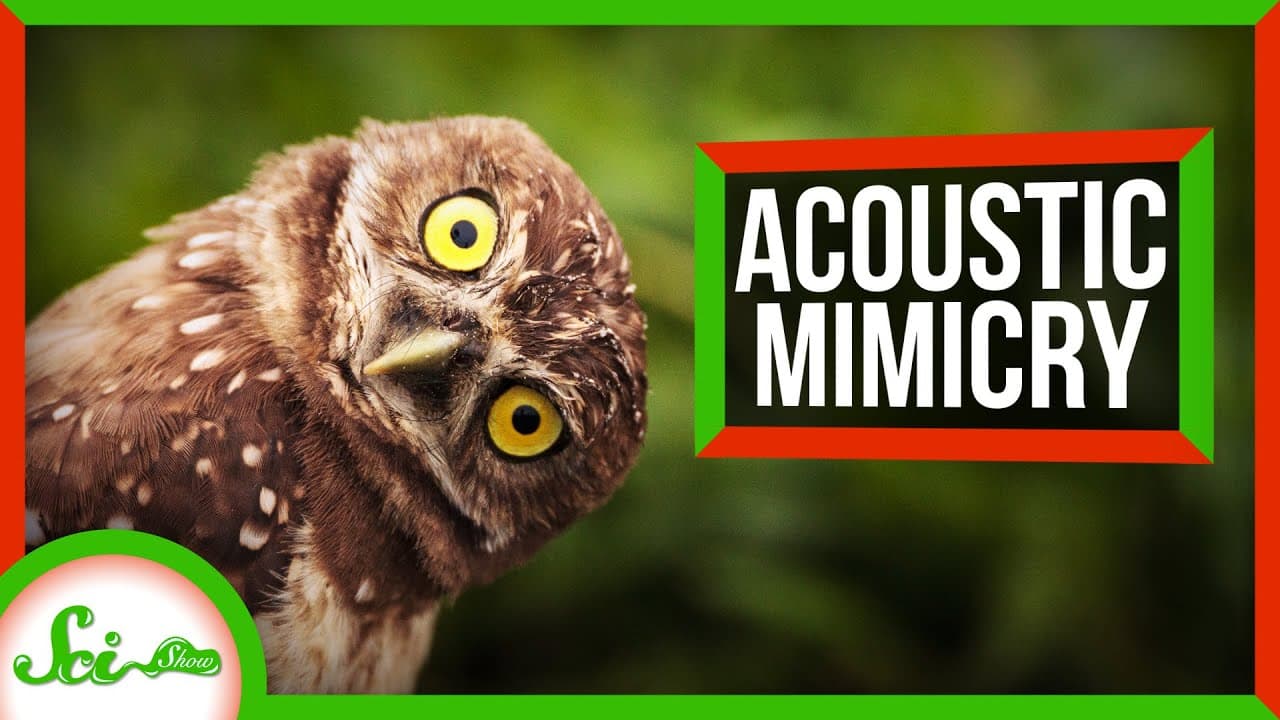
Burrowing owls, the only known owls to make their homes underground, use a hissing sound that mimics a rattlesnake's rattle to deter predators from entering their burrows.
Transcript
Thanks to Brilliant for supporting this episode. Go to Brilliant.org/SciShow to learn more about their course on Search Engines. [♪ INTRO] You don’t usually hear the words “bird” and “burrow” in the same sentence. Because many birds prefer nesting in trees to holes in the ground. After all, burrows can be infiltrated by all kinds of ground-dwelling... Read More
Key Insights
- 🦉 Burrowing owls are the only known owls that live underground.
- ❓ They steal burrows from other animals and defend them using acoustic batesian mimicry.
- 👪 By mimicking a rattlesnake's rattle, burrowing owls deter predators and protect their homes.
Install to Summarize YouTube Videos and Get Transcripts
Explore YouTube Video Summarizer or Get YouTube Transcript Extractor
Questions & Answers
Q: Why do burrowing owls prefer stealing burrows instead of digging their own?
While burrowing owls are capable of digging their own burrows, they prefer stealing them from other animals because it saves them time and energy. It's an efficient strategy.
Q: How do burrowing owls mimic a rattlesnake's rattle?
Burrowing owls produce a hissing sound that closely resembles the acoustic structure and frequency of a rattlesnake's rattle. This sound is enough to deter predators, as they mistake the owls for venomous snakes.
Q: Is acoustic batesian mimicry unique to burrowing owls?
Yes, this specific form of mimicry is unique to burrowing owls. Even closely related owl species do not possess this defensive behavior. It is a specialized adaptation developed by burrowing owls.
Q: How did burrowing owls develop this ability?
The origins of this ability are not fully understood, but it is believed to have evolved from the vocalizations that juvenile owls use to communicate hunger to adults. Over time, the sound was repurposed for defensive mimicry.
Summary & Key Takeaways
-
Burrowing owls are small brown owls that live underground, preferably in stolen burrows rather than digging their own.
-
They use a hissing sound that closely resembles a rattlesnake's rattle to scare away predators like badgers and coyotes.
-
This unique defensive strategy, known as acoustic batesian mimicry, evolved to protect burrowing owls in their shared habitat with rattlesnakes.
Read in Other Languages (beta)
Share This Summary 📚
Summarize YouTube Videos and Get Video Transcripts with 1-Click
Try YouTube Summary with ChatGPT & Claude or YouTube Transcript Generator
Explore More Summaries from SciShow 📚

Summarize YouTube Videos and Get Video Transcripts with 1-Click
Try YouTube Summary with ChatGPT & Claude or YouTube Transcript Generator