What Did 'Big Science' Mean for Postwar Physics?
TL;DR
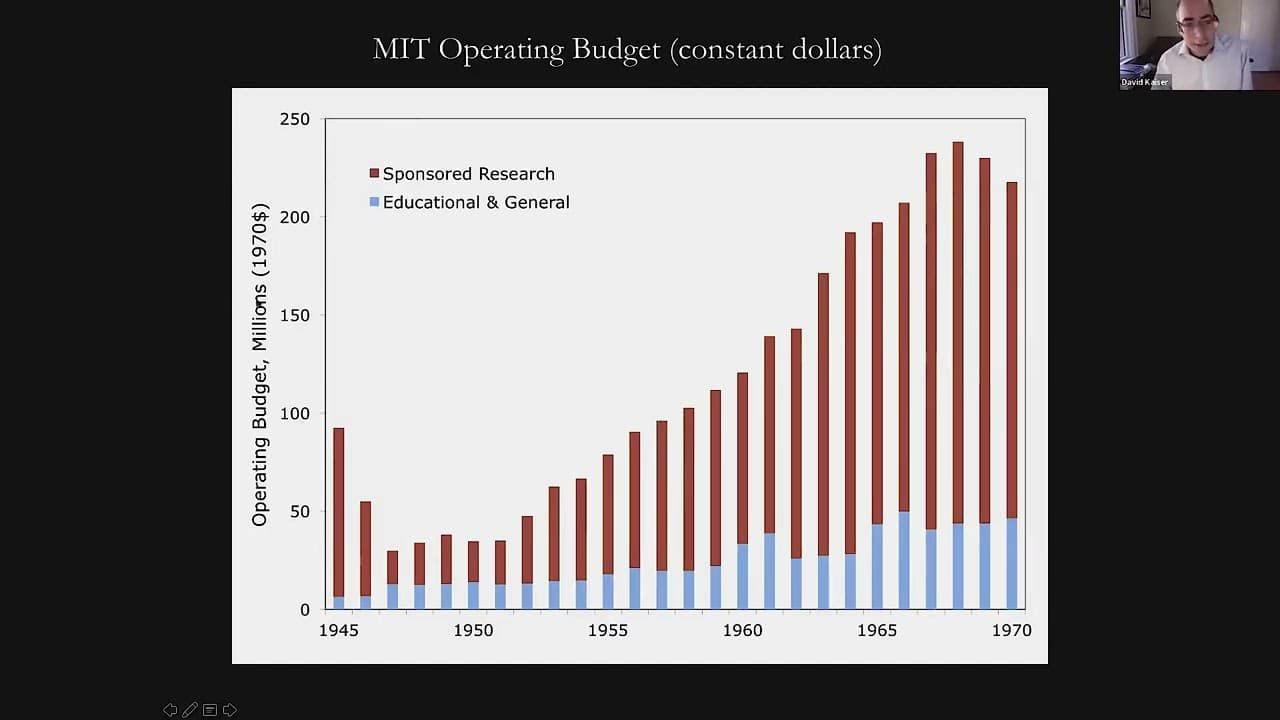
The term 'big science' describes the dramatic expansion of funding, resources, and student enrollments in physics following World War II, largely driven by Cold War dynamics. A focus on increasing scientific manpower in the U.S. emerged after the Sputnik launch, resulting in significant federal investment through initiatives like the National Defense Education Act. However, this growth proved unsustainable, ultimately leading to a decline in physics enrollments due to various factors, including shifts in defense priorities.
Transcript
[SQUEAKING] [RUSTLING] [CLICKING] DAVID KAISER: So today, we're really kind of making a transition in the material from the overtly war time focus we've had for a couple of classes in a row. And now we'll start moving toward the last part of the semester, asking about some implications or some effects from that very dramatic series of developments ... Read More
Key Insights
- 😃 The term "big science" refers to the exponential growth in funding, machines, and enrollments in physics and related fields during the Cold War.
- 🖐️ Concerns over the so-called manpower gap between the US and the Soviet Union played a significant role in the rapid expansion of the field.
- 🥺 The launch of Sputnik intensified efforts to increase investment in scientific manpower, leading to the passage of the National Defense Education Act.
Install to Summarize YouTube Videos and Get Transcripts
Explore YouTube Video Summarizer or Get YouTube Transcript Extractor
Questions & Answers
Q: What was the significance of the term "big science" in the Cold War era?
The term "big science" referred to the exponential growth in funding, machines, and enrollments in physics and related fields during the Cold War. It was driven by concerns over scientific manpower and the competition between the US and the Soviet Union.
Q: How did the launch of Sputnik impact the push for increased investment in scientific manpower?
The launch of Sputnik intensified concerns over the so-called manpower gap between the US and the Soviet Union. It served as a catalyst for the passage of the National Defense Education Act, which provided substantial funding for higher education in science and engineering.
Q: What factors accounted for the decline in numbers in the field of physics?
The decline in numbers can be attributed to several factors. The escalation of the Vietnam War meant that draft deferments for full-time students were no longer available. Additionally, there were concerns about the return on investment in defense-related research and a reevaluation of funding priorities.
Q: How did the hype and amplification of the manpower gap contribute to the rapid growth in enrollments in physics?
The hype surrounding the perceived manpower gap and the launch of Sputnik led to increased public and political attention on the need for more scientists and engineers, particularly in the physical sciences. This, in turn, led to the passage of legislation and increased funding for higher education in these fields, driving the rapid growth in enrollments.
Summary & Key Takeaways
-
The term "big science" emerged in the aftermath of World War II, referring to the exponential growth in funding, machines, and enrollments in physics and related fields.
-
Concerns over scientific manpower and the competition with the Soviet Union played a significant role in this rapid expansion.
-
The hype around the so-called manpower gap between the US and the Soviet Union, as well as the launch of Sputnik, amplified the push for increased investment in scientific manpower.
-
The National Defense Education Act was passed in 1958, providing substantial funding for higher education in science and engineering.
-
However, the growth was not sustainable, and a combination of factors such as the Vietnam War, changes in defense priorities, and a reevaluation of the return on investment led to a significant decline in numbers.
Read in Other Languages (beta)
Share This Summary 📚
Summarize YouTube Videos and Get Video Transcripts with 1-Click
Try YouTube Summary with ChatGPT & Claude or YouTube Transcript Generator
Explore More Summaries from MIT OpenCourseWare 📚


Summarize YouTube Videos and Get Video Transcripts with 1-Click
Try YouTube Summary with ChatGPT & Claude or YouTube Transcript Generator