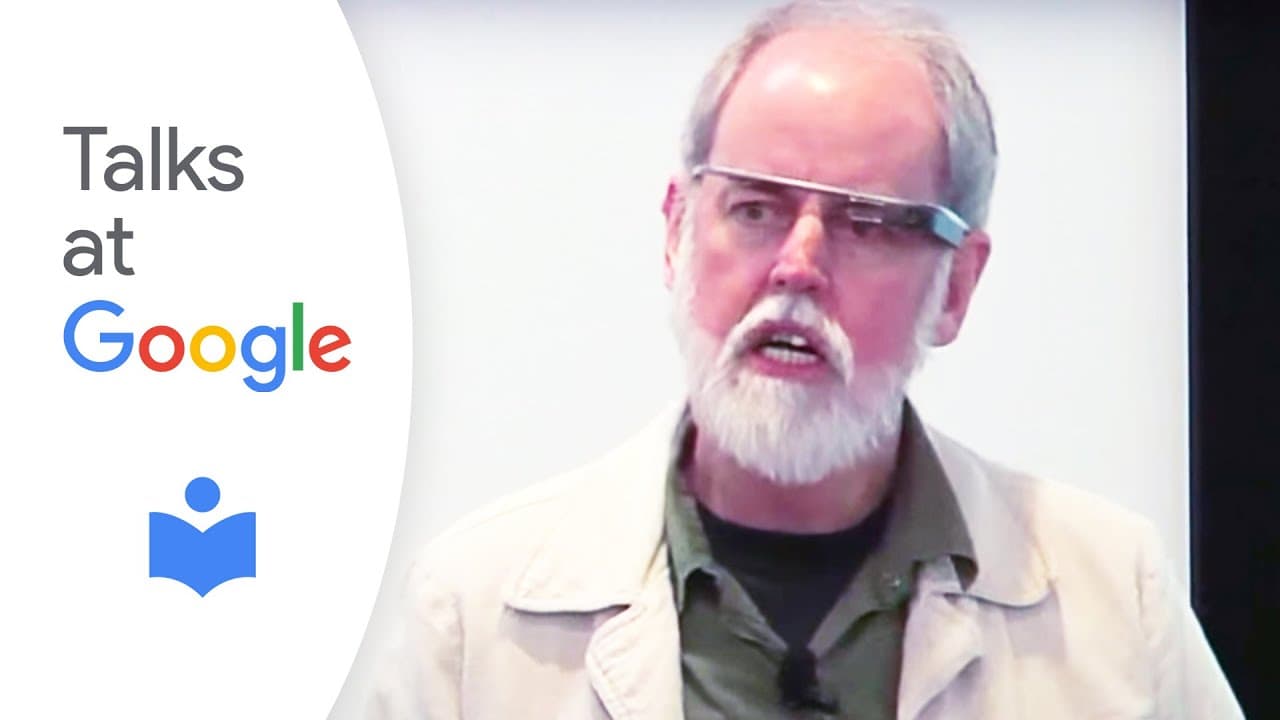
Skycorp and the ISEE-3 Reboot Project | Dennis Wingo | Talks at Google
TL;DR
Skycorp CEO Dennis Wingo and his collaborators revived the ISEE-3 spacecraft by combining software-defined radio research, modern hardware, systems engineering, and Wingo’s experience restoring obsolete space technology. NASA had discarded the original equipment in the 1990s, but the team reestablished communication and used the spacecraft for magnetometer and gamma-ray-burst experiments. Read on to see how they approached an allegedly impossible recovery.
Transcript
MALE SPEAKER: I'm really, really happy and excited to let everybody know that we have Dennis Wingo here speaking today. Dennis is the CEO of Skycorp Incorporated, and he spent the last year, over a year, on this ISEE-3 Reboot Project, which I'm sure you guys are on the website and seeing the news up until-- I think they had a post about it this mor... Read More
Key Insights
- 🤔 Dennis Wingo and his team successfully revived the ISEE-3 spacecraft, which was thought to be impossible due to lack of documentation and outdated technology.
- 😀 The project faced challenges such as finding a transmitter and communication network, but collaboration with NASA and other experts helped overcome these obstacles.
- 🙌 The revived spacecraft has been used for scientific experiments on magnetometers and gamma ray bursts, with plans for future calibration of other instruments.
- ✊ The project highlights the power of collective consciousness and the importance of preserving engineering documentation for future generations.
Install to Summarize YouTube Videos and Get Transcripts
Explore YouTube Video Summarizer or Get YouTube Transcript Extractor
Questions & Answers
Q: How did Dennis Wingo and his team revive the ISEE-3 spacecraft?
They investigated software-defined radios and determined that modern software, hardware, and systems engineering could replace capabilities that had previously required obsolete equipment. Drawing on Wingo’s experience restoring old space hardware and data, the team established the transmitter and communications resources needed to contact and revive ISEE-3.
Q: Why was recovering ISEE-3 considered impossible?
NASA had disposed of the equipment needed to communicate with the spacecraft in the 1990s. The project also faced outdated technology, limited documentation, and the need to assemble a suitable transmitter and communications network.
Q: What prompted Dennis Wingo to begin the ISEE-3 Reboot Project?
Wingo read a blog post in February saying that ISEE-3 would pass Earth but could not be saved. Because he was already familiar with the spacecraft and tends to investigate projects labeled impossible, he began researching whether modern technology could recover it.
Q: What is the ISEE-3 spacecraft designed to study?
ISEE-3 studies the solar-terrestrial interface, where energy from the Sun begins interacting with Earth. Its instruments include magnetometers, cosmic-ray detectors, wide-band sensors, and a gamma-ray-burst instrument.
Q: What scientific work was done after ISEE-3 was revived?
The revived spacecraft was used for experiments involving its magnetometers and gamma-ray bursts. The team also planned to calibrate additional scientific instruments and make the resulting data available to the public.
Q: What made ISEE-3 scientifically important?
Its gamma-ray-burst instrument was the first to detect unusual bursts arriving from across the universe. Those findings later contributed to the creation of a dedicated spacecraft called the Gamma Ray Observatory.
Q: How large are ISEE-3’s sensor booms?
Each boom is 41 meters long. Together they give the spacecraft a tip-to-tip width of 92 meters in space, which led the team to jokingly call it a “space blender.”
Q: What earlier projects prepared Dennis Wingo for the ISEE-3 recovery?
Wingo helped fly the first Macintosh used on the Space Shuttle with a 5.25-inch, 1-gigabyte hard drive. He also helped raise $6.6 million in cash and in-kind contributions for the first student satellite supported by NASA, and later restored 1960s lunar-image tapes and old tape drives through the McMoons project.
Summary & Key Takeaways
-
The ISEE-3 spacecraft, launched in 1978, was thought to be impossible to revive due to outdated technology and lack of documentation.
-
Dennis Wingo and his team decided to revive the spacecraft after reading a blog post about its trajectory.
-
They faced challenges such as finding a transmitter and communication network, but were able to revive the spacecraft and conduct scientific experiments.
Read in Other Languages (beta)
Share This Summary 📚
Summarize YouTube Videos and Get Video Transcripts with 1-Click
Try YouTube Summary with ChatGPT & Claude or YouTube Transcript Generator
Explore More Summaries from Talks at Google 📚

Summarize YouTube Videos and Get Video Transcripts with 1-Click
Try YouTube Summary with ChatGPT & Claude or YouTube Transcript Generator