How to Challenge Presumptions of Black Inferiority
TL;DR
Reject presumptions of Black inferiority instead of internalizing them, and recognize that professional success often follows persistent resistance to systemic barriers. The discussion argues that gender discrimination can be real while racial and family privilege also shape opportunity, so overlapping forms of advantage and disadvantage must be examined together.
Transcript
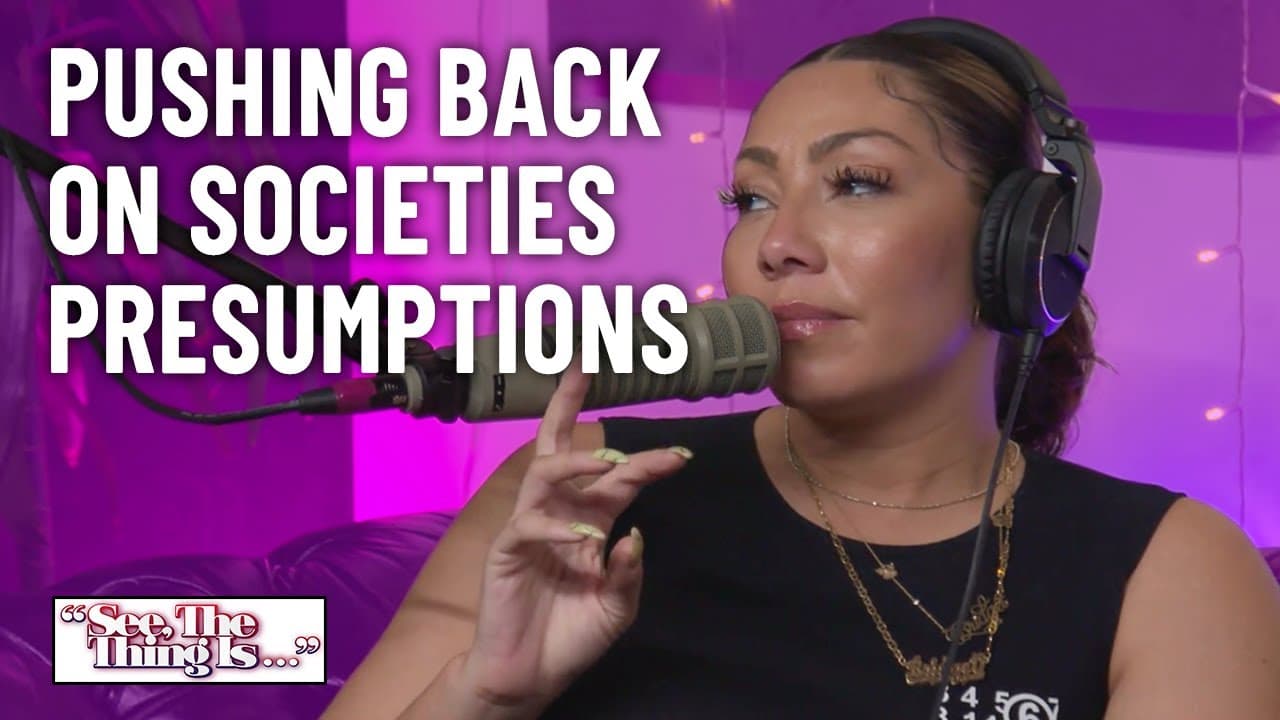
We do not need to absorb the society's presumption of our inferiority. We must push back on that. Right. We must. At every turn. At every turn. Mm-hmm. So that's how, that's how I show up without anger. Right. It's humorous to me. I mean, what, w- wait, but also- But when I- But also with Rachel Nichols in this, in this moment, right? Right. And, a... Read More
Key Insights
- The central argument is that Black people should not absorb society's presumption of their inferiority. The hosts advocate pushing back whenever that presumption appears and describe humor, rather than anger, as one possible way to confront it.
- Multiple forms of privilege and discrimination can operate simultaneously. The discussion accepts that women in sports are often not respected while arguing that race, professional connections, entitlement, and another candidate's qualifications must also be considered in a specific workplace dispute.
- The hosts characterize Rachel Nichols's response as frustration over not receiving a desired opportunity. They reject using the broader difficulties faced by women in sports as a shield against examining the racial and professional privilege they believe shaped her career.
- Family and institutional connections are presented as forms of professional privilege. The hosts emphasize Nichols's relationship to Diane Sawyer and Mike Nichols, then connect ABC News and ESPN to argue that her career cannot be discussed as though she lacked influential access.
- Professional bias extends beyond sports and media, according to the examples discussed. Black women in law, accounting, and health care may confront assumptions that they hold lower-ranking roles or possess fewer qualifications than white colleagues in the same workplace.
- A Black nurse anesthetist is described as the only Black woman in her University of Alabama program. According to the account, people assumed she was a nurse rather than the anesthesiology professional, and some white patients requested a white doctor instead.
- Black professionals can face skepticism from Black clients as well as white clients. The discussion cites a Black dentist whose qualifications were questioned by Black people and acknowledges a recurring preference for lawyers associated with another ethnic identity.
- The hosts argue that visible Black professional success should not be treated as rare or exceptional. They contend that Black attorneys, judges, accountants, agents, and medical professionals often had to overcome systems that discouraged their participation, making their achievements evidence of sustained effort and capability.
Install to Summarize YouTube Videos and Get Transcripts
Explore YouTube Video Summarizer or Get YouTube Transcript Extractor
Questions & Answers
Q: How can Black people challenge presumptions of inferiority?
The discussion recommends refusing to internalize society's presumption of Black inferiority and pushing back whenever it appears. One host says she can confront that presumption without anger because she finds it humorous. The larger principle is to recognize biased assumptions as products of society rather than accurate measures of a Black person's qualifications, competence, or professional standing.
Q: How can gender discrimination and racial privilege exist together?
The hosts argue that multiple things can be true at once. Women in sports can be disrespected as a group, while a particular white woman may also benefit from racial privilege, family relationships, or professional access. A fair analysis therefore should not use one form of disadvantage to erase other advantages or to avoid examining whether another candidate was more qualified.
Q: Why do the hosts criticize Rachel Nichols's workplace complaint?
The hosts interpret the complaint as frustration about not receiving a desired assignment and believe the broader struggles of women in sports were used to shield that frustration. They accept that women face genuine disrespect in sports, but argue that this specific complaint should also be evaluated through racial privilege, influential family connections, expected favoritism, and the qualifications of the other woman involved.
Q: What professional privilege do the hosts attribute to Rachel Nichols?
The hosts point to her position as the daughter-in-law of Diane Sawyer and Mike Nichols. They describe Sawyer as a leading figure at ABC News and note that ABC News and ESPN are sister networks. From those relationships, they argue that Nichols entered her career with family and institutional access, rather than advancing without influential connections.
Q: How do presumptions of incompetence affect Black medical professionals?
The discussion describes a Black nurse anesthetist who was the only Black woman in her University of Alabama program. People reportedly assumed she was a nurse when she entered, rather than recognizing her actual professional role. Some white patients also asked to replace her with a white doctor because they believed she was less qualified, illustrating how racial assumptions can override credentials.
Q: Why do the hosts say Black professionals often work harder to enter their fields?
The hosts argue that systems were designed to keep Black people out of positions such as attorney, accountant, dentist, anesthesiology professional, judge, agent, manager, and financial adviser. In their view, reaching those roles requires overcoming additional structural resistance. They therefore interpret Black representation at high professional levels as evidence of exceptional persistence, preparation, and competence rather than an unusual accident.
Q: Why should successful Black professionals not be treated as exceptions?
The hosts reject a narrative that treats prominent Black representatives, including sports agents, as isolated exceptions. They state that Black professionals have long represented clients and worked at high levels, even when industries showed little interest in Black representation. Treating every visible success as unprecedented can hide the longer history of qualified Black people already performing those roles.
Q: How does professional bias appear outside sports and media?
The conversation extends the issue to law, accounting, dentistry, health care, management, and financial services. Examples include a Black nurse anesthetist being mistaken for a lower-ranking professional and a Black dentist facing doubts about his qualifications. These accounts support the hosts' claim that racial presumptions about competence follow Black professionals across many occupations, not only highly visible entertainment roles.
Summary & Key Takeaways
-
The hosts argue that Black people should actively reject society's presumption of their inferiority. They connect this principle to professional settings where Black attorneys, accountants, dentists, medical professionals, agents, and advisers may be treated as less qualified despite overcoming significant barriers to enter and succeed in those fields.
-
The Rachel Nichols discussion distinguishes legitimate concerns about women being disrespected in sports from the hosts' criticism of how those concerns were invoked in a dispute over professional opportunity. They argue that gender disadvantage, racial privilege, family connections, jealousy, entitlement, and another candidate's qualifications can all matter simultaneously.
-
Personal examples broaden the conversation beyond sports and media. A Black nurse anesthetist was reportedly mistaken for a nurse and rejected by patients seeking a white doctor, while a Black dentist faced doubts about his qualifications. The hosts present these experiences as evidence that presumptions of incompetence operate across professional fields.
Read in Other Languages (beta)
Share This Summary 📚
Summarize YouTube Videos and Get Video Transcripts with 1-Click
Try YouTube Summary with ChatGPT & Claude or YouTube Transcript Generator
Explore More Summaries from Joe Budden TV 📚

Summarize YouTube Videos and Get Video Transcripts with 1-Click
Try YouTube Summary with ChatGPT & Claude or YouTube Transcript Generator