How to Use Cyber Insurance Expert Panels
TL;DR
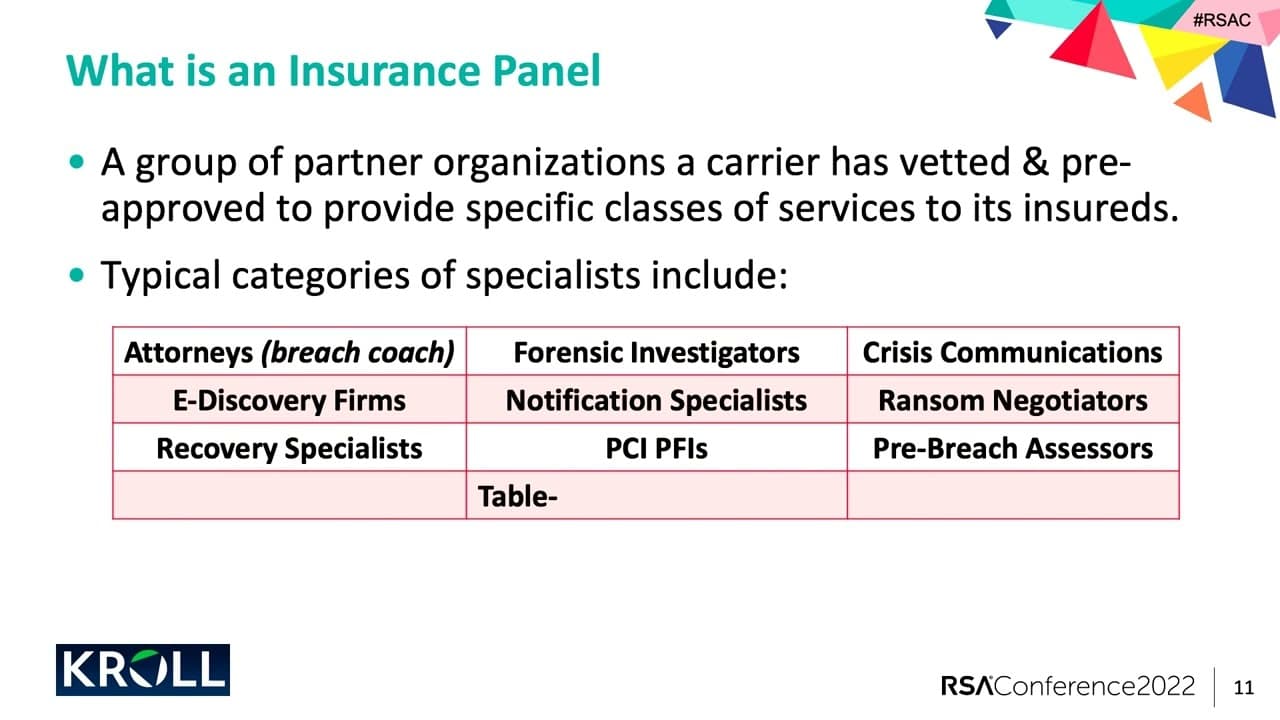
Notify your cyber insurer as soon as an incident may produce a claim, then use its panel of pre-vetted specialists to accelerate the response and protect coverage. Reviewing panel requirements before an incident helps teams identify approved attorneys, forensic investigators, crisis communicators, and security reviewers while understanding negotiated rates, contractual conditions, and possible limits on payments to providers outside the panel.
Transcript
Well, good morning, good afternoon, depending on the time zone that you're in. Uh, I'm in about three time zones simultaneously at the moment, which is really confusing. Um, but since COVID has gotten better, they've put me back on the road. So for two years, I could wake up, and I'd know what time it was. And now I don't really know what time it i... Read More
Key Insights
- Cyber insurance is a contract, and failure to follow its provisions can cause a claim to be limited or rejected. Organizations must understand their policy obligations before an incident because discovering procedural requirements during an active response can create delays and threaten available coverage.
- Early insurer notification is a central policy requirement. A carrier may want notice when an organization merely believes an event could lead to a claim, rather than after investigators have confirmed the incident or the organization has completed notifications to other parties.
- An insurer panel is a list of service providers that the carrier has pre-vetted and approved for defined purposes. The insurer generally indicates that covered response work should be performed by these organizations, much like different payment treatment for in-network and out-of-network healthcare providers.
- Panel arrangements are designed to preserve time during an incident. Without a pre-approved list, an organization might propose several vendors while the insurer separately evaluates their qualifications, reliability, and costs, even as investigation, remediation, and notification deadlines continue to advance.
- Insurers use panels to obtain predictable, efficient, and effective incident support. They want providers who understand that insurance funding is not unlimited and who can perform response work without forcing the carrier to assess unfamiliar organizations during a rapidly developing event.
- Breach coaches are attorneys who specialize in incident response and understand relevant laws, procedures, working relationships, and practical execution. The important question is not how many internal lawyers an organization employs, but how many data breaches those lawyers have actually handled.
- Forensic investigators differ in experience, writing quality, and effectiveness as expert witnesses. Insurers therefore vet investigators instead of treating all forensic firms as interchangeable, and they may favor firms that also satisfy specialized payment-card investigation requirements.
- Payment-card contracts can require a PCI-approved preferred forensic investigator. The presenter states that roughly a dozen such investigators were available in the United States when he last checked, and a payment-card issuer may still demand one even if another forensic investigator is already working.
Install to Summarize YouTube Videos and Get Transcripts
Explore YouTube Video Summarizer or Get YouTube Transcript Extractor
Questions & Answers
Q: What is a cyber insurance panel?
A cyber insurance panel is a list of companies with which an insurer has an established relationship for particular services. These organizations have been pre-vetted and pre-approved, so the carrier can authorize covered assistance without evaluating unfamiliar vendors during an incident. Panel members may include breach coaches, forensic investigators, crisis communicators, security reviewers, and other specialists needed for investigation, legal guidance, notification, or response.
Q: Why do cyber insurers use pre-approved panels?
Cyber insurers use panels to make incident response faster and more predictable. Time continues to pass while an organization investigates, remediates, and prepares required notifications, so the insurer does not want to evaluate several newly proposed vendors after an event begins. Pre-vetting also helps the carrier confirm that providers are experienced, trustworthy, efficient, effective, and aware that insurance funding is not an unlimited source of money.
Q: When should an organization notify its cyber insurer?
An organization should notify its insurer when it believes an event may produce a claim, even if the facts are not yet fully confirmed. The carrier may expect notice before other parties are contacted, and delayed notification can affect the claim because insurance is governed by contractual provisions. Incident procedures should therefore include the insurer alongside regulators, government bodies, payment-card companies, and other parties that may require notice.
Q: Can a cyber insurance claim be denied for missing policy requirements?
A cyber insurance claim can be rejected or limited when the insured organization fails to follow contractual provisions. The presentation identifies notification as one particularly important requirement, but provider-selection rules can also matter because carriers may specify which support organizations they will pay. Teams should review these obligations before an incident instead of assuming that every chosen attorney, investigator, or response vendor will receive the same coverage.
Q: Why might a company need an outside breach coach?
A company may need an outside breach coach because the number of lawyers on staff does not establish experience with data breaches. A breach coach is an attorney who specializes in incident response and understands applicable laws, procedures, professional relationships, and methods for getting the work done. The presentation emphasizes that an active incident is the worst time for internal counsel to learn incident-response practice from the beginning.
Q: How should a company evaluate forensic investigators on an insurer panel?
A company should recognize that forensic investigators are not interchangeable. Their experience, writing ability, and effectiveness as expert witnesses can differ, and specialized contractual requirements may also determine whether a particular firm is suitable. Before an incident, the organization should examine available panel firms, understand their qualifications, and determine whether payment-card obligations could require a PCI-approved preferred forensic investigator.
Q: What happens if a payment-card issuer requires a preferred forensic investigator?
A payment-card issuer can demand an investigation by a preferred forensic investigator approved through the PCI framework described in the presentation. That demand may apply even when the organization has already retained a different forensic investigator, creating potentially duplicative work. If the organization wants to continue accepting payment cards, it must locate the required investigator, which is why insurers may include firms with that qualification on their panels.
Q: How can an organization get more value from its cyber insurance before an incident?
An organization can get more value by reviewing its insurer's panel, covered services, negotiated rates, and notification conditions before an event occurs. The policy may provide access to pre-approved communication consultants, security reviewers, attorneys, and investigators even when no incident has happened. Incorporating these resources into planning allows the response team to know whom it can call, what the insurer will cover, and which contractual steps must be followed.
Summary & Key Takeaways
-
Cyber insurance is a contract whose provisions can determine whether a claim is paid, limited, or rejected. Notification is especially important because insurers may expect contact before the organization knows exactly what happened. IT teams should therefore incorporate insurer notification into incident procedures rather than focusing only on regulators, payment companies, and other external parties.
-
Insurer panels are lists of organizations that carriers have pre-vetted and approved for specific response services. They reduce the need to evaluate vendors after an incident begins, when time is especially valuable. The carrier gains confidence in service quality and cost control, while the insured organization gains faster access to experienced specialists.
-
Panel providers can include breach coaches, forensic investigators, crisis communicators, and security reviewers. Breach coaches are attorneys experienced in incident response, while forensic capabilities vary among providers. Organizations handling payment-card information may also face contractual demands for an investigation by a PCI-approved preferred forensic investigator, potentially even after another investigator has been engaged.
Read in Other Languages (beta)
Share This Summary 📚
Summarize YouTube Videos and Get Video Transcripts with 1-Click
Try YouTube Summary with ChatGPT & Claude or YouTube Transcript Generator
Explore More Summaries from RSAC Cybersecurity 📚

Summarize YouTube Videos and Get Video Transcripts with 1-Click
Try YouTube Summary with ChatGPT & Claude or YouTube Transcript Generator