How Do Next-Generation Cyberattacks Work?
TL;DR
Many supposedly sophisticated cyberattacks rely on familiar techniques, including delayed malware execution, weak endpoint defenses, persistence, and data exfiltration. Prevention remains possible when defenders recognize these behaviors, inspect execution in memory, account for sandbox evasion, and strengthen systems against both malicious software and legitimate operating-system features used for harmful purposes.
Transcript
All right. Well, thanks everybody for, uh, joining in today. Hopefully, we'll make it a fun-filled adventure for you. So, uh, typical topic for us, Hacking Exposed live, we're, of course, the, the bravest or the dumbest, um, in trying to do a lot of these demos all live because you never quite know, uh, what's gonna happen, but we're gonna give it ... Read More
Key Insights
- Claims that modern attacks are entirely new and sophisticated are often misleading. The presentation argues that genuinely unusual vulnerabilities appear infrequently, while most successful campaigns reuse known techniques, ordinary system capabilities, weak defenses, and recognizable stages such as compromise, persistence, execution, and exfiltration.
- The defender's dilemma is philosophically valid but can encourage the wrong practical response. An attacker may need only one entry route while a defender covers many surfaces, yet that imbalance does not justify abandoning prevention or accepting the industry's claim that effective prevention is impossible.
- Malware includes any malicious software that executes on an endpoint, whether as binary code or within an interpreted environment. Even authentication attacks, insider threats, and memory-resident activity may eventually require executable behavior to steal data, overwrite a disk, or perform another harmful action.
- Prevention is possible without necessarily purchasing additional products. The central recommendation is to keep preventive controls in the defensive strategy, because familiar attack behaviors can still be recognized and blocked even when campaigns are described publicly as advanced or unprecedented.
- The Sony wiper sample contains multiple sleep functions, with the longest lasting 2.7 million milliseconds, equivalent to 45 minutes. Such delays can help malware outlast common sandbox observation periods, although the presentation notes that more sophisticated analysis methods can bypass sleeping behavior.
- VirusTotal first recorded the demonstrated Sony sample on December 3, after the November 24 incident date mentioned in the presentation. At that point, only three vendors classified it as malicious, illustrating why signature-dependent antivirus protection may initially miss a newly submitted sample.
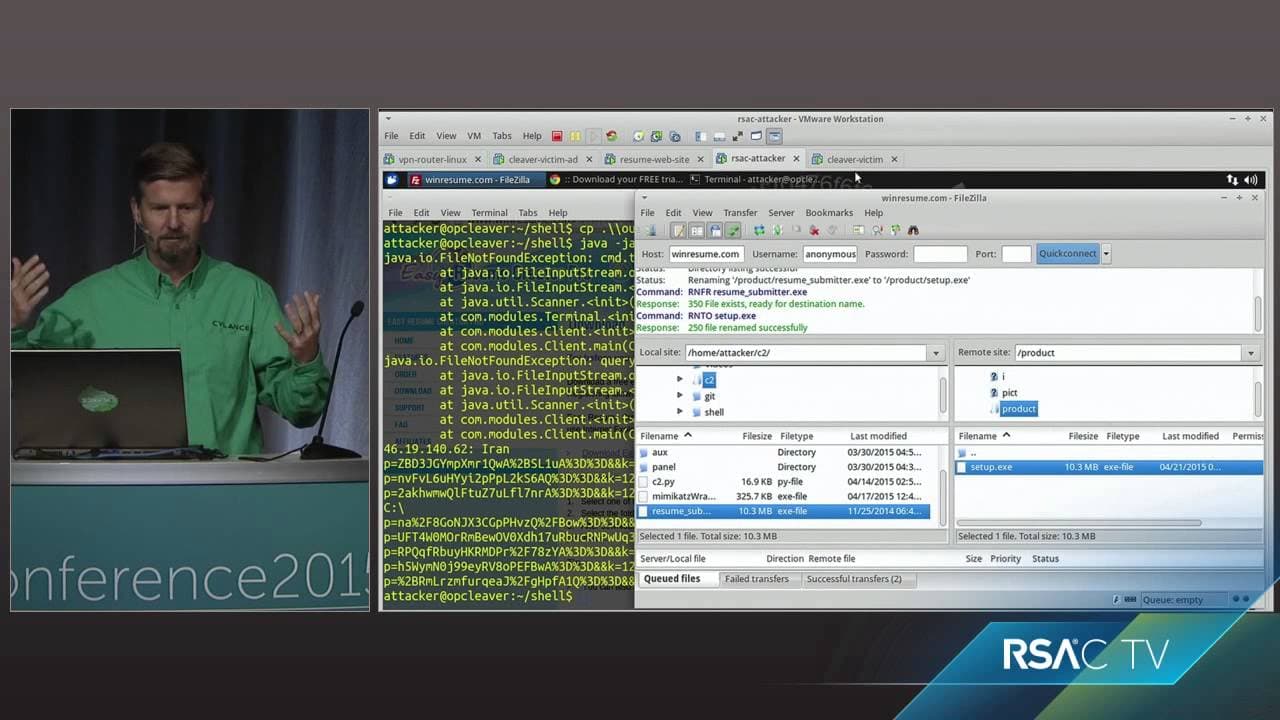
- Operation Cleaver focused almost entirely on global critical infrastructure. Identified victim sectors included airports and airlines, oil and gas, energy and utilities, vehicle manufacturing, heavy machinery, and other sensitive networks where deep access could support espionage, leverage, or potential sabotage.
- Operation Cleaver followed a recognizable sequence of initial compromise, data exfiltration, and persistent access. The observed infrastructure traced to Iranian netblocks and two predominantly Iranian-focused teams, although the presentation cautions that network origin alone does not conclusively establish the operators' nationality.
Install to Summarize YouTube Videos and Get Transcripts
Explore YouTube Video Summarizer or Get YouTube Transcript Extractor
Questions & Answers
Q: Why should defenders continue trying to prevent cyberattacks?
Defenders should continue prevention because the presentation rejects the claim that successful prevention is impossible. Although attackers need only one route into a network and defenders must cover many attack surfaces, most campaigns still use recognizable techniques. Preventive measures can target execution, persistence, exfiltration, destructive actions, and malicious use of built-in system or application features.
Q: How did the Sony malware attempt to evade sandbox analysis?
The demonstrated Sony wiper sample used several sleep functions, including one lasting 2.7 million milliseconds, or 45 minutes. A common sandbox may stop observing a program before that delay ends, allowing the malicious behavior to remain hidden during analysis. The presentation also notes that advanced analysis can bypass sleeping, and delays may alternatively coordinate timed activity.
Q: What components were associated with the Sony attack malware?
The presentation identifies two primary components associated with the Sony malware. Destover served as a remote-access-trojan component, while a separate wiper technology performed destructive activity. When the sample was executed with administrator privileges, it immediately dropped a file labeled Igfx Tray Ex, described as the component responsible for wiping and other malicious actions after its sleep period.
Q: When was the demonstrated Sony malware publicly detected?
The earliest VirusTotal record shown for the demonstrated sample was December 3, while the presentation places the Sony incident on November 24. Only three vendors identified the sample as malicious in that December 3 record. The presenter therefore emphasizes that publicly available signatures were limited and that no antivirus engine necessarily had preventive coverage when the attack initially occurred.
Q: What was Operation Cleaver targeting?
Operation Cleaver focused almost entirely on critical infrastructure around the world. The listed victims included airports, airlines, oil and gas organizations, energy providers, utilities, vehicle manufacturers, and heavy-machinery companies. The campaign gained deep access to sensitive networks and systems, creating concern that the operators could eventually use their position for sabotage, although their exact purpose remained uncertain.
Q: How did Operation Cleaver progress after initial compromise?
Operation Cleaver followed stages that the presenter describes as typical of an intrusion campaign. The first phase sought initial access to victim networks. The operators then exfiltrated data and established persistence so they could remain inside affected systems. The presenter believed this access might prepare for sabotage or provide negotiating leverage, while acknowledging that the operators' purpose might never be known.
Q: Does an attack without a traditional malicious file still involve malware?
Under the presentation's broad definition, malware includes anything that executes maliciously on an endpoint, whether it runs as binary code or in an interpreted environment. Authentication abuse and insider actions may begin without conventional malware, but stealing data, overwriting disks, or completing another harmful objective may eventually require software or memory execution that defenders can evaluate as benign or malicious.
Q: Why are built-in system features described as forever days?
Forever days are operating-system or application features that can be used maliciously and are unlikely to disappear. Unlike a newly disclosed vulnerability that might receive a direct fix, these capabilities remain because they are legitimate parts of the platform. The presentation treats them as valuable attack techniques to demonstrate while connecting their misuse to practical mitigation and prevention strategies.
Summary & Key Takeaways
-
The presentation challenges claims that modern cyberattacks are entirely new, unusually sophisticated, or impossible to prevent. Although an adversary needs only one route into a network, defenders should not abandon prevention. Most attacks still depend on recognizable execution, persistence, exfiltration, destructive actions, or misuse of existing system capabilities at some stage.
-
The Sony demonstration examines a destructive malware sample associated with Destover and a wiper component. Its longest sleep function lasts 2.7 million milliseconds, or 45 minutes, helping it evade common sandboxes or coordinate timing. The sample immediately drops Igfx Tray Ex, which remains inactive until the programmed delay has elapsed.
-
Operation Cleaver targeted global critical infrastructure, including airports, airlines, oil and gas organizations, utilities, energy providers, vehicle manufacturers, and heavy-machinery companies. The observed campaign involved initial compromise, persistent access, and data exfiltration. Its activity originated from Iranian netblocks and was associated primarily with two teams focused on infrastructure targets worldwide.
Read in Other Languages (beta)
Share This Summary 📚
Summarize YouTube Videos and Get Video Transcripts with 1-Click
Try YouTube Summary with ChatGPT & Claude or YouTube Transcript Generator
Explore More Summaries from RSAC Cybersecurity 📚

Summarize YouTube Videos and Get Video Transcripts with 1-Click
Try YouTube Summary with ChatGPT & Claude or YouTube Transcript Generator