How to Use AI Super Agents for Marketing Work
TL;DR
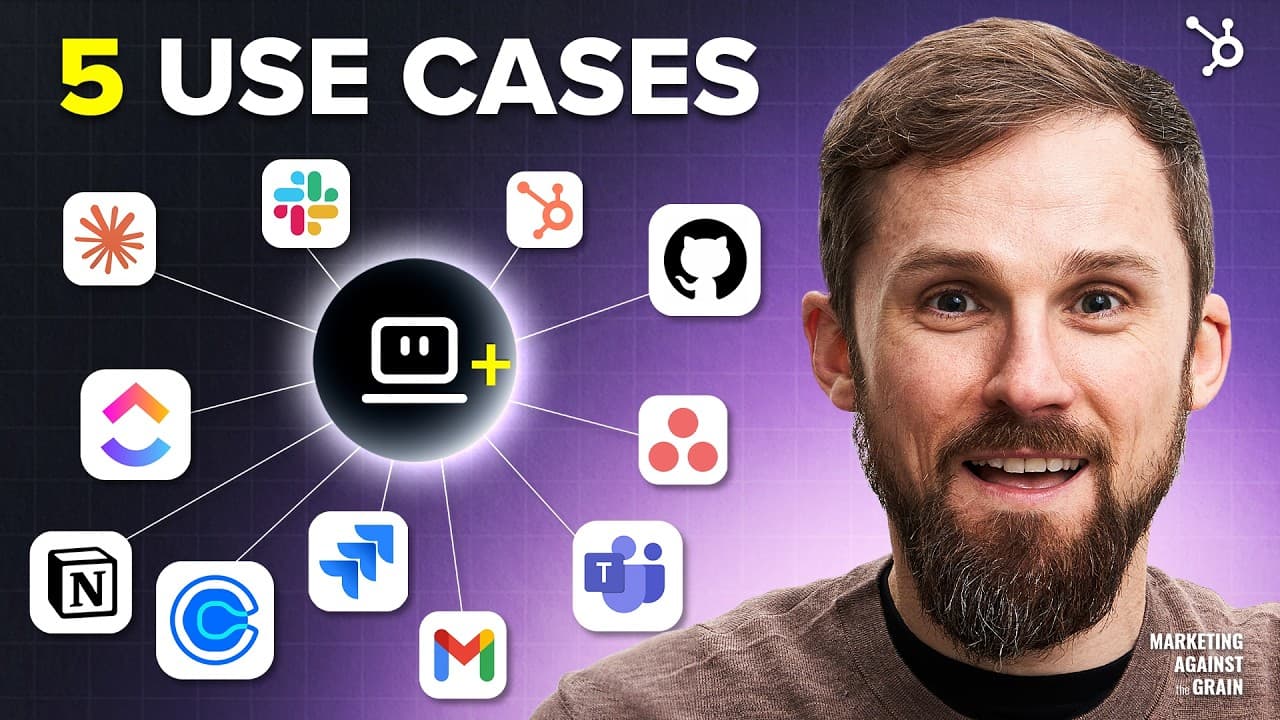
Choose one accessible super agent and integrate it deeply into your daily workflow instead of dividing attention among several similar tools. Perplexity Computer can plan complex projects, connect tools, assign parallel sub-agents, select suitable models, analyze large collections of material, create reusable skills, and present results through disposable websites or interactive dashboards.
Transcript
Okay, Perplexity computer is just out and it is incredible. I just give it one prompt and it built me a live interactive website using Polymarket data. Not just that, but we used it to grade HubSpot's entire product marketing strategy. It built us an incredible product marketing skill that you can use because we're going to give it away at the end ... Read More
Key Insights
- Super agents are becoming a common interface for software, data, and professional work. Products such as Perplexity Computer, Claude Code, Manus, and Open Claw combine autonomous execution with tool connections and reusable skills, making their underlying product concepts increasingly similar.
- The practical choice between AI agents depends partly on accessibility and control. Perplexity Computer and Claude Co-work or Code are presented as suitable options for an average user, while Open Claw is described as more technical and less accessible despite its strong community attention.
- Perplexity Computer executes complex tasks by first constructing a plan and then completing its component stages. The demonstrated book-cover project required ranking business books, collecting cover images, analyzing each image, synthesizing design principles, writing a skill file, generating concepts, and publishing a review website.
- Parallel sub-agents can shorten research-heavy workflows by dividing a large collection into batches. Perplexity Computer assigned four agents to analyze 25 book covers each, with each batch taking about 10 minutes, instead of processing all 100 covers through one uninterrupted sequence.
- Model selection can happen inside a broader agent workflow because Perplexity Computer is described as model agnostic. It can call models from Google, OpenAI, or Claude according to the task, and the demonstrated cover-analysis workflow visibly used Claude Sonnet 4.6.
- Reusable skills capture methods that can be applied across tools and future projects. The book-cover research became a design skill file usable in Perplexity Computer, Claude Code, or another compatible environment, allowing collaborators to iterate from accumulated analysis rather than restart the research.
- Disposable websites are useful when a temporary interface makes AI output easier to inspect or share. Perplexity Computer created a polished site that displayed proposed book covers alongside the rationale for each design, even though the site only served a short-lived review task.
- Marketing and creative taste remain differentiators when competing agents offer similar technical capabilities. Open Claw gained attention partly through its playful lobster identity and community, illustrating how distinctive positioning can help one product capture interest within a crowded category.
- More videos from this channel:
- More from this channel: Marketing Against the Grain
Install to Summarize YouTube Videos and Get Transcripts
Explore YouTube Video Summarizer or Get YouTube Transcript Extractor
Questions & Answers
Q: What is an AI super agent with tools and skills?
An AI super agent is an autonomous system that can connect to external tools and apply specialized skills to complete multi-step work. Tools may provide access to resources such as email or YouTube, while skills define capabilities such as content creation, paid marketing, answer-engine optimization, or pre-sales work. The agent plans and performs tasks through those combined resources.
Q: How should you choose between Perplexity Computer, Claude Code, Manus, and Open Claw?
Choose one system that matches your technical comfort and invest time in integrating it into your regular workflow. The episode presents Perplexity Computer and Claude Co-work or Code as more practical for an average user, while Open Claw is described as the most technical and least accessible. The central recommendation is to avoid spreading attention across too many similar agents.
Q: How did Perplexity Computer create a business book cover skill?
Perplexity Computer received a prompt asking it to study the covers of the top 100 business books sold during the previous 24 months. It compiled a ranking, collected the cover images, analyzed their components and styles, synthesized the findings, and wrote a reusable skill file. The skill then produced five design concepts from a brief about a marketing and AI book.
Q: Why are parallel sub-agents useful for large research tasks?
Parallel sub-agents divide a large assignment into smaller batches that can be completed at the same time. In the book-cover example, four sub-agents each analyzed 25 titles in depth, and each batch took about 10 minutes. The system could then combine the separate findings into shared design principles and a reusable skill without processing every cover sequentially.
Q: What does model agnostic mean for Perplexity Computer?
Model agnostic means Perplexity Computer can use models from different providers within a broader workflow instead of relying only on a single proprietary model. The episode says it can call Google, OpenAI, or Claude models and shows Claude Sonnet 4.6 handling part of the book-cover analysis. This lets the supervising agent select an appropriate tool for each task.
Q: How can disposable websites improve AI-assisted work?
A disposable website can turn complex output into a temporary, interactive presentation that is easier to review and share. After generating book-cover concepts, Perplexity Computer built a site displaying the mockups and explaining the rationale behind each design. The site did not need to become a permanent product because its purpose was simply to support one collaborative decision.
Q: How can professionals turn their work processes into reusable AI skills?
Professionals can document how they perform a repeatable task, identify the judgments and steps involved, and encode that process as a skill file. The episode suggests recording yourself while working as one way to capture the procedure. Once created, the skill can guide future tasks such as product-marketing audits or design analysis without rebuilding the methodology every time.
Q: Why will marketing and creative taste matter as AI agents converge?
Marketing and creative taste become more important when competing products offer increasingly similar combinations of autonomy, tools, and skills. The episode uses Open Claw as an example: its quirky lobster identity and enjoyable community helped it capture public attention. Distinctive branding, positioning, and judgment can therefore separate an agent or its outputs when technical capabilities alone look interchangeable.
Summary & Key Takeaways
-
Major AI products are converging on a shared model: a super agent connects to tools and applies specialized skills to complete work autonomously. Because Claude Code, Perplexity Computer, Manus, and Open Claw increasingly overlap, users may benefit more from mastering one system than repeatedly switching among every new option.
-
Perplexity Computer can turn one detailed prompt into a planned, multi-stage workflow. In the book-cover demonstration, it identified top-selling business books, collected and analyzed 100 cover images, distributed the analysis among four parallel sub-agents, synthesized design patterns, created a reusable skill file, and generated five cover concepts.
-
The broader opportunity is to convert repeatable professional judgment into reusable AI skills. The episode applies this idea to product-marketing audits, B2B growth-pattern research, Polymarket dashboards, and salary negotiation. Its practical advice is to record real work, encode the process, and use temporary websites when they make results easier to review.
Read in Other Languages (beta)
Share This Summary 📚
Summarize YouTube Videos and Get Video Transcripts with 1-Click
Try YouTube Summary with ChatGPT & Claude or YouTube Transcript Generator
Explore More Summaries from Marketing Against the Grain 📚

Summarize YouTube Videos and Get Video Transcripts with 1-Click
Try YouTube Summary with ChatGPT & Claude or YouTube Transcript Generator