Dear Indians, Sikhs Want You To Know This CRUCIAL Truth
TL;DR
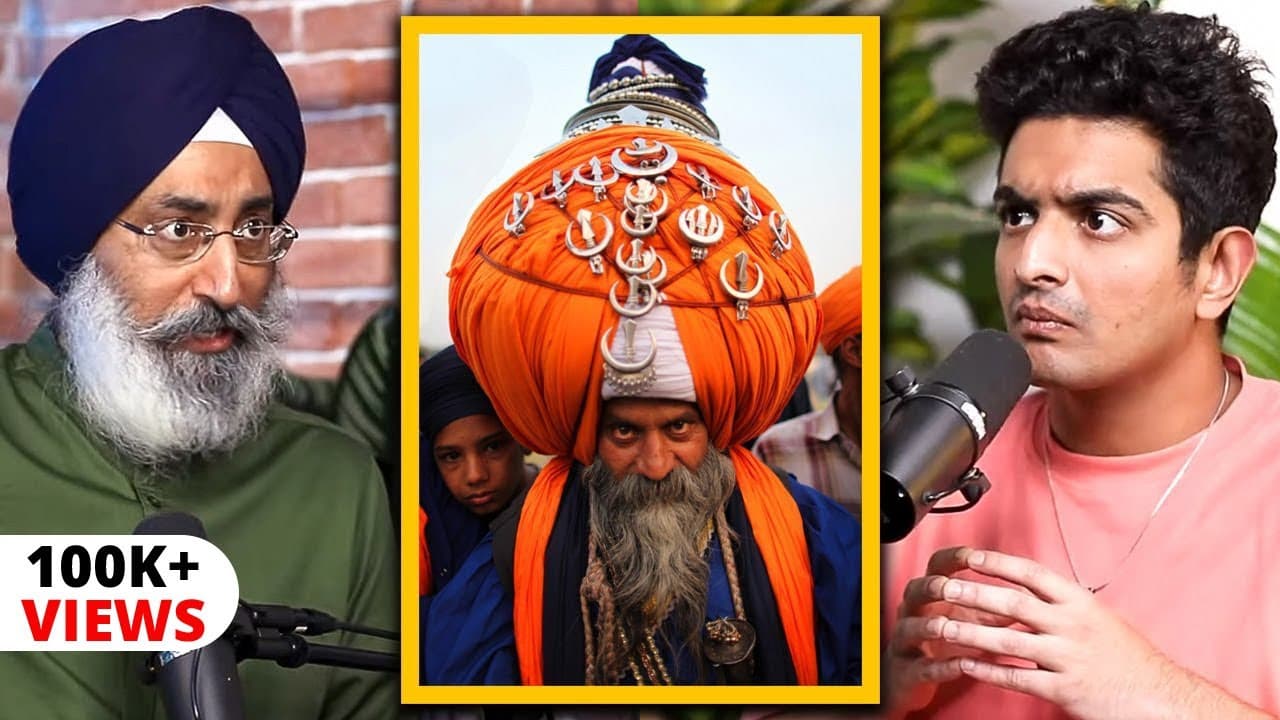
This content explores the complex identities of Sikhs, emphasizing the balance between warrior spirit and spirituality.
Transcript
you either use the internet for fun or you use the internet to grow you're here to grow welcome to TRS clips do you want to talk a little bit about where the warrior culture began it's a myth partly you know part of the Indian narrative is that myth I think it suits particular ideology I can share the phrase with you if you want to talk about it do... Read More
Key Insights
- 😑 Sikhism promotes a balanced identity that harmonizes warrior qualities with deep spirituality and artistic expression.
- 💡 The idea of 'just War Theory' within Sikh philosophy underscores moral responsibility in conflict, advocating for peaceful resolution first.
- ❓ Historical accounts of Sikhs illustrate an ongoing legacy of courage, yet also highlight their profound cultural and artistic contributions to society.
- 🥋 The emphasis on comprehensive training by Sikh gurus reveals a multi-faceted approach to leadership that incorporates ethical, spiritual, and martial skills.
- ❓ Understanding Sikh identity requires acknowledging the distinction between being a but Fighter, where the former embodies restraint and moral integrity.
- 🤑 The misuse of the term "warrior" can misrepresent Sikh values, often overshadowing their rich spiritual traditions and peaceful teachings.
- 👨⚖️ The active participation of Sikhs in both historical and modern conflicts reflects a tradition steeped in the principles of justice and moral courage, rather than mere aggression.
Install to Summarize YouTube Videos and Get Transcripts
Explore YouTube Video Summarizer or Get YouTube Transcript Extractor
Questions & Answers
Q: What is the significance of the term 'just War Theory' in Sikhism?
The 'just War Theory' within Sikhism, articulated by Guru Gobind Singh, emphasizes that armed conflict should only be a last resort after all peaceful methods have been exhausted. This concept aligns closely with Sikh values of justice and moral conduct, insisting that self-defense is justified but should be approached with caution and moral clarity.
Q: How does the narrative around Sikh warriors sometimes misrepresent their true identity?
The narrative often paints Sikhs as solely a warrior community, which can foster misconceptions of them as aggressive or violent. In reality, Sikhs embody a balanced identity that includes spiritual depth, artistic expression, and a commitment to justice, emphasizing that they are not just fighters but spiritual warriors trained in restraint.
Q: How did Guru Gobind Singh prepare for the warrior class during the 23 years after Guru Tegh Bahadur's martyrdom?
During the 23 years following the martyrdom of Guru Tegh Bahadur, Guru Gobind Singh focused on comprehensive training programs that included not only combat but also poetry, music, and leadership. This holistic approach prepared individuals for the complexities of life and conflict, integrating spiritual and military training.
Q: What role do art and culture play in the Sikh warrior identity?
Art and culture are integral to the Sikh identity, as seen through the emphasis on poetry and music under Guru Gobind Singh’s leadership. These elements reflect the spiritual dimension of Sikhism and illustrate that being a warrior involves more than just fighting; it encompasses a commitment to cultural expression and moral integrity.
Q: In what ways does the distinction between 'warrior' and 'fighter' affect the understanding of Sikh identity?
The distinction is crucial as it redefines Sikh identity. A ‘warrior’ embodies discipline and restraint, acting with purpose, while a ‘fighter’ suggests a more aggressive, reactive role. Understanding this distinction allows for a richer appreciation of Sikh values, where strength lies not in unrestrained aggression, but in mindful action.
Q: How does the 'non-violence of the strong' concept apply to Sikh principles?
The 'non-violence of the strong' highlights a powerful form of restraint, where Sikhs acknowledge their capacity for combat but choose non-violent solutions first. This principle illustrates a commitment to peace while being prepared to defend justice when necessary, embodying the true essence of Sikh values in social and political contexts.
Summary & Key Takeaways
-
The discussion highlights the misconception of Sikhs solely as warriors, emphasizing a broader spiritual identity that includes artistic and cultural facets.
-
Notable Sikh historical figures like Guru Gobind Singh and Guru Tegh Bahadur exemplify the essence of a warrior culture rooted in moral principles and just warfare.
-
The content contrasts the images of fighters versus warriors, underlining the importance of self-discipline and restraint in the Sikh religion's approach to conflict.
Read in Other Languages (beta)
Share This Summary 📚
Summarize YouTube Videos and Get Video Transcripts with 1-Click
Try YouTube Summary with ChatGPT & Claude or YouTube Transcript Generator
Explore More Summaries from TRS Clips 📚





Summarize YouTube Videos and Get Video Transcripts with 1-Click
Try YouTube Summary with ChatGPT & Claude or YouTube Transcript Generator