What Are Thinking Tools and How Do They Impact Us?
TL;DR
Thinking tools are essential for enhancing our understanding and decision-making abilities. They are not just features of consciousness but significant influences on our cognitive processes. Free will is seen as a competent moral agency rather than a fundamental aspect of reality, and understanding these tools can lead to improved reasoning and creativity.
Transcript
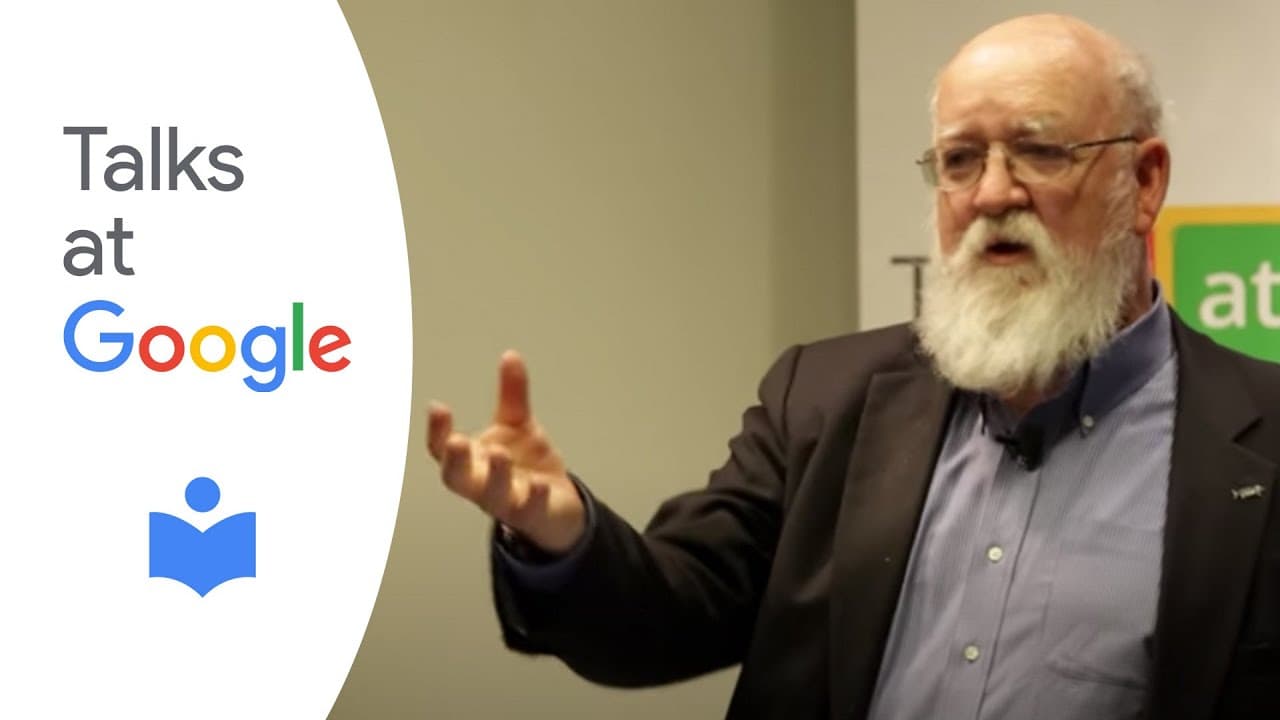
PETER NORVIG: Welcome everybody. It's our pleasure to have with us at Google today, Daniel Dennett. He has a long and distinguished career. I won't try to summarize all of it. You can Google it. [LAUGHTER] PETER NORVIG: Instead, I'll just try to introduce very briefly the book that he's written most recently and is talking about today, which is a c... Read More
Key Insights
- 🤔 Thinking tools are essential for human progress and can shape our understanding, decision-making, and problem-solving.
- 🥶 Free will and consciousness are complex biological phenomena influenced by cultural evolution, rather than fundamental dimensions of the universe.
- 🥶 Determinism does not negate free will, as competence and moral responsibility are the defining factors.
- 🫵 Consciousness should be viewed as a software installed in our brains, dependent on cultural and environmental influences.
- 🎙️ More videos with Daniel Dennett:
Install to Summarize YouTube Videos and Get Transcripts
Explore YouTube Video Summarizer or Get YouTube Transcript Extractor
Questions & Answers
Q: What is the speaker's view on determinism and free will?
The speaker believes that free will is not dependent on determinism. He argues that free will is a function of the competence and moral responsibility that individuals have been instilled with since childhood, rather than being determined by external factors.
Q: Does the speaker consider consciousness to be a fundamental part of nature?
No, the speaker views consciousness as a complex and recursive biological phenomenon that is deeply rooted in culture. He argues that it is not a fundamental category that splits the universe, but rather a software that is installed in our brains.
Q: Does the speaker agree with the concept of utilitarianism in moral reasoning?
The speaker identifies as a consequentialist rather than a strict utilitarian. He believes that the consequences of actions matter, but he does not endorse a purely deontological view of ethics. He also touches on the importance of punishment as a foundational good in society.
Q: What is the speaker's stance on software patents?
The speaker suggests that software patents should consider the utility and the transmission of adaptations for various purposes. He views software as a tool for thinking and argues that patentability should be based on the utility provided by the software.
Summary & Key Takeaways
-
The speaker emphasizes the significance of thinking tools and how they have shaped human progress.
-
He argues that free will and consciousness are not fundamental dimensions of reality, but rather complex biological phenomena influenced by cultural evolution.
-
The speaker discusses the debate surrounding software patents and suggests that the utility of the software should be considered in determining patentability.
Read in Other Languages (beta)
Share This Summary 📚
Summarize YouTube Videos and Get Video Transcripts with 1-Click
Try YouTube Summary with ChatGPT & Claude or YouTube Transcript Generator
Explore More Summaries from Talks at Google 📚
Summarize YouTube Videos and Get Video Transcripts with 1-Click
Try YouTube Summary with ChatGPT & Claude or YouTube Transcript Generator