What Are the Key Insights from Venture Capital Investing?
TL;DR
Venture capital is a high-risk, high-yield investment strategy that funds early-stage startups, balancing a few top-performing investments against a backdrop of significant failure rates. It emphasizes the need for innovation, often thriving in conditions where traditional corporations struggle. Philanthropy can learn from venture capital by focusing on efficient resource use, impact assessment, and sustainable long-term investments.
Transcript
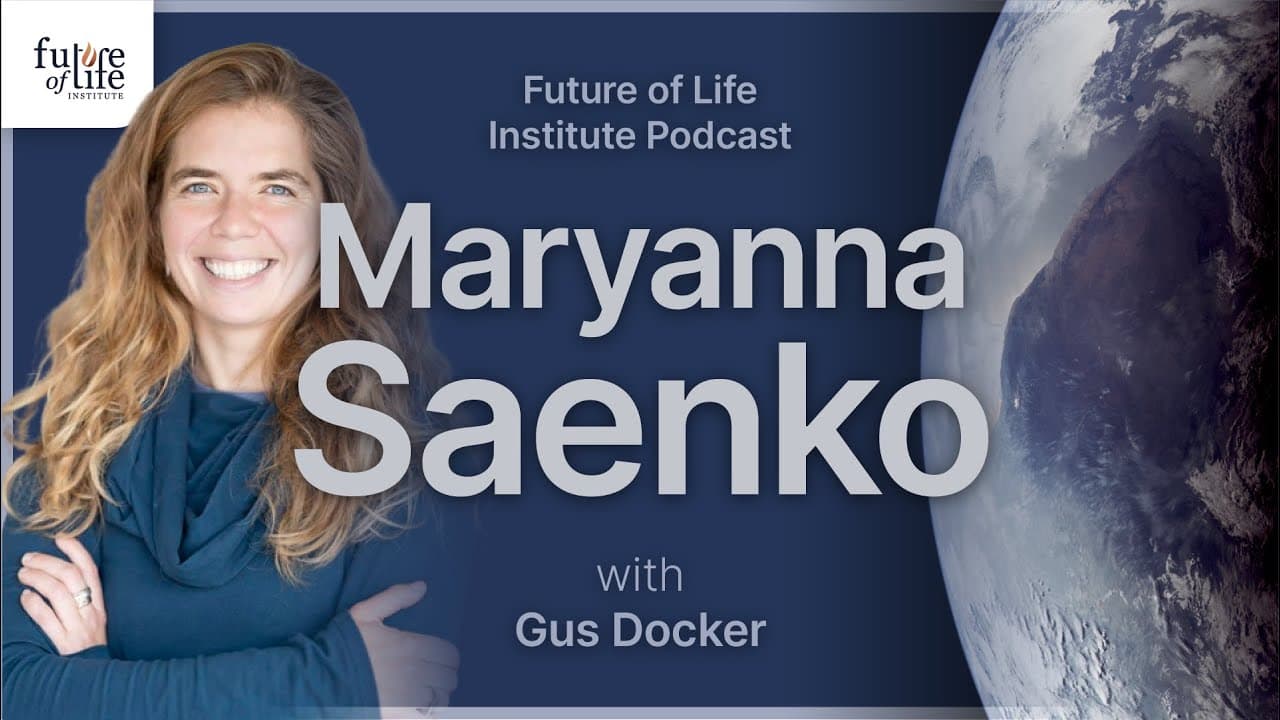
welcome to the future of Life Institute podcast I'm Gus Docker I'm here with Mariana senko who is the co-founder of future Ventures which is a venture capital firm so Mariano welcome to the podcast much for having me okay perhaps we could start by talking about how Venture Capital Works where does it fit on say the spectrum of risk from a pension f... Read More
Key Insights
- 🎯 Venture Capital is considered high risk, high yield, and is positioned on the right side of the risk-yield profile, making it a key part of the investment landscape.
- 🚀 Venture capitalists fund high-risk, high-reward ideas that others may not touch and have a higher cost of capital due to the risk involved.
- 💡 In the early stages of an idea, Venture Capital funding is crucial for testing and iterating, as most ventures fail at this stage.
- 🏢 Large corporations struggle to maintain innovation and creativity due to cultural and cost constraints, making Venture Capital necessary for pushing the bleeding edge of innovation.
- 🤔 Existing companies often struggle to replicate the startup environment due to the cultural profile and lack of existential pressure to drive innovation.
- 📊 Most startups fail, and the success of a VC fund is often driven by a few top performers, creating a power law distribution of returns.
- 💲 The top 10% of venture funds contribute to 90% of the gains in the market, highlighting the significance of successful funds and partners. ⏳ Venture capital has long time horizons, typically 15 years, allowing for investment in deep tech and fundamental technology plays that may take longer to mature.
- ✅ Deep tech often includes hardware and software merging together, highlighting the importance of both aspects in innovation.
- 💰 The philanthropy sector can learn from Venture Capital in terms of making efficient use of resources, finding the most impactful ventures, and ensuring long-term sustainability.
- 🎮 Gamification for good can be a powerful tool to motivate behavior change, such as getting people to be more active or follow healthier habits.
- 🌍 The potential for innovation is still vast, and the expanding technological literacy and access to resources suggest that great startups are yet to come.
- 💡 Ideas are becoming more accessible to small teams, with expanding resources and technology, paving the way for continued innovation and entrepreneurialism.
- 💻 The capture of value from AI and generative models is uncertain, but partnerships between tech giants and chip manufacturers may play a significant role.
- ⚡️ Semiconductor manufacturing and access to high-capacity compute are crucial factors in the capture of value from AI and generative models.
- 🔒 Concerns arise around the concentration of value and access to resources, as large corporations have greater access to compute, potentially limiting innovation outside of major players.
- ️ The time horizons of Venture Capital and philanthropy differ, and both play important roles in driving innovation and creating long-term impact.
- 🌍 The value captured from AI models may be concentrated in a small, independent group, as seen in historical patterns.
- 💰 The hardware manufacturers and existing tech giants could capture a significant portion of the value from AI and generative models, but startups also have the potential to unlock value in this space.
Install to Summarize YouTube Videos and Get Transcripts
Explore YouTube Video Summarizer or Get YouTube Transcript Extractor
Questions & Answers
Q: Is venture capital the most efficient way to bring ideas into existence?
Venture capital is one way to provide funding and support to early-stage startups, but it may not be the only or most efficient method. Other approaches, such as philanthropy or government grants, can also play important roles in bringing ideas to life, particularly for social or environmental impact projects.
Q: What is the difference between fundamental science risk and engineering risk in venture capital investments?
Fundamental science risk refers to investing in technologies or scientific concepts that have not yet been fully proven or demonstrated in practical applications, while engineering risk involves investments in technologies that have shown promise but still require further development or optimization. Fundamental science risk is typically higher, as it entails more uncertainty and longer timelines for commercialization.
Q: How do venture capitalists and philanthropists approach the concept of impact and sustainability?
Venture capitalists aim to achieve high financial returns for their investors by funding startups with high-growth potential. While they consider the potential impact of their investments, the primary goal is often driven by financial objectives. In contrast, philanthropists prioritize social or environmental impact and sustainability, focusing on using their resources to address pressing challenges and create meaningful change in society.
Q: Are good ideas becoming harder to find, and is innovation becoming more challenging over time?
No, good ideas are not becoming harder to find. Technological advancements, increased access to information, and a growing global talent pool actually make it easier for innovative ideas to emerge. While there may be more noise and competition in the innovation landscape, the potential for groundbreaking ideas and breakthroughs continues to grow, especially as society faces new challenges and needs.
Summary & Key Takeaways
-
Venture capital is high-risk, high-yield investing that funds early-stage startups with the hope of achieving significant returns for investors.
-
Venture capitalists provide capital and expertise to startups that have high-growth potential but also high failure rates.
-
The success of venture capital funds is concentrated in a few top-performing investments, while the majority of startups may not achieve significant returns.
-
Philanthropy focuses on long-term solutions to societal challenges and can complement venture capital by supporting non-profit organizations and initiatives that tackle pressing issues.
-
It is important for philanthropy to consider efficient use of funds and the potential for sustainability and impact.
Read in Other Languages (beta)
Share This Summary 📚
Summarize YouTube Videos and Get Video Transcripts with 1-Click
Try YouTube Summary with ChatGPT & Claude or YouTube Transcript Generator
Explore More Summaries from Future of Life Institute 📚

Summarize YouTube Videos and Get Video Transcripts with 1-Click
Try YouTube Summary with ChatGPT & Claude or YouTube Transcript Generator