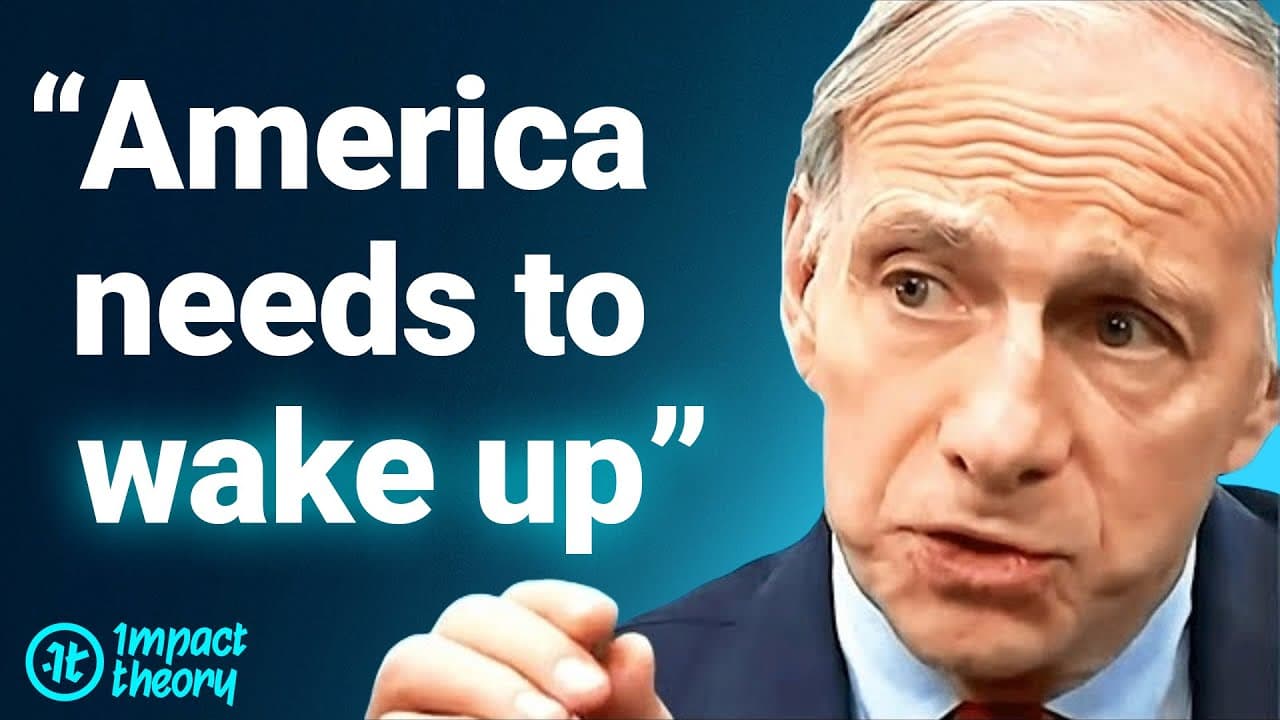
Will The US Dollar COLLAPSE? - China & Russia Declaring ECONOMIC WAR On America | Ray Dalio
TL;DR
The US dollar is not described as facing a deliberate attack; countries are becoming less willing to hold dollar debt or use dollars for trade because sanctions can freeze assets and the US share of world trade has declined. Ray Dalio compares this dynamic with the earlier declines of the British pound and Dutch guilder as reserve currencies. Read on to understand how trade, debt, money printing, and sanctions could weaken reserve-currency demand.
Transcript
right now one of the things that has me the most unnerved is the attack on the dollar so you've got the brics Nations uh for people that haven't heard that acronym before Brazil Russia India China and South Africa uh are getting together and I know this has been going on for quite some time so I don't know if I should be overly paranoid about that ... Read More
Key Insights
- 🤨 The BRICS nations' movement away from the dollar raises concerns about a potential transition from phase five to phase six.
- 🛟 The weaponization of the dollar through sanctions undermines confidence in its status as a reserve currency.
- 🥶 Countries transacting in currencies other than the dollar reduces their exposure to potential freezing of assets.
- 😒 Maintaining the dollar's reserve currency status requires financial strength and avoiding the use of financial sanctions.
- 🖕 Education, infrastructure, and equal opportunity are crucial for strengthening a country's position and maintaining a thriving middle class.
- 🖤 Deteriorating public education and a lack of resources contribute to challenges in achieving equal opportunity.
- ❓ Social issues like drug problems, crime, and mental illness can indicate a breakdown in infrastructure and societal cohesiveness.
Install to Summarize YouTube Videos and Get Transcripts
Explore YouTube Video Summarizer or Get YouTube Transcript Extractor
Questions & Answers
Q: Will the US dollar collapse as BRICS nations move away from it?
The discussion does not predict an immediate collapse. Ray Dalio says countries are becoming less inclined to hold dollar debt or transact in dollars because of sanctions risk and the declining US share of world trade.
Q: Are China and Russia declaring economic war on America by moving away from the dollar?
Dalio characterizes the shift as something other than an attack on the dollar. Countries may simply decide that holding dollar debt and trading in other currencies is safer when dollar assets could be frozen through sanctions.
Q: What does BRICS stand for?
BRICS refers to Brazil, Russia, India, China, and South Africa. The discussion identifies these nations as moving away from the dollar.
Q: How do sanctions weaken the dollar’s reserve-currency role?
US sanctions can freeze assets, including bonds held by other countries. That possibility makes countries question whether dollar debt is a safe asset and leaves them less inclined to hold it.
Q: Why might countries trade directly in currencies other than the dollar?
When two countries trade with each other, they may see no good reason to route the transaction through a third currency. Trading in other currencies also reduces their exposure to the risk that dollar assets could be frozen.
Q: How does world trade affect demand for the dollar?
When the dollar is widely used in world trade, countries want to save in dollars because they can spend in the same currency. As the US share of world trade declines and China’s share grows larger, the usefulness of the dollar as both a medium of exchange and a store of wealth can weaken.
Q: What does holding dollars mean in this discussion?
Dalio says that holding dollars generally means holding dollar debt. Debt is a promise to receive currency, so doubts about that promise or the possibility of sanctions can make other currencies appear safer.
Q: What historical warning does the decline of the British pound provide?
Britain emerged from World War II with substantial debt and needed to print more money, which contributed to deterioration in its currency’s position. After the Suez Canal incident highlighted Britain’s reduced power and heavy debt, countries became less willing to own that debt, and the pound lost its reserve-currency standing.
Summary & Key Takeaways
-
BRICS nations (Brazil, Russia, India, China, and South Africa) are shifting away from the dollar as a reserve currency, causing concern about a transition from phase five to phase six.
-
Sanctions and the weaponization of the dollar through freezing assets contribute to this movement.
-
The decline of the British pound and Dutch guilder as reserve currencies in the past provides historical context for the current situation.
Read in Other Languages (beta)
Share This Summary 📚
Summarize YouTube Videos and Get Video Transcripts with 1-Click
Try YouTube Summary with ChatGPT & Claude or YouTube Transcript Generator
Explore More Summaries from Full Episodes of Impact Theory 📚



Summarize YouTube Videos and Get Video Transcripts with 1-Click
Try YouTube Summary with ChatGPT & Claude or YouTube Transcript Generator