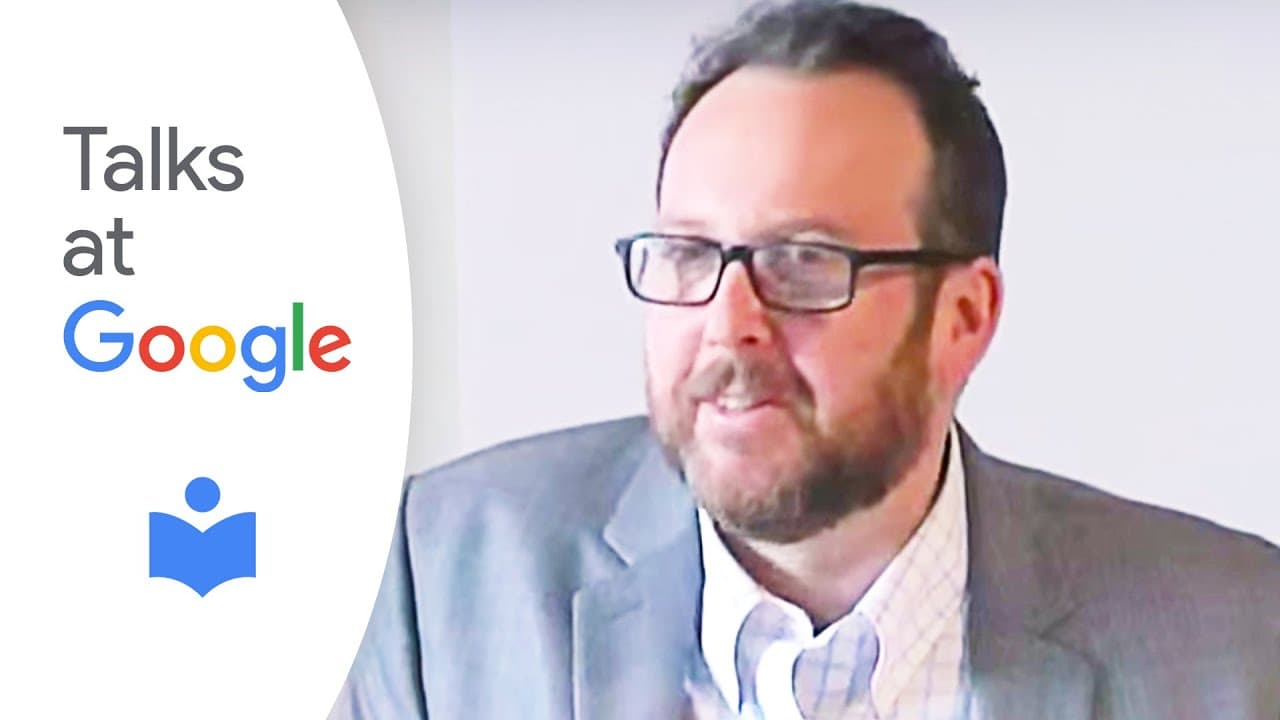
Better Living Through Criticism | A.O. Scott | Talks at Google
TL;DR
Criticism matters because it is the conversation people have about the meaning, value, and status of art and other products of human imagination. A.O. Scott began exploring this subject around 2011, when social media, digital culture, and recommendation algorithms were said to be making professional critics obsolete. He argues that criticism would continue even without professional critics; read on to see how this idea connects art, taste, beauty, pleasure, and disagreement.
Transcript
MALE SPEAKER: All right, thank you all for coming, everybody. Mr. AO Scott, or Tony, is the film critic of "The New York Times" and has been since 2004. He grew up in Northampton-- actually, he was born in Northampton, Massachusetts. I'm not sure if he actually grew up there-- and studied English and fortunately thought better of getting a PhD, and... Read More
Key Insights
- 🥰 Criticism is not limited to professional critics, but is a conversation that we all engage in about art and its meaning in our lives.
- 🤕 The rise of social media and technology has both praised and criticized the role of criticism in the digital age.
- 🥰 Art and criticism are deeply intertwined, with criticism providing insights into our own experiences and interpretations of works.
Install to Summarize YouTube Videos and Get Transcripts
Explore YouTube Video Summarizer or Get YouTube Transcript Extractor
Questions & Answers
Q: What is the main idea of A.O. Scott’s “Better Living Through Criticism”?
The book examines what criticism is, rather than focusing only on what professional critics do. Scott describes criticism as the conversation people have about the meaning, value, and status of art and other products of human imagination.
Q: Why did A.O. Scott write “Better Living Through Criticism”?
Scott got the idea around 2011 after reading claims that social media, digital culture, and algorithms would make professional critics unnecessary. He wanted to determine what critics do, whether their work matters beyond their jobs, and why criticism itself deserves explanation or defense.
Q: Would criticism survive if professional critics disappeared?
Scott believes it would. In his view, criticism is bigger and more important than the particular jobs held by professional critics because people naturally discuss and argue about art that matters to them.
Q: How does digital culture challenge professional criticism?
Scott encountered predictions that Facebook, Twitter, Google, Amazon, Yelp, and emerging algorithms would replace critics. Some welcomed that possibility, while others feared that serious writing and thinking about artistic excellence and value would disappear.
Q: What questions about art does Scott explore through criticism?
He asks how people know that something is beautiful and what happens when a movie, painting, book, or poem moves them, or fails to move them. He also considers how people form judgments about artistic value and taste.
Q: Why do people argue about taste if everyone likes different things?
Scott highlights a tension between saying that taste cannot be disputed and repeatedly debating it. After seeing a movie, friends often go beyond stating separate preferences and instead argue that it was great or terrible.
Q: Is criticism limited to deciding whether a work of art is good or bad?
No. Scott presents criticism as an inquiry into a work’s meaning, value, and status, as well as the experience of being moved or unmoved by it. That makes criticism a broader conversation about art, pleasure, beauty, and truth.
Q: What role does conversation play in Scott’s view of criticism?
Conversation is central because criticism happens when people discuss things that are important to them. Their disagreements about movies and other art forms are not incidental; Scott treats the resulting argument as an important part of engaging with art.
Summary & Key Takeaways
-
Film critic Tony Scott discusses his book "Better Living Through Criticism" and the importance of criticism in our understanding of art and its significance in our lives.
-
He reflects on the evolution of criticism in the digital age and how it has been both praised and criticized due to the rise of social media and technology.
-
Scott argues that criticism is not limited to professional critics, but is a conversation that we all engage in about the meaning and value of art.
Read in Other Languages (beta)
Share This Summary 📚
Summarize YouTube Videos and Get Video Transcripts with 1-Click
Try YouTube Summary with ChatGPT & Claude or YouTube Transcript Generator
Explore More Summaries from Talks at Google 📚
Summarize YouTube Videos and Get Video Transcripts with 1-Click
Try YouTube Summary with ChatGPT & Claude or YouTube Transcript Generator