Are Canada's Best Years Ahead or Behind Us?
TL;DR
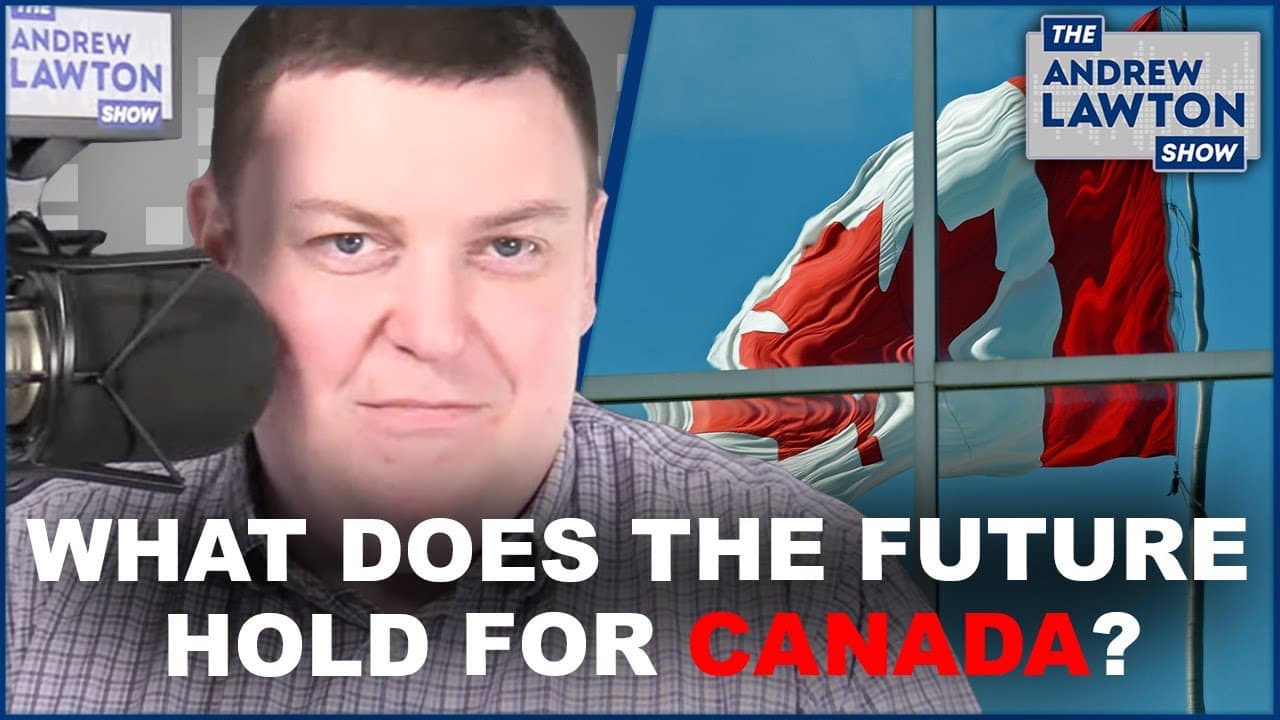
Canada's future is potentially bright if we embrace free expression and rational discourse. While recent societal challenges have deepened divisions, an optimistic approach focusing on unity and the acknowledgment of both successes and failures can strengthen Canada's identity. To move forward, Canadians must make distinctions between harmful and constructive ideologies.
Transcript
welcome to Canada's most irreverent talk show this is the Andrew Len show brought to you by True North hello and welcome to you all welcome to Canada's most Reverend talk show the Andrew lton show on true north and happy Boxing Day to you and it's not really a holiday in fact maybe you are out beating away the crowds at Best Buy to get that like $2... Read More
Key Insights
- 👯 The conversation highlights the historical context of crises in shaping societal unity, suggesting that past crises often brought people together, unlike current divisions that seem to foster polarization.
- 🔇 A notable theme is the critique of identity politics, which the speakers believe exacerbates societal divisions and complicates consensus on fundamental issues.
- 🤗 The speakers emphasize the importance of free expression and open dialogue as mechanisms to combat misinformation and promote better understanding among differing ideologies.
- 🎮 The video critiques the increasing government and institutional interference in personal and familial matters, advocating for a return to individual autonomy.
- 🤙 Discussions emphasize the challenges of contemporary moral relativism, calling for a reevaluation of the value of ideas and the need for discerning judgments in public discourse.
- 🍝 The guests reflect on the historical perspective of Canadian identity, advocating for a narrative that celebrates positive contributions rather than focusing solely on past injustices.
- 😚 The speakers assert that without clear distinctions between harmful and acceptable ideologies, society risks losing its moral compass amidst growing divisions.
Install to Summarize YouTube Videos and Get Transcripts
Explore YouTube Video Summarizer or Get YouTube Transcript Extractor
Questions & Answers
Q: What events have contributed to the current state of division in Canada?
Recent global crises, including the Russian invasion of Ukraine and the Hamas attack in October, alongside domestic issues like government overreach during the pandemic, have intensified divisions within Canadian society. These events highlighted differing ideologies and the impact of identity politics on unity, suggesting a significant shift from past societal cohesion.
Q: How do Andrew Lutton and Mark Milky view the role of government and courts in personal lives?
Both speakers are critical of the increasing interference by government and courts in personal matters. They argue that such overreach undermines individual rights and responsibilities, particularly regarding parental authority. They assert that professionals and organizations should refrain from micromanaging individual lives, advocating for a return to personal freedoms and decision-making.
Q: What is meant by the term “anti-reality,” and how does it relate to current societal issues?
"Anti-reality" refers to a growing trend where individuals prioritize feelings and ideologies over objective truths and facts. This mindset is reflected in societal debates over identity and expression, leading to a culture of denial about basic realities, such as physical and biological differences between genders, which complicates discourse and resolution of conflicts.
Q: Can you explain the concept of moral relativism as discussed in the content?
Moral relativism is the belief that all ideas and beliefs are equally valid. This perspective has led to confusion and conflict, as it blurs the lines between good and bad actions. Lutton and Milky argue that such thinking diminishes the importance of distinguishing between harmful and beneficial ideas, resulting in a lack of consensus on fundamental values.
Q: What do the speakers propose to help Canada move forward positively?
They advocate for open dialogue and a commitment to truth-telling as foundational values that can help unify Canadians. By encouraging thoughtful consideration of distinct ideas and fostering a culture where individuals challenge inaccuracies or biases, they believe society can collectively move toward a more optimistic future.
Q: How does the discussion in the video reflect on Canada’s national identity?
The conversation critiques the notion of Canada as a "postnational" identity and highlights the importance of upholding a cohesive national narrative. Lutton and Milky stress that a strong Canadian identity should not be defined by past injustices but rather by shared core values and a commitment to the rights of individuals, ensuring prosperity and unity.
Q: What role does social media play in the current discourse around identity and politics?
Social media significantly affects public discourse, often amplifying emotional responses and reinforcing existing biases. The speakers suggest that while it has the potential to democratize information, it may also contribute to a herd mentality, undermining critical thinking and leading individuals to conform to popular but potentially misguided beliefs.
Summary & Key Takeaways
-
Andrew Lutton discusses the state of Canada with Mark Milky, focusing on recent crises and their impact on societal unity and divisions.
-
The conversation emphasizes the need for a return to rational discourse and the importance of distinguishing between good and bad ideas in society.
-
Both speakers express cautious optimism about Canada's potential future while criticizing the growing divisions fueled by identity politics and government interference.
Read in Other Languages (beta)
Share This Summary 📚
Summarize YouTube Videos and Get Video Transcripts with 1-Click
Try YouTube Summary with ChatGPT & Claude or YouTube Transcript Generator
Explore More Summaries from True North 📚

Summarize YouTube Videos and Get Video Transcripts with 1-Click
Try YouTube Summary with ChatGPT & Claude or YouTube Transcript Generator