What Was the Manhattan Project and Its Impact?
TL;DR
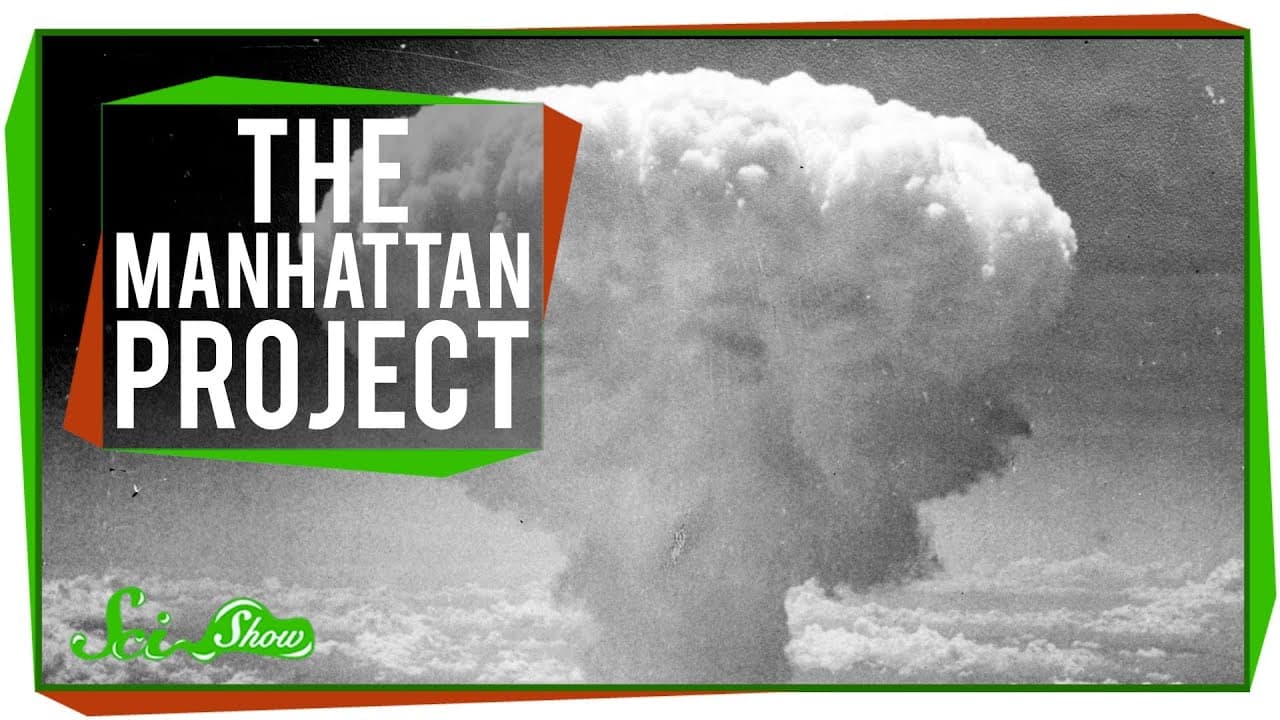
The Manhattan Project was a secret multinational initiative during World War II aimed at developing atomic bombs, which eventually led to the bombings of Hiroshima and Nagasaki. This project significantly advanced nuclear science and technology, fostering developments in nuclear energy and medicine, while also marking the start of the Atomic Age and Cold War.
Transcript
It's a sad but inescapable fact some of the greatest advances in science have come from humanity's more destructive impulses. German chemist, Fritz Haber for example, figured out how to fix nitrogen from the atmosphere to create gigantic bombs, used to kill people in the World War I But his technology was also used to make the world's first synthet... Read More
Key Insights
- 🫀 The darkest discoveries in science often come from destructive impulses, such as the development of atomic bombs from the Manhattan Project.
- 😒 The moral responsibility of scientists is to determine how to use their discoveries wisely for the betterment of humanity.
- 🫀 The Manhattan Project brought together the world's top scientists to collaborate and make rapid progress in understanding the atom.
- ✊ Atomic bombs released enormous amounts of energy through nuclear fission, harnessing the power of the strong force.
- 👨🔬 The project's research contributed to the development of nuclear medicine, nuclear chemistry, and nuclear physics.
- 🫀 Despite the devastating consequences of atomic bombs, the knowledge gained from the Manhattan Project has brought about positive advancements in various fields.
- 🥺 The project's success led to the Atomic Age, with nuclear weapons becoming a threat during the Cold War.
Install to Summarize YouTube Videos and Get Transcripts
Explore YouTube Video Summarizer or Get YouTube Transcript Extractor
Questions & Answers
Q: How did the discovery and development of atomic bombs come about?
The discovery of nuclear fission and the concept of atomic bombs was theorized by German-Jewish physicist Leo Szilard. He patented the atomic bomb idea to prevent others from developing it, and later turned it over to the British government to keep it out of the Nazis' hands.
Q: What were the goals of the Manhattan Project?
The goals were to research and develop atomic weapons using uranium and plutonium, with the aim of producing a chain reaction and achieving critical mass to sustain a nuclear explosion.
Q: What were the major achievements of the Manhattan Project?
The Manhattan Project successfully developed and built four atomic bombs: "The Gadget" (test bomb), "Little Boy" (dropped on Hiroshima), "Fat Man" (dropped on Nagasaki), and a fourth bomb that was never used. The project also paved the way for advancements in nuclear energy, medicine, and scientific understanding of the atom.
Q: How did the Manhattan Project impact the world?
The atomic bombs effectively ended World War II but also initiated the Cold War and the fear of nuclear annihilation. However, the project's research led to significant advancements in nuclear energy, medicine, and scientific knowledge of the atom.
Summary & Key Takeaways
-
The Manhattan Project was a secretive effort that developed atomic bombs during World War II, leading to significant advancements in nuclear science.
-
The project involved the collaboration of the brightest minds in physics, chemistry, and engineering from the US, UK, and Canada.
-
Atomic bombs were successfully detonated in New Mexico as a test, and later dropped on Hiroshima and Nagasaki, leading to the end of the war and the beginning of the Atomic Age.
Read in Other Languages (beta)
Share This Summary 📚
Summarize YouTube Videos and Get Video Transcripts with 1-Click
Try YouTube Summary with ChatGPT & Claude or YouTube Transcript Generator
Explore More Summaries from SciShow 📚


Summarize YouTube Videos and Get Video Transcripts with 1-Click
Try YouTube Summary with ChatGPT & Claude or YouTube Transcript Generator