8 Incredibly Brilliant Spiders
TL;DR
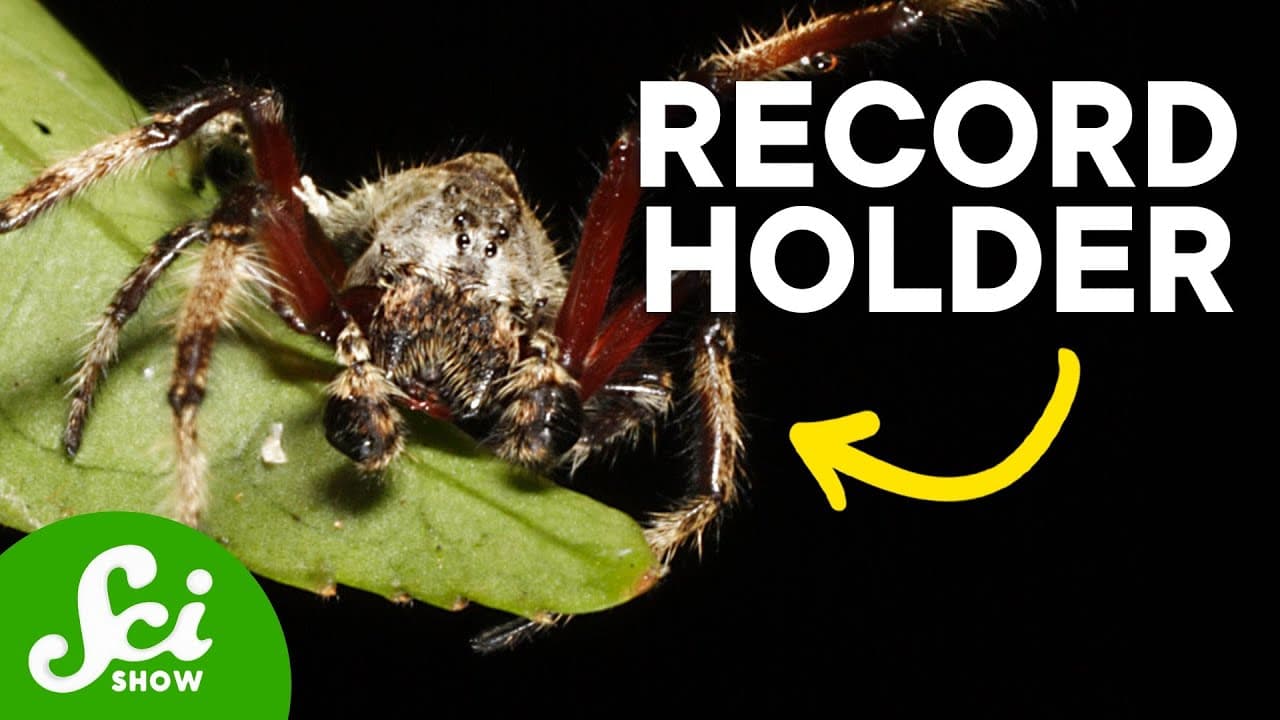
Spiders possess incredible abilities such as web-spinning, long chelicerae for capturing prey, and underwater survival, inspiring scientific research and potential advancements in various fields.
Transcript
[♪ INTRO] When you hear the word spider, you might immediately think venomous, terrifying, or just... nope. Or you could be like me, and think they’re amazing! Very few spiders are actually harmful to people, while lots of spiders, pretty much all of them, in fact, are helpful to us in some way. When you look at spiders more closely, you realize th... Read More
Key Insights
- 🙂 Spiders possess various extraordinary abilities, including superior low-light vision, long chelicerae for impaling prey, strong and stretchy silk, underwater survival techniques, and regenerative capabilities.
- 👨🔬 Understanding spiders' abilities can inspire advancements in various fields such as materials science, sensor technology, adhesives, longevity research, and organ regeneration.
- 🕷️ Researchers are studying spiders' unique traits to gain insights into evolutionary processes, neural basis of intelligence, and the development of innovative technologies and materials.
Install to Summarize YouTube Videos and Get Transcripts
Explore YouTube Video Summarizer or Get YouTube Transcript Extractor
Questions & Answers
Q: How do net casting spiders catch their prey?
Net casting spiders use their massive eyes and superior low-light vision to cast small nets on their prey, allowing them to drop down from above and envelop them.
Q: What makes Darwin's Bark Spiders' silk unique?
Darwin's Bark Spiders produce silk that is two times more elastic and ten times stronger than Kevlar, enabling them to create large webs across rivers and potentially inspiring advancements in bulletproof vests and high-performance materials.
Q: How do trapdoor spiders live long lives compared to other spiders?
Trapdoor spiders stay in underground burrows, which provides safety and helps them conserve energy through a low resting metabolic rate, potentially reducing cellular damage and contributing to their longevity.
Q: How do spitting spiders immobilize their prey?
Spitting spiders spray a zig-zag pattern of liquid silk at their prey, which becomes sticky upon contact with air, pinning the prey down. They may also inject venom afterward to fully immobilize the prey.
Q: What is the diving bell spider's strategy for survival underwater?
Diving bell spiders spin silk webs that trap air bubbles, allowing them to create an underwater habitat. Their bodies have fine, water-repellent hairs that hold onto air, enabling them to breathe through small holes while submerged.
Q: How fast can giant house spiders run and why?
Giant house spiders can run as fast as half a meter per second due to their long legs and alternating leg movement. They rely on speed to catch prey as their webs are not sticky.
Q: How do fringed jumping spiders exhibit intelligent behavior?
Fringed jumping spiders use aggressive mimicry and can change their strategy based on the effectiveness of their initial approach. They can navigate mazes, remember routes, and exhibit trial-and-error problem-solving abilities.
Q: What potential applications can be derived from studying spiders' extraordinary abilities?
Research on spiders' abilities can lead to the development of sensors with enhanced low-light capabilities, improvements in adhesives, water-resistant materials, and insights into longevity and organ regeneration in humans.
Summary & Key Takeaways
-
Spiders like net casting spiders use their massive eyes to see in low light and have developed a unique hunting technique involving casting nets.
-
Pelican spiders have the longest chelicerae among spiders and impale their prey before leaving them to be immobilized by venom, aiding in the study of their evolution.
-
Darwin's Bark Spiders create the largest and longest webs using silk that is incredibly strong and elastic, potentially leading to the development of high-performance materials.
-
Tarantulas and trapdoor spiders live long lives thanks to their staying indoors, resting metabolic rate, and possible reduced cellular damage, providing insights into longevity research.
-
Spitting spiders immobilize prey by spraying a zig-zag pattern of liquid silk, potentially leading to the development of improved adhesives.
-
Fringed jumping spiders exhibit intelligent behavior by using aggressive mimicry and planning strategies for prey capture, prompting research on the neural basis of intelligence.
-
Diving bell spiders live underwater by spinning silk webs that trap air bubbles and aid in breathing, which could inform the development of water-resistant materials.
-
Giant house spiders hold records for their speed and can regenerate lost legs, offering potential insight into organ and limb regeneration.
Read in Other Languages (beta)
Share This Summary 📚
Summarize YouTube Videos and Get Video Transcripts with 1-Click
Try YouTube Summary with ChatGPT & Claude or YouTube Transcript Generator
Explore More Summaries from SciShow 📚

Summarize YouTube Videos and Get Video Transcripts with 1-Click
Try YouTube Summary with ChatGPT & Claude or YouTube Transcript Generator