Palladium - Periodic Table of Videos
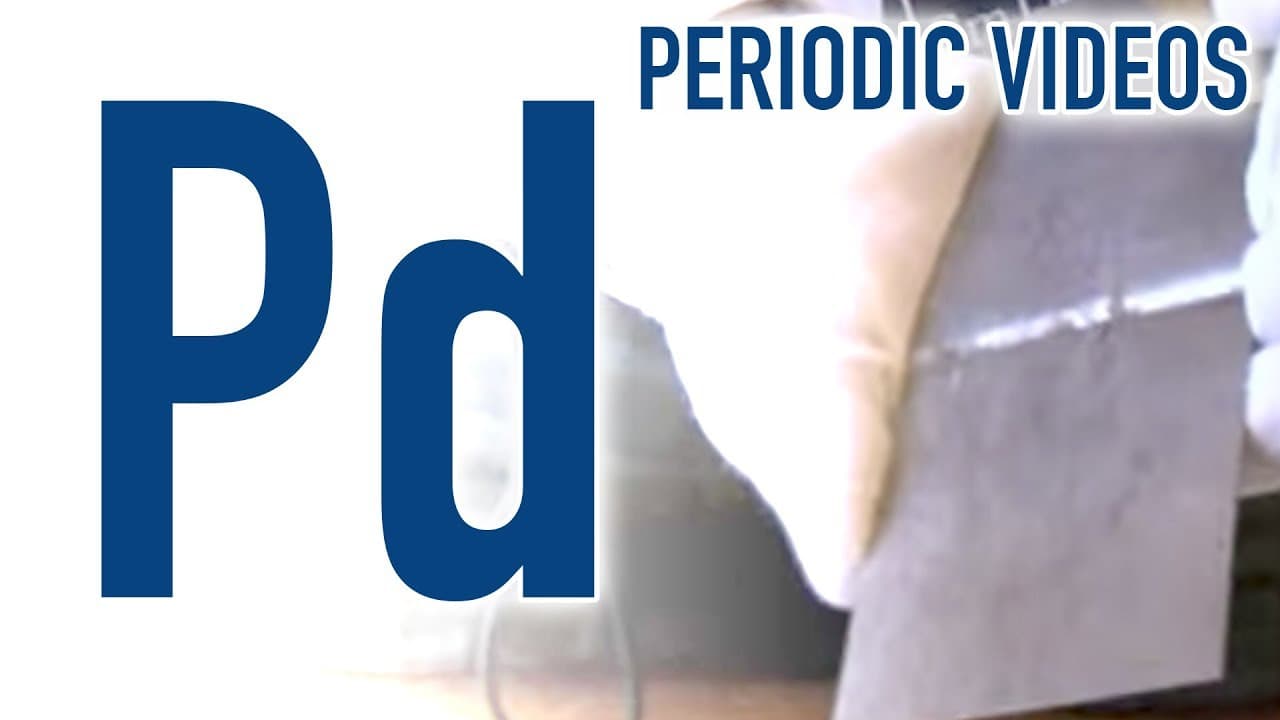
TL;DR
Palladium was discovered by chemist Weston, who marketed it as “the new silver” before publishing a scientific paper that established it as a real element. He offered it at prices ranging from five shillings to one guinea and named it after Pallas, then considered a newly discovered planet. Read on to trace the controversy, surviving samples, and Michael Faraday connection.
Transcript
Weston wasn't entirely mercenary and when he died in the 1820s he Beque that's left in his will samples of his Metals platinum and Palladium to the Royal Society and we still have them let's see what's in the box and here you can see there is sample that is labeled padium and if we look inside imagine that you've discovered a new element what would... Read More
Key Insights
- 🤘 Chemist Weston discovered Palladium in the 1800s and marketed it as a valuable metal, using pricing and chemical properties to attract buyers.
- 🥺 The authenticity of Palladium was initially challenged, leading Weston to publish a scientific paper describing the metal's properties and reactions.
- ❓ Samples of Palladium and Platinum, donated to the Royal Society, were used by Michael Faraday for electrochemical experiments.
- 🙈 The names "Palladium" and "Platinum" are connected to the excitement surrounding the discovery of a new planet and the presence of other noble metals in ores.
Install to Summarize YouTube Videos and Get Transcripts
Explore YouTube Video Summarizer or Get YouTube Transcript Extractor
Questions & Answers
Q: How was palladium discovered and introduced to the public?
Chemist Weston discovered palladium while refining metals and began selling it as “the new silver.” His sales paper listed its chemical properties and prices, while a Mr. Forer sold it on his behalf.
Q: How much did Weston charge for palladium?
The sales paper offered palladium at five shillings, half a guinea, or one guinea. It identifies half a guinea as 10 and a half shillings and a guinea as 21 shillings.
Q: Who challenged palladium’s status as a new metal?
A person called Chix wrote an angry letter a year after the sales paper appeared. Chix described chemical tests that supposedly showed palladium was not a new metal.
Q: How did Weston respond to claims that palladium was a fraud?
Weston had not initially published a scientific account of palladium. A couple of years later, he wrote a paper describing the discovery and the metal’s reactions, demonstrating that the element was real.
Q: Why was the element named palladium?
Weston named palladium after Pallas, a large asteroid that people at the time thought was a planet. It had been discovered at nearly the same time, making the name fashionable and connected to an exciting contemporary discovery.
Q: How did Weston produce palladium from ore?
He dissolved an ore containing minerals of several noble metals, including platinum. Through careful precipitation, he separated one metal after another until he obtained palladium.
Q: What happened to Weston’s palladium and platinum samples?
When Weston died in the 1820s, he left samples of palladium and platinum to the Royal Society for scientific use. Surviving palladium pieces show signs that corners, splinters, or other portions were removed for experiments.
Q: What connects Michael Faraday to the surviving palladium samples?
Michael Faraday signed an inventory dated 11 February 1834 listing platinum and palladium in the Royal Society’s collection. The transcript says these were the samples he used for his electrochemical experiments, while his recorded weights also suggested that nearly half of the platinum was missing.
Summary & Key Takeaways
-
Chemist Weston discovered Palladium and began selling it, providing chemical properties and pricing in a piece of paper.
-
A letter from someone named Chix questioned the authenticity of Palladium, leading Weston to publish a scientific paper on its discovery.
-
Samples of Palladium and Platinum, along with a list signed by Michael Faraday, provide insight into their weights and potential theft.
Read in Other Languages (beta)
Share This Summary 📚
Summarize YouTube Videos and Get Video Transcripts with 1-Click
Try YouTube Summary with ChatGPT & Claude or YouTube Transcript Generator
Explore More Summaries from Periodic Videos 📚
Summarize YouTube Videos and Get Video Transcripts with 1-Click
Try YouTube Summary with ChatGPT & Claude or YouTube Transcript Generator