Why Is Human-Centered Cybersecurity So Hard?
TL;DR
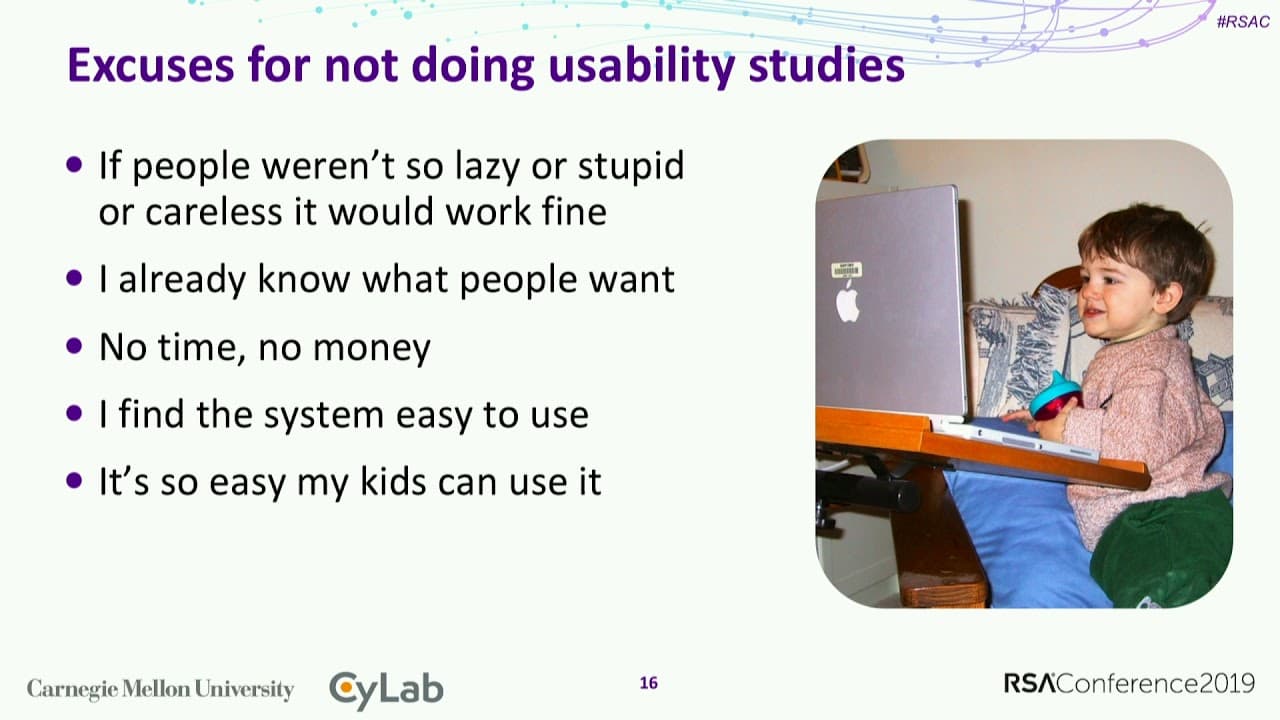
Security and privacy systems often fail because they require people to perform difficult secondary tasks, such as remembering many unique passwords, verifying cryptographic fingerprints, or reading lengthy policies. Better results come from designing security, privacy, and usability together, then using realistic and ethical user studies to identify needs, assess trade-offs, evaluate prototypes, and diagnose failures.
Transcript
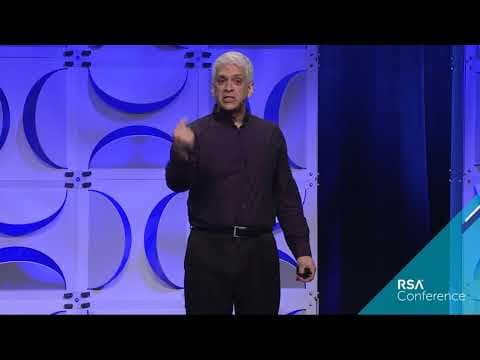
Well, good morning, everybody. I am, uh, so amazed to see so many people here bright and early. Um, I was thrilled when, when RSA asked me if I would curate this, uh, this day, that they, they wanted to, uh, spend an entire day focused on the human side of security and privacy. Um, so it's, it's, uh, it's really great to see so much interest in thi... Read More
Key Insights
- Human involvement in security includes malicious, uninformed, unmotivated, and constrained behavior. Focusing only on attackers overlooks people who do not understand required precautions, do not consider security their responsibility, or cannot reliably perform the difficult tasks imposed on them.
- Security, privacy, and usability must be designed together. Completing the security and privacy work first and passing it to usability specialists afterward produces weaker results because usability choices can directly determine whether people understand and follow protective mechanisms.
- Privacy control is inherently complicated. Online services may clarify policies or change settings to reduce confusion, yet those changes can confuse users further, while detailed configuration demands more time than people want to spend managing social-network privacy.
- Common security requirements exceed realistic human capabilities. Creating and remembering many unique passwords, verbally comparing cryptographic fingerprint numbers, and reading a 29-page privacy policy illustrate protections that may be sound in theory but difficult to follow consistently.
- Security and privacy are secondary tasks for most users. People generally use computers to communicate, play games, or complete work, so protective steps compete with their primary goals and may receive limited attention, effort, or motivation.
- Expert and user priorities are not always aligned. Experts may view keys mainly as tools for excluding unauthorized people, while users may place greater immediate importance on preventing themselves from being locked out of a system.
- User studies serve several distinct purposes. They can assess desired features, examine security-usability trade-offs, evaluate completed products or early prototypes, and identify the root causes of known user difficulties so that teams can design targeted improvements.
- Usable-security research must represent risk without harming participants. Studies need realistic behavior, opportunities to observe potentially rare security events, and careful treatment of legal, ethical, and practical constraints, often through simulated attacks or simulated risks.
Install to Summarize YouTube Videos and Get Transcripts
Explore YouTube Video Summarizer or Get YouTube Transcript Extractor
Questions & Answers
Q: Why is human behavior difficult to manage in cybersecurity?
Human behavior is difficult to manage because security problems do not come only from malicious people. Some users do not know which precautions they should take, some understand but lack motivation, and others face ordinary human limitations. Systems often require all of them to complete demanding tasks reliably, even while they are busy or focused on another goal.
Q: Why should security, privacy, and usability be designed together?
Security, privacy, and usability should be designed together because protective mechanisms succeed only when people can understand and use them. Creating security and privacy features first, then passing them to usability specialists, does not work well. Integrating all three concerns allows teams to consider human behavior while decisions are still being made and generally produces better results.
Q: What security tasks are especially difficult for users?
Difficult tasks include creating and remembering unique passwords for dozens of accounts, verifying cryptographic key fingerprints by comparing strings of numbers, and reading lengthy privacy policies. One policy shown in the remarks is 29 pages long. These examples demonstrate how systems routinely assign people security and privacy work that designers already know is hard to complete.
Q: Why are privacy controls hard to design?
Privacy controls are hard to design because privacy itself is complicated. Services must give people meaningful control without requiring them to spend all day configuring settings. Attempts to clarify policies or revise controls can create additional confusion, so merely changing the interface is insufficient. Research is needed to balance understandable choices, practical effort, and genuine user control.
Q: How do user and expert security priorities differ?
Users and experts may assign different priorities to the same protective mechanism. An expert may see a key primarily as a way to keep unauthorized people out. A user may be more concerned about being locked out personally. Users still care about preventing unauthorized access, but immediate access and recoverability may matter more in their decisions.
Q: What are user studies used for in security research?
Security researchers use user studies to determine which features and functions people need, measure trade-offs between protection and usability, and evaluate products or prototypes against requirements. Studies can also diagnose a known failure. If users are struggling, researchers need to identify the underlying cause before they can design an effective correction rather than merely observing that something went wrong.
Q: How are usable-security studies different from ordinary usability tests?
Usable-security studies differ because they must consider a risk or an adversary. A standard word-processor test might examine whether people can type, change fonts, or insert tables. A security study must also determine whether the system remains usable when attackers try to deceive users or when predictable behavior, limited motivation, carelessness, or competing demands affect decisions.
Q: How can researchers study security risks ethically?
Researchers generally simulate security risks because they do not want to harm participants. The study must still feel realistic enough that people behave as they would outside a research setting. It must also create an opportunity to observe security events during limited study time while addressing legal, ethical, and practical concerns surrounding exposure to actual or simulated threats.
Summary & Key Takeaways
-
Human behavior affects security through more than malicious intent. Problems also arise when people lack knowledge, motivation, time, or the ability to complete demanding tasks reliably. Treating every failure as carelessness ignores predictable human limitations and prevents designers from addressing the actual causes of insecure behavior.
-
Security and privacy are secondary tasks for most people, whose main goals include communication, entertainment, and work. Requirements such as managing numerous unique passwords, comparing cryptographic fingerprints, and reading a 29-page privacy policy impose substantial burdens. Expert priorities may also conflict with users' concerns, such as avoiding account lockout.
-
User studies help teams understand desired functionality, measure security-usability trade-offs, evaluate products or early prototypes, and determine why users struggle. Security studies differ from ordinary usability tests because they must account for risk or an adversary, usually through simulations designed to remain realistic, observable, legal, ethical, and practical.
Read in Other Languages (beta)
Share This Summary 📚
Summarize YouTube Videos and Get Video Transcripts with 1-Click
Try YouTube Summary with ChatGPT & Claude or YouTube Transcript Generator
Explore More Summaries from RSAC Cybersecurity 📚


Summarize YouTube Videos and Get Video Transcripts with 1-Click
Try YouTube Summary with ChatGPT & Claude or YouTube Transcript Generator