Wendy Kopp: Answering Teach For America's Critics
TL;DR
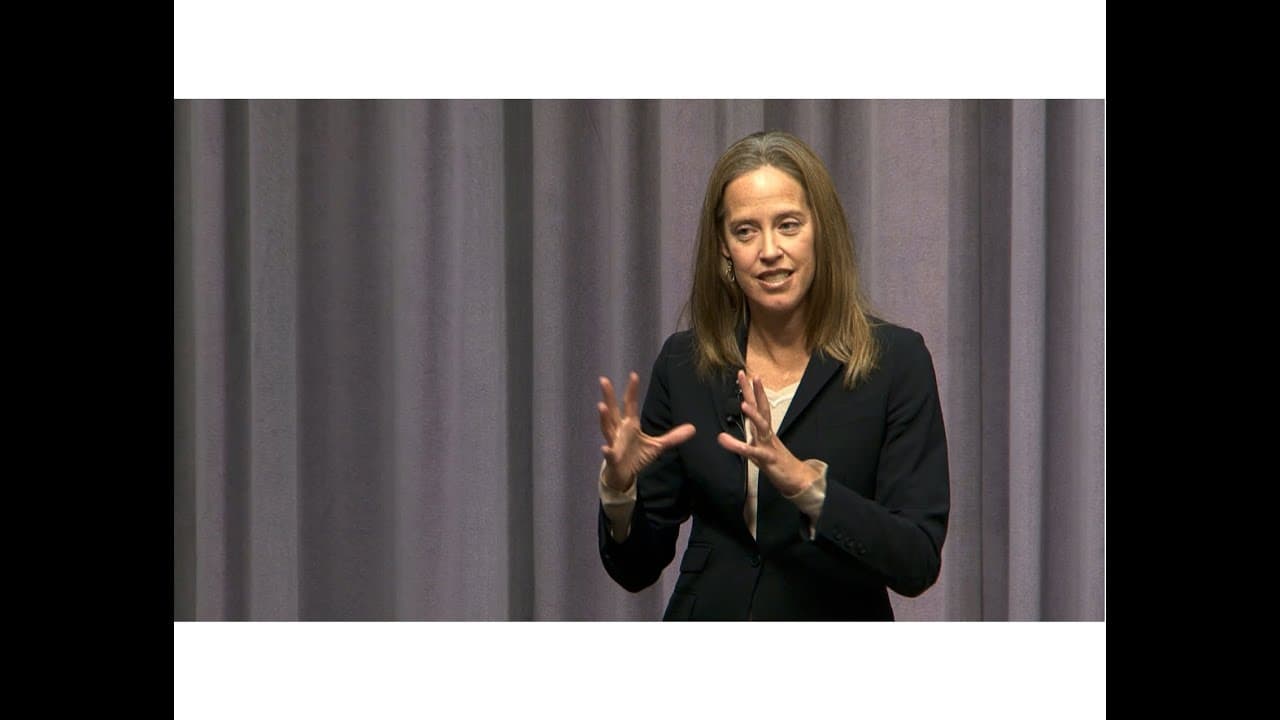
Teach For America responds to criticism by selecting candidates for demonstrated achievement, perseverance, influence, organization, problem solving, respect, and humility, then providing intensive preparation and ongoing support. Wendy Kopp argues that the two-year commitment is part of a broader strategy: many alumni remain in education, while others pursue policy and leadership roles that can address problems schools cannot solve alone.
Transcript
How do I respond to critics that people from elite colleges are not necessarily the best teachers for kids in this context that the Teach For America corps members are not skilled enough, well prepared enough after summer training and that this is a band-aid program because people commit two years? And how can that solve the whole problem? Is that,... Read More
Key Insights
- Teach For America recruits broadly, with one corps representing 500 colleges and universities, while focusing most recruitment resources on the 350 most competitive colleges identified by U.S. News and World Report because Kopp wants highly educated and skilled graduates to prioritize education.
- Candidate selection is based on demonstrated characteristics rather than elite credentials alone. Teach For America seeks records of achievement in academics, extracurricular activities, or work, along with perseverance, influence, motivation, organization, problem solving, respect, and humility toward the people with whom candidates will work.
- Teach For America's selection model is predictive and continually revised using performance data. Kopp says the organization has invested substantial time and energy in identifying the personal characteristics that distinguish transformational teachers, although she also acknowledges that no selection system can predict performance perfectly.
- First-year teaching necessarily involves a learning curve that no pre-service program can completely remove. Kopp argues that this limitation applies in every setting and is especially significant in the low-income communities where corps members work, making preparation and continuing support essential rather than optional.
- Teacher preparation is designed around the mindsets, skills, and knowledge associated with successful teaching in low-income communities. Kopp describes the pre-service program as intensive and goal-oriented, with the specific aim of preparing teachers to produce significant academic gains among their students.
- Ongoing professional development is a central part of Teach For America's approach because teachers enter distinct schools and face distinct circumstances. The organization invests in management, training, and individualized support after placement, which Kopp considers more important than relying exclusively on preparation completed before teaching begins.
- Principal feedback and performance data support Teach For America's training claims, according to Kopp. She says most principals consider corps members better trained than their other new teachers, while outcome data indicate corps members can outperform other beginners and, in some cases, more experienced teachers at their schools.
- Teach For America's theory of change extends beyond the initial two-year teaching commitment. Kopp reports that 65 percent of 20,000 alumni work full time in education, including teachers, 600 principals, and district leaders, while other alumni can influence public policy outside school systems.
Install to Summarize YouTube Videos and Get Transcripts
Explore YouTube Video Summarizer or Get YouTube Transcript Extractor
Questions & Answers
Q: How does Teach For America select its teachers?
Teach For America uses an evolving predictive selection model rather than admitting candidates solely because they attended selective colleges or earned strong grades. It looks for achievement across academics, extracurricular activities, or employment, as well as perseverance, the ability to influence and motivate others, organizational and problem-solving ability, respect, and humility. Kopp says these characteristics are associated with transformational teaching.
Q: Does Teach For America recruit only from elite colleges?
Teach For America does not recruit only from elite colleges. Kopp says one corps represented 500 colleges and universities across the country. However, the organization concentrates recruitment at the 350 most competitive colleges listed by U.S. News and World Report. She argues that directing highly educated and skilled graduates toward teaching can strengthen education, while acknowledging that excellent candidates can come from less selective institutions.
Q: Is Teach For America's summer preparation sufficient for new teachers?
Kopp acknowledges that no pre-service program can eliminate the learning curve experienced by a first-year teacher, especially in the communities served by Teach For America. She nevertheless describes the program as intensive and goal-oriented, built around observed mindsets, skills, and knowledge of successful teachers. Preparation is supplemented by management, training, and continuing professional development after corps members enter their individual schools.
Q: What qualities make a Teach For America teacher successful?
Successful candidates typically demonstrate achievement in academics, extracurricular activities, or work experience, according to Kopp. They also show perseverance when facing challenges, an ability to influence and motivate people, organizational skill, and problem-solving ability. Respect and humility in working with others are also important. Teach For America uses screens intended to identify these qualities in candidates from many educational backgrounds.
Q: What evidence does Wendy Kopp give for corps member effectiveness?
Kopp cites both principal opinion and performance data. She says most principals report that Teach For America corps members are better trained than their other new teachers. More importantly, she says the data show that corps members are more successful than other new teachers and, in some cases, more successful than experienced teachers working in the same schools. The transcript does not provide specific outcome measurements.
Q: Why does Teach For America use a two-year commitment?
The two-year commitment introduces future leaders directly to educational inequality while placing teachers in communities facing an urgent need. Kopp argues that the program is not limited to those two years because many participants remain in education afterward. Others leave schools but carry their experience into policy and other influential roles, supporting change that cannot be achieved solely from within individual schools.
Q: How many Teach For America alumni remain in education?
Kopp states that 65 percent of Teach For America's 20,000 alumni work full time in education. Half of those alumni are teachers, while 600 are school principals, and many others serve as district leaders. She presents these figures as evidence that participants who initially did not plan to pursue teaching often make long-term commitments to education after completing their corps service.
Q: Why does Kopp believe education reform needs leaders outside schools?
Kopp argues that the crisis cannot be solved from outside the education system alone, which is why many alumni must remain as teachers, principals, and district leaders. She also contends that schools cannot solve the problem entirely from within. Policymakers and the people who influence them need a deeper understanding of the challenges, so some alumni must apply their classroom experience in external leadership roles.
Summary
In this video, the speaker addresses criticisms regarding the effectiveness of Teach For America's recruitment and training process for teachers. They explain the importance of recruiting talented individuals from competitive colleges and universities and how their selection process aims to identify teachers who possess the necessary characteristics to be successful. They also highlight the intensive and goal-oriented training program that Teach For America provides. Additionally, the speaker emphasizes the magnitude of the education crisis and the need for innovative solutions, such as getting highly capable individuals involved in addressing the issue.
Questions & Answers
Q: Why do some critics argue that people from elite colleges are not the best teachers for kids?
Critics argue that people from elite colleges may not necessarily be the best teachers for kids because there is a perception that these individuals may not be well-prepared or skilled enough after the summer training provided by Teach For America. They also argue that since this program only requires a two-year commitment, it may not be enough to solve the overall problem.
Q: What is the response to the criticism that Teach For America mainly recruits from competitive colleges?
The speaker acknowledges that Teach For America does recruit aggressively from the most competitive colleges in the country. However, they believe this is critical because it is important to have well-educated and skilled individuals channel their energy into improving the education system. The reality is that the most capable people are not currently choosing a career in teaching, so Teach For America aims to change that by making teaching a desirable option at selective colleges.
Q: How does Teach For America identify potential teachers?
Teach For America has developed a predictive selection model to identify potential teachers. They focus on personal characteristics such as a track record of achievement, perseverance in the face of challenges, influence and motivation skills, organizational ability, problem-solving ability, and respect and humility in working with others. While they prioritize individuals who possess these characteristics, Teach For America recognizes that there are exceptions and that teachers with these qualities can come from various backgrounds.
Q: How does the preparation of Teach For America corps members address the learning curve of being a first-year teacher?
The speaker acknowledges that no free service program can eliminate the learning curve of being a first-year teacher. However, Teach For America has learned a lot about both the characteristics and teaching methods of transformational teachers. As a result, they have developed an intense, goal-oriented free service program that prepares teachers to make significant academic gains with their students in low-income communities. They believe that their program is comparable, if not better, than any other free service program in the country.
Q: What kind of management and training do Teach For America teachers receive?
Teach For America recognizes the importance of ongoing professional development and support for their teachers once they are in unique classroom environments. They invest heavily in this aspect and approach it like any good manager would, ensuring that teachers have the necessary tools and resources to excel in their roles. The evidence shows that principals perceive Teach For America corps members as better trained than other new teachers, and data indicates that they are more successful as new teachers compared to their peers.
Q: How does Teach For America address the criticism that it is just a band-aid solution to the education crisis?
The speaker highlights the magnitude of the education crisis, with millions of children growing up in poverty and facing significant hurdles in their educational journey. Teach For America aims to tackle this crisis by rallying talented individuals to make it their cause and invest in their success. While some critics argue that Teach For America is just a band-aid solution, the organization believes that it is important to have individuals from both within and outside the education system working together to find solutions. They emphasize the need for policymakers and influential individuals to understand the problem deeply and support innovative approaches.
Takeaways
Teach For America addresses criticisms regarding their recruitment and training processes, asserting that they actively recruit from competitive colleges to enlist the most talented individuals. They have developed a predictive selection model and intense training program to prepare teachers for success. The organization acknowledges the limitation of a two-year commitment but argues that it is critical to involve capable individuals in solving the education crisis. Teach For America aims to make teaching a desirable career path and believes that both internal and external solutions are needed to address the complex challenges within the education system.
Summary & Key Takeaways
-
Teach For America recruits across hundreds of institutions while concentrating resources on selective colleges. Kopp says admission is not based simply on attending an elite school or earning strong grades. The organization uses an evolving predictive model to identify personal characteristics associated with teachers who can produce significant academic progress in low-income communities.
-
Kopp acknowledges that no preparation program can eliminate the learning curve faced by a first-year teacher, particularly in challenging environments. She argues that Teach For America provides intensive, goal-oriented pre-service preparation and invests heavily in continuing management, training, and professional development tailored to individual teachers working in their particular school settings.
-
Kopp rejects the claim that a two-year commitment makes Teach For America merely a temporary intervention. She presents it as a leadership strategy: alumni may remain as teachers, principals, or district leaders, while others influence policy. Her theory is that educational inequality must be addressed both within schools and through broader systems.
-
Key Insights:[
Read in Other Languages (beta)
Share This Summary 📚
Summarize YouTube Videos and Get Video Transcripts with 1-Click
Try YouTube Summary with ChatGPT & Claude or YouTube Transcript Generator
Explore More Summaries from Stanford eCorner 📚

![Debbie Sterling: Disrupting the Pink Aisle [Entire Talk] thumbnail](/_next/image?url=https%3A%2F%2Fi.ytimg.com%2Fvi%2Fpptovj4UczY%2Fhqdefault.jpg&w=750&q=75)
![Tim Kentley-Klay: Self-Driving Cars for Everyone [Entire Talk] thumbnail](/_next/image?url=https%3A%2F%2Fi.ytimg.com%2Fvi%2FvqGUekl9Hkk%2Fhqdefault.jpg&w=750&q=75)
Summarize YouTube Videos and Get Video Transcripts with 1-Click
Try YouTube Summary with ChatGPT & Claude or YouTube Transcript Generator