How Are Trump Talks Shaping Asian Markets?

TL;DR
Asian markets drew support from hopes for progress in U.S.-China trade talks and expected Federal Reserve rate cuts, while investors awaited President Trump’s meeting with Japanese Prime Minister Takaichi. The agenda included defense spending, Russian LNG purchases, North Korea, a 15% tariff arrangement, and Japan’s proposed $550 billion U.S. investment fund.
Transcript
THIS IS THE ASIA TRADE. I'M PAUL ALLEN IN SYDNEY. >> I'M AVRIL HONG IN KUALA LUMPUR FOR THE LEADERS SUMMIT. THE TOP STORIES THIS HOUR. PRESIDENT TRUMP DO TO MEET JAPAN'S PERIMETER IN TOKYO SHORTLY WITH MILITARY AND BUSINESS TIES TOP OF THE AGENDA. TRUMP'S ASIA TRIP RAISING HOPES FOR A CHINA TRADE DEAL AND BOOSTING RISK SENTIMENT AHEAD OF THIS WE... Read More
Key Insights
- Trump’s meeting with Prime Minister Takaichi was expected to focus on military cooperation, business relations, Japanese defense spending, Russian LNG purchases, North Korea, and the implications of prospective U.S.-China trade progress for Japan and the wider East Asian region.
- Japan’s trade arrangement with the United States involved a relatively low 15% tariff in exchange for a proposed $550 billion Japanese investment fund in the United States, but the fund’s specific investments and operating details remained unclear before the bilateral meeting.
- Japan’s Nikkei 225 had risen above 50,000 as U.S. Treasury Secretary Scott Bessent praised the country’s pro-stimulus and expansionary policies. Japanese authorities nevertheless remained concerned that Trump might raise the weak yen, which was trading around 152.7.
- South Korea’s economy expanded 1.7% year over year and 1.2% quarter over quarter in the third quarter, beating expectations. Improved consumer confidence, stronger private and government consumption, resilient exports, semiconductor demand, and planned defense spending supported the expansion.
- U.S. market sentiment strengthened as signs of a U.S.-China trade détente pushed stocks to record highs. Shorter-dated Treasuries dipped, gold fell below 4,000, and investors prepared for central-bank decisions and major technology earnings during a particularly news-heavy week.
- Qualcomm’s shares reached their highest level in 15 months after the company introduced chips and computers for AI data centers. Its initial customer was a Saudi AI startup, and even a small share of the rapidly growing market could represent billions of dollars.
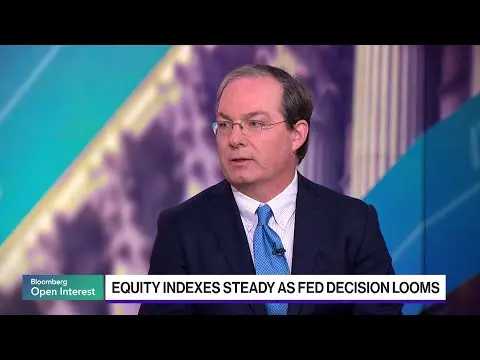
- The Federal Reserve was expected by Goldman Sachs Asset Management’s Simon Dangoor to cut rates by 25 basis points at the current meeting and another 25 basis points in December. The outlook for 2026 was less certain because labor-market and economic conditions could change.
- CSL’s decision to delay separating its influenza vaccine business sent its shares sharply lower. The company still considered separation the preferred long-term approach for unlocking growth, but heightened volatility in the U.S. vaccination market made the proposed timing unsuitable.
Install to Summarize YouTube Videos and Get Transcripts
Explore YouTube Video Summarizer or Get YouTube Transcript Extractor
Questions & Answers
Q: What was expected from Trump’s meeting with Takaichi?
President Trump’s first face-to-face meeting with Japan’s new prime minister was expected to cover military and business ties, faster progress toward defense spending equal to 2% of GDP, Japan’s purchases of Russian LNG, and the threat from North Korea. The leaders could also discuss U.S.-China negotiations and clarify the proposed $550 billion Japanese investment fund in the United States.
Q: How did Trump’s Asia trip affect market sentiment?
Trump’s Asia trip encouraged hopes that the United States and China could make progress toward a trade agreement, which improved risk sentiment. U.S. stocks reached record highs, shorter-dated Treasuries dipped, and gold slipped below 4,000. Investors were simultaneously preparing for likely Federal Reserve easing, other central-bank decisions, and earnings reports from major technology companies.
Q: Why did the Nikkei 225 rise above 50,000?
The Nikkei 225 moved above 50,000 amid enthusiasm for Japan’s expansionary fiscal stance and expectations surrounding the Trump-Takaichi meeting. U.S. Treasury Secretary Scott Bessent praised the policies of Japan’s new prime minister and finance minister, saying they were sending the right signal. The extremely weak yen was also identified as a factor supporting Japanese stocks.
Q: What did South Korea’s third-quarter GDP report show?
South Korea’s economy grew 1.7% from a year earlier and 1.2% from the previous quarter during the third quarter, exceeding expectations and extending momentum from the second quarter. The report reflected improving consumer confidence, stronger private and government consumption, effects from the expanded July budget, resilient exports, robust semiconductor demand, and plans for higher defense spending.
Q: How is Qualcomm entering the AI data-center market?
Qualcomm introduced new chips and computers designed for AI data centers, marking a larger push beyond its earlier activity at the market’s edges. A Saudi AI startup was identified as an important initial customer. Qualcomm’s products may sometimes operate alongside Nvidia chips, so the opportunity is not necessarily direct competition in every deployment, although Nvidia remains dominant.
Q: Why did CSL shares fall sharply in Australia?
CSL shares fell after the company shelved its planned separation of its influenza vaccine producer. CSL said separation remained its preferred long-term approach for unlocking growth, but heightened volatility in the U.S. vaccination market meant the timing was not right. The stock declined by roughly 12% to more than 14% during the reported trading period.
Q: What was the expected Federal Reserve rate path?
Simon Dangoor of Goldman Sachs Asset Management expected a 25-basis-point Federal Reserve rate cut during the week and another 25-basis-point reduction in December. He viewed both moves as largely locked in, although limited economic data could complicate the December decision if the government remained closed. The policy outlook for 2026 was described as substantially less clear.
Q: Why did WiseTech shares decline in Sydney trading?
WiseTech shares fell almost 12% after police and market regulators raided its Sydney offices. The investigation concerned alleged trading in company shares by billionaire co-founder Richard White and three employees between late 2024 and early 2025. The company’s statement to the Australian Securities Exchange said that no charges had been filed at that point.
Summary & Key Takeaways
-
President Trump’s Tokyo meeting with Prime Minister Takaichi was expected to cover military and business ties, faster Japanese defense spending, Russian LNG purchases, North Korea, and regional implications of U.S.-China negotiations. Investors also wanted details about Japan’s proposed $550 billion investment fund connected to a 15% tariff agreement.
-
Market sentiment improved as investors anticipated U.S.-China trade progress and a likely Federal Reserve rate cut. The Nikkei 225 had crossed 50,000, supported by enthusiasm for Japan’s expansionary fiscal policies and a weak yen. South Korea reported third-quarter growth of 1.7% year over year and 1.2% quarter over quarter.
-
Corporate developments produced sharp market moves. Qualcomm shares reached their highest level in 15 months after it introduced AI data-center chips and computers. CSL fell after delaying a vaccine-business separation, while WiseTech declined following raids connected to an investigation into alleged share trading by its co-founder and three employees.
Read in Other Languages (beta)
Share This Summary 📚
Summarize YouTube Videos and Get Video Transcripts with 1-Click
Try YouTube Summary with ChatGPT & Claude or YouTube Transcript Generator
Explore More Summaries from Bloomberg Television 📚



Summarize YouTube Videos and Get Video Transcripts with 1-Click
Try YouTube Summary with ChatGPT & Claude or YouTube Transcript Generator